


Listen to the article
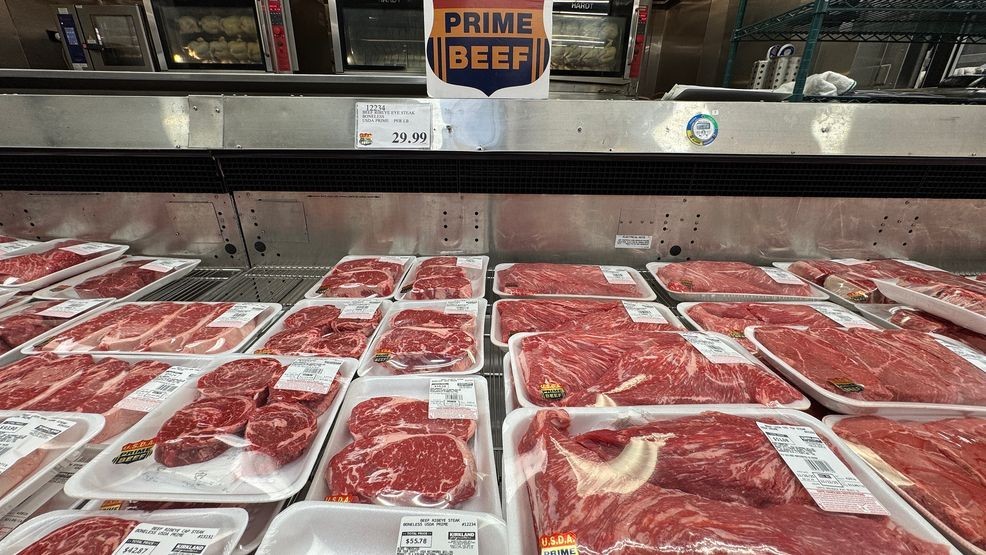
Record-high beef prices across the nation have prompted the federal government to launch an investigation into potential anticompetitive practices among the country’s largest meatpackers, marking a significant intervention in an industry that has grown increasingly concentrated over four decades.
Earlier this month, President Donald Trump directed the Department of Justice to open a formal investigation into the country’s dominant beef processors, citing concerns about potential collusion, price-fixing, and market manipulation. The White House stated that the probe aims to restore competition in a market where an overwhelming percentage of U.S. beef processing capacity rests in the hands of just four companies.
The investigation targets the so-called “Big Four” beef processors – JBS, Cargill, Tyson Foods, and National Beef – which collectively control approximately 85% of U.S. beef processing capacity. The White House specifically noted that two of these companies, including JBS (the world’s largest meatpacker), operate under foreign ownership or significant foreign control.
This level of market concentration stands in stark contrast to the industry’s structure in 1980, when USDA data shows the top four processors controlled only about 36% of the U.S. beef market.
The transformation began during the 1980s and 1990s, as major packers constructed massive, high-efficiency processing plants. These facilities could process far more cattle at substantially lower costs than their smaller competitors. According to the USDA’s Economic Research Service, a typical plant owned by one of the top four processors handled about 417,000 cattle in 1980. By 2002, that figure had more than doubled to over 1 million head.
This dramatic increase in scale effectively pushed smaller operations out of the market. As regional processors closed or were acquired, the Big Four rapidly consolidated their market power. By the mid-1990s, they controlled more than 80% of the nation’s beef processing – a level of dominance that has continued to strengthen in subsequent years.
Interestingly, early USDA research suggested this consolidation initially delivered certain benefits. Studies conducted in the 1990s found that larger plants achieved greater cost efficiencies, which were partially passed on to consumers through lower beef prices. These reduced costs helped stimulate demand, temporarily benefiting cattle producers through stronger pricing.
However, the advantage proved short-lived. USDA research indicates a significant market shift occurred around 2015. For decades prior, packers maintained excess plant capacity, creating incentives to compete aggressively for cattle to keep their facilities operating efficiently. This competition supported rancher prices.
Once the industry began operating at full capacity, with plants running near maximum output, the competitive pressure diminished considerably. Packers no longer needed to outbid each other for livestock. According to USDA data, this transition period coincided with a dramatic widening of the spread between what processors pay ranchers for cattle and what they earn from selling boxed beef. In some years, this price gap doubled or even tripled compared to earlier decades.
The Trump administration has justified the DOJ investigation by pointing to the combination of record-high consumer beef prices, shrinking margins for ranchers, and the extraordinary market concentration among just four companies – factors that suggest the possibility of market manipulation. According to the White House, the investigation is designed to restore competitive balance and ensure fair pricing throughout the entire beef supply chain, from producers to consumers.
The investigation comes at a time when Americans continue to purchase beef despite escalating prices, highlighting both the staple nature of the product in American diets and the potential for consumer harm if anticompetitive practices are indeed occurring in this critical food sector.
Fact Checker
Verify the accuracy of this article using The Disinformation Commission analysis and real-time sources.

15 Comments
This investigation into potential price manipulation by the ‘Big Four’ meatpackers is concerning. High beef prices have a real impact on consumers, so I’m glad to see the government taking action to address potential anti-competitive practices in this concentrated industry.
Agreed, it’s critical that the government ensures fair competition and pricing in the beef industry. Consumers shouldn’t have to bear the burden of potential collusion or market manipulation.
It’s concerning to see such a high degree of market concentration in the beef processing sector. I hope the government’s investigation can shed light on any anticompetitive practices and lead to meaningful reforms to promote a more competitive market.
Agreed. With so much control in the hands of just a few large players, there’s a clear risk of consumer harm through inflated prices and reduced choice. Robust antitrust enforcement is needed.
High beef prices are a real burden on household budgets, so I’m glad to see the federal government taking this issue seriously. Addressing potential collusion or price manipulation by the dominant meatpackers is an important step.
The shift towards greater consolidation in the beef industry over the past few decades is concerning. I hope this federal probe can provide much-needed transparency and lead to policy changes that promote a more competitive marketplace.
Absolutely. Increased competition and fairer pricing practices would benefit both consumers and smaller producers who have struggled against the dominant ‘Big Four’ meatpackers.
This is an important investigation into a critical sector of the US food system. I’m hopeful the findings will lead to reforms that protect consumers from the negative impacts of industry consolidation and potential price manipulation.
I’m curious to see what the federal probe uncovers about pricing practices and potential collusion among the ‘Big Four’ beef processors. Transparency is key in this highly consolidated industry.
Yes, I hope the investigation provides clear insights into any anti-competitive behavior. Consumers deserve to know if they’re being unfairly charged at the grocery store.
This federal probe into the beef industry is a welcome development. Restoring competition and addressing potential price manipulation is crucial for maintaining affordable and accessible beef supplies for American families.
The shift towards greater concentration in the beef processing industry over the past few decades is worrying. With just four companies controlling 85% of capacity, there’s clearly a need for more robust antitrust oversight to protect consumers and smaller producers.
Absolutely. This level of market dominance leaves little room for competition and innovation. Proactive regulation is crucial to prevent these large players from abusing their position.
The foreign ownership of some of the largest meatpackers is an interesting angle. It’s important to ensure that all players in the US beef industry, regardless of their national origins, are operating in a fair and transparent manner.
Good point. Foreign ownership shouldn’t shield these companies from rigorous antitrust scrutiny. The focus should be on protecting American consumers and producers, not on corporate nationality.