


Listen to the article
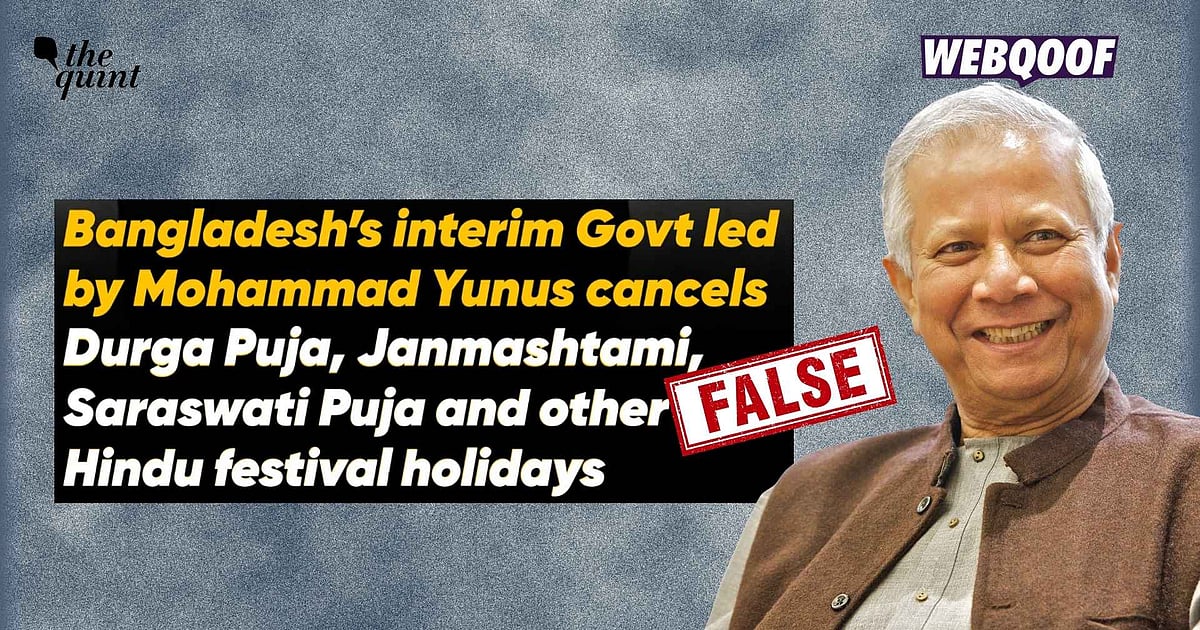
In recent days, social media platforms have been buzzing with claims that Bangladesh’s interim government, led by Nobel laureate Muhammad Yunus, has cancelled holidays for major Hindu festivals including Durga Puja, Janmashtami, and Saraswati Puja. An investigation reveals these allegations to be entirely false.
The misinformation has spread rapidly across platforms, with one account on X (formerly Twitter) named Kreately being a primary amplifier. The post in question had garnered nearly 170,000 views before fact-checkers intervened. Kreately, notably, has previously been identified as a source of misinformation on multiple occasions.
The timing of these false claims is particularly sensitive, coming just weeks after Bangladesh experienced a major political transition. In early August, longtime Prime Minister Sheikh Hasina resigned and fled the country following massive student-led protests. Muhammad Yunus, an economist and founder of Grameen Bank who won the Nobel Peace Prize in 2006, was subsequently appointed to lead the interim government.
Bangladesh, while predominantly Muslim (about 90% of the population), has a significant Hindu minority comprising approximately 8% of its 170 million citizens. Religious harmony and protection of minority rights have been ongoing concerns in the country’s political landscape.
The false information appears designed to stoke religious tensions during an already delicate transition period. By suggesting that Hindu festivals would no longer be recognized with national holidays, the posts implied a shift toward less inclusive policies under the new administration.
Officials from Bangladesh’s interim government have categorically denied making any changes to the country’s holiday calendar. The Ministry of Public Administration, which oversees the national holiday schedule, confirmed that all previously established religious holidays remain in place, including those for Hindu festivals.
Durga Puja, the most important annual Hindu festival in Bangladesh, traditionally receives government recognition with public holidays. Similarly, Janmashtami (celebrating the birth of Lord Krishna) and Saraswati Puja (honoring the goddess of knowledge) continue to be acknowledged in the official calendar.
The spread of such misinformation highlights the challenges facing Bangladesh’s transition. Since taking office, Yunus has emphasized national unity and pledged to protect the rights of all religious communities. His government has specifically stated its commitment to maintaining Bangladesh’s secular traditions.
Digital rights experts note that Bangladesh has seen a significant uptick in religious and politically motivated misinformation since the change in government. Social media platforms have become battlegrounds where competing narratives about the country’s future direction circulate with minimal oversight.
“During political transitions, we often see an increase in identity-based misinformation designed to create fear and division,” explained a digital rights researcher who monitors South Asian social media trends. “These false claims about Hindu holidays appear to follow that pattern.”
The interim government faces multiple challenges beyond combating misinformation. Yunus inherited an economy under pressure, with inflation running high and foreign exchange reserves depleted. He has pledged to hold free and fair elections within the coming months, though no specific date has been announced.
For Bangladesh’s Hindu community, which has faced periods of discrimination and violence in the past, false claims about their religious observances can create unnecessary anxiety. Community leaders have called for responsible communication, especially during this transitional period.
Media literacy advocates emphasize the importance of verifying information before sharing, particularly claims that appear designed to inflame communal tensions. They recommend consulting official government communications and established news outlets rather than relying on unverified social media accounts, especially those with a history of spreading misleading content.
As Bangladesh works to establish a new political equilibrium, accurate information will be crucial for maintaining social cohesion and ensuring a peaceful transition to its next elected government.
Fact Checker
Verify the accuracy of this article using The Disinformation Commission analysis and real-time sources.

14 Comments
It’s disappointing to see a platform like X being used to amplify misinformation. Social media companies need to do more to combat the spread of falsehoods.
Definitely. Platforms have a responsibility to proactively identify and remove content that is verifiably false or misleading.
This highlights the importance of robust fact-checking mechanisms, especially around sensitive topics like religious holidays and political transitions. Kudos to the investigators.
Absolutely. In an era of information overload, independent fact-checkers play a crucial role in separating truth from fiction.
This situation underscores the need for media literacy and critical thinking skills. Readers should always verify claims, especially those with potential to inflame tensions.
Well said. Developing the ability to discern fact from fiction is an important skill in today’s information landscape.
It’s concerning to see such blatant misinformation spread so rapidly. I hope the authorities continue to swiftly address and debunk these types of false claims.
Agreed. Proactive communication from the government and diligent reporting from journalists are key to countering the spread of misinformation.
This underscores the need for vigilance against misinformation, which can be weaponized for political agendas. Kudos to the fact-checkers for intervening.
Well said. In today’s digital age, it’s critical that we all strive to be discerning consumers of news and information.
Interesting to see the government clarify the misinformation around Hindu festival holidays. It’s important to verify facts, especially during sensitive political transitions.
Absolutely. Spreading false claims can sow unnecessary divisions, so fact-checking is crucial in such situations.
I’m glad the government was able to swiftly address and debunk these false claims. Maintaining religious harmony is important, especially during periods of political transition.
Agreed. Fact-based reporting and transparency from authorities can help counter the spread of misinformation and its divisive effects.