


Listen to the article
As the U.S. races to maintain its competitive edge in the global artificial intelligence industry, a new analysis from the Pew Research Center reveals a concerning trend: the rapid proliferation of data centers is placing unprecedented strain on the nation’s energy and water infrastructure. This expansion could lead to higher utility bills and significant environmental challenges for American consumers.
The Pew analysis of federal and international data indicates that U.S. data centers consumed 183 terawatt-hours of electricity in 2024, representing approximately 4% of total national electricity usage. To put this in perspective, this amount equals the entire annual electricity consumption of Pakistan, according to the International Energy Agency (IEA).
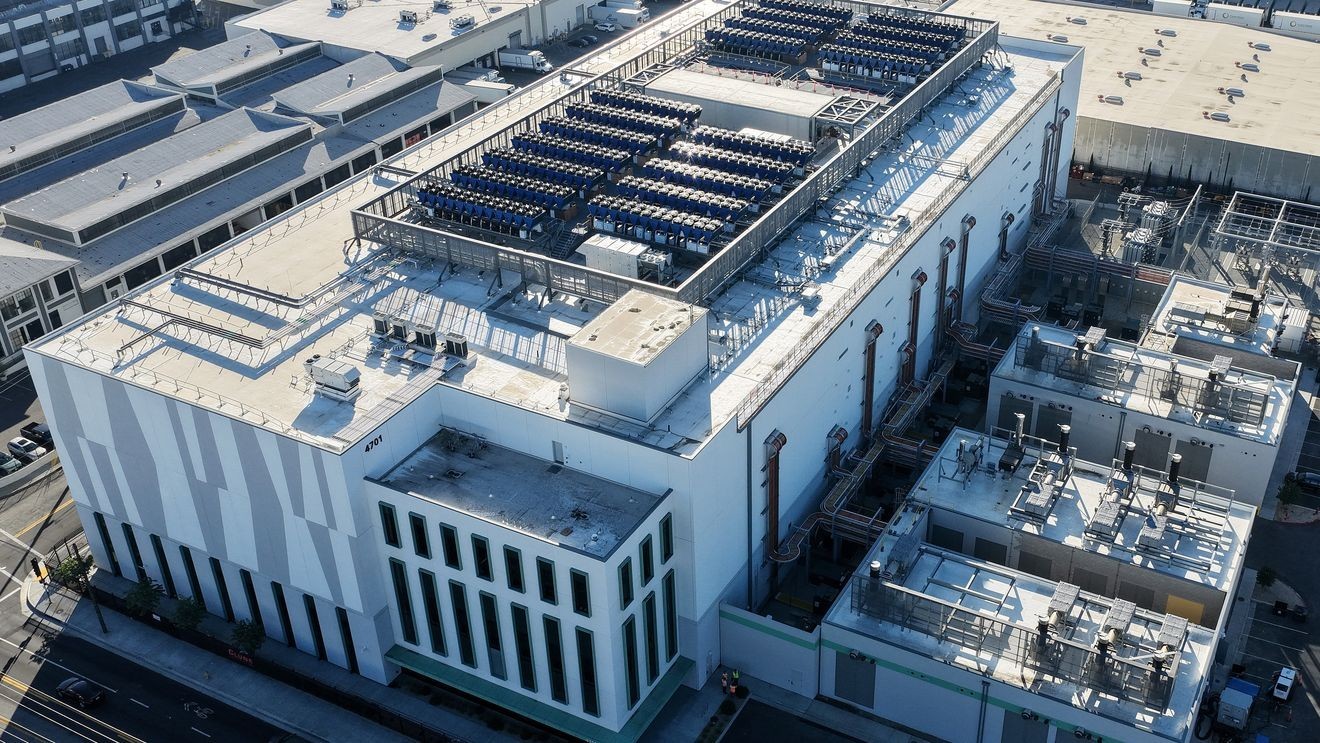
Hyperscale facilities specifically designed for AI model processing are the primary drivers of this surge in power demand. The Pew report and IEA data show that a typical AI-optimized hyperscale center requires electricity equivalent to 100,000 homes annually. Even more concerning, newer mega-facilities currently being developed could consume up to 20 times more electricity once operational.
The concentration of these facilities in specific regions is creating localized pressure points on power grids. In Northern Virginia, a major data center hub, these facilities now account for more than 25% of the state’s total electricity consumption, according to figures from the Electric Power Research Institute.
This escalating power demand is already translating into higher costs for consumers. The PJM electricity market, which serves states from Illinois to North Carolina, has added $9.3 billion in capacity costs for 2025-26 due to data center growth. This translates to approximately $18 per month in additional costs for households in western Maryland and $16 per month for Ohio residents.
Looking ahead, the financial impact could become more severe. Research from Carnegie Mellon University suggests U.S. electricity bills might increase by 8% by 2030 solely due to data centers and cryptocurrency mining operations. Regions with higher concentrations of these facilities could experience even steeper rate hikes.
While electricity consumption has received significant attention, water usage represents a less publicized but equally critical concern. Federal data cited by Pew shows that U.S. data centers used 17 billion gallons of water in 2023, primarily for cooling energy-intensive AI processing chips at hyperscale sites.
This water demand is projected to grow substantially. By 2028, hyperscale centers alone could consume between 16 and 33 billion gallons annually—roughly equivalent to the yearly water usage of a mid-sized American city. Although cooling requirements fluctuate seasonally and vary by facility design, researchers emphasize that AI growth is driving a clear upward trend in water consumption.
The American public remains divided on AI’s environmental impact. Pew’s August 2024 survey reveals that 25% of respondents believe AI will harm the environment, while 20% think it will be beneficial. Another 25% anticipate mixed effects, and a substantial 30% remain uncertain.
This public uncertainty mirrors the complex reality: the United States is experiencing a resource-intensive technological boom without a comprehensive long-term strategy to address its infrastructure and environmental implications.
As AI technology continues to advance and proliferate, policymakers, industry leaders, and utility providers face mounting pressure to develop sustainable solutions that balance technological innovation with resource conservation and consumer affordability. Without coordinated planning and investment in renewable energy and water conservation technologies, the environmental and economic costs of the AI revolution may fall disproportionately on American households.
Fact Checker
Verify the accuracy of this article using The Disinformation Commission analysis and real-time sources.

18 Comments
The exponential growth of AI data centers is a double-edged sword. While it showcases our technological prowess, the strain on resources is a serious concern that warrants immediate attention.
As the U.S. races to stay ahead in the global AI race, the Pew report serves as a wake-up call. The resource strain posed by these data centers is a critical issue that requires a comprehensive, sustainable response.
The data is eye-opening. AI-optimized hyperscale centers consuming the equivalent of 100,000 homes per facility is a sobering statistic. Sustainable solutions must be a top priority as this industry expands.
This is a complex issue with no easy answers. On one hand, we want to maintain America’s technological leadership in AI. On the other, the resource strain cannot be ignored. Finding the right balance will be critical.
Agreed. Policymakers will need to carefully weigh the economic and strategic benefits of AI against the very real environmental and infrastructure challenges.
The rise of AI data centers is a double-edged sword. While it showcases the rapid technological advancements, the strain on U.S. resources is concerning. Careful planning and sustainable energy solutions will be crucial to address this challenge.
Absolutely. Balancing the benefits of AI innovation with the infrastructure impacts is key. Proactive measures to improve energy efficiency and utilize renewable sources will be important.
The electricity consumption of these AI data centers is staggering, equivalent to a small country. The environmental impact and strain on the grid are valid worries that need to be addressed head-on.
Agreed. Policymakers and industry leaders must work together to find sustainable solutions that allow AI progress while minimizing the burden on the nation’s resources.
The revelation that newer mega-facilities could consume up to 20 times more electricity is quite alarming. Clearly, the industry’s energy appetite needs to be reined in through innovative solutions.
Absolutely. Optimizing energy efficiency, leveraging renewable sources, and rethinking data center design should be top priorities to address this challenge.
As the U.S. races to maintain its AI edge, the Pew report highlights an important reality check. The exponential growth of energy-hungry data centers poses significant challenges that require innovative and practical responses.
Precisely. A comprehensive, multi-pronged approach is needed – from improving energy efficiency, to leveraging renewable sources, to rethinking data center design and location.
The energy consumption figures are staggering. Equivalent to a small country’s annual usage – that’s a sobering statistic that highlights the immense strain these facilities are placing on the U.S. grid.
Agreed. Proactive measures to improve efficiency, leverage renewables, and rethink data center design will be essential to mitigate the environmental impact and ensure the long-term viability of this industry.
The figures are quite alarming – the electricity consumption of these AI data centers is equivalent to the entire annual usage of a country like Pakistan. Clearly, the industry’s environmental impact needs to be addressed urgently.
Absolutely. Policymakers and industry leaders must work together to find a balanced approach that allows for AI progress while minimizing the strain on the nation’s resources and infrastructure.
As the U.S. races to maintain its AI edge, the Pew report serves as a crucial reality check. The resource strain posed by these data centers is a complex challenge that requires innovative, sustainable solutions.