


Listen to the article
In the wake of a recent shooting involving two National Guardsmen allegedly by an Afghan refugee, renewed scrutiny has fallen on the U.S. government’s processes for vetting and resettling Afghan evacuees. The incident has prompted fresh questions about Operation Allies Welcome (OAW), the Biden administration’s emergency initiative launched after the Taliban seized control of Kabul in August 2021.
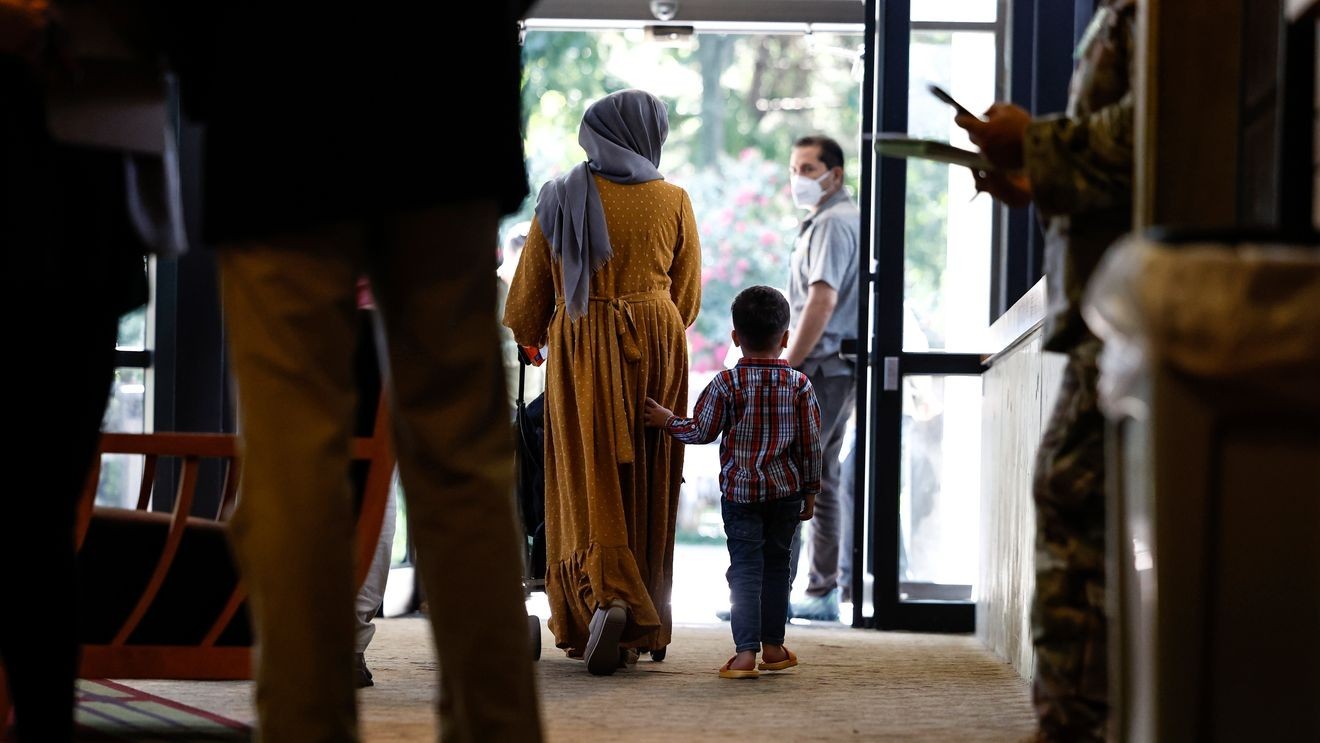
Operation Allies Welcome emerged as a comprehensive, multi-agency effort to evacuate and resettle Afghans who had worked alongside American forces or faced Taliban threats. The Department of Homeland Security (DHS) coordinated with the Department of Defense, State Department, Department of Health and Human Services, and FEMA to manage what would become one of America’s largest refugee resettlement operations in decades.
According to official figures, the United States ultimately assisted more than 190,000 Afghans through this initiative, marking it as one of the most significant humanitarian operations undertaken by the U.S. in half a century. The program was later incorporated into the broader Enduring Welcome initiative to provide continued support for Afghan allies.
The Biden administration implemented a three-tiered security screening system for Afghan evacuees, beginning with overseas vetting. DHS deployed approximately 400 personnel from various agencies, including Customs and Border Protection, Immigration and Customs Enforcement, and the Transportation Security Administration, to military bases across the Middle East and Europe.
This initial screening involved collecting biometric data, conducting facial recognition checks, cross-referencing names against terrorist watchlists, and validating identities through coordination with intelligence partners. The comprehensive approach aimed to identify potential security threats before evacuees boarded flights to the United States.
Upon arrival at major U.S. entry points such as Dulles International and Philadelphia International airports, Customs and Border Protection officers conducted additional immigration interviews and re-verified biometric data. This second layer of screening served as a critical checkpoint before evacuees were transported to U.S. military bases for temporary housing.
A State Department Office of Inspector General review confirmed that evacuees underwent a final round of screening at U.S. bases before being released into local communities. This multi-layered approach was designed to ensure thorough vetting despite the chaotic circumstances of the Afghanistan withdrawal.
The financial commitment to Operation Allies Welcome was substantial. In 2021, Congress appropriated approximately $6.3 billion specifically for Afghan resettlement efforts. This funding covered essential services including temporary housing on military installations, resettlement assistance, and continuing evacuation operations.
U.S. Citizenship and Immigration Services received an additional $193 million for processing applications and handling administrative functions related to OAW. Joint Base McGuire-Dix-Lakehurst, one of the primary resettlement sites, reported spending over $626 million by early 2022 to support Afghan evacuees housed there.
According to estimates cited from the Office of Inspector General by the Washington Times, the total government expenditure for evacuating and resettling Afghan evacuees has exceeded $14 billion since 2021. This figure encompasses both immediate evacuation costs and ongoing support services for those resettled in American communities.
While the recent shooting has raised concerns, security data indicates that the vast majority of Afghan evacuees have integrated into American society without incident. However, there have been isolated criminal cases involving individuals who entered through the program, including one notable case where an Afghan national pleaded guilty to plotting a terrorist attack targeting an Election Day in the United States.
These isolated incidents represent a minute fraction of the total Afghan population resettled in the United States but have nonetheless fueled debate about the effectiveness of the vetting process, particularly given the rushed nature of the evacuation following Kabul’s fall.
As investigations into the recent shooting continue, policymakers face renewed pressure to evaluate the balance between humanitarian obligations to Afghan allies and ensuring national security—a tension that has characterized America’s approach to refugee resettlement throughout its history.
Fact Checker
Verify the accuracy of this article using The Disinformation Commission analysis and real-time sources.

6 Comments
The Enduring Welcome initiative sounds like an important long-term program to support these Afghan refugees. I hope it provides them with the resources and stability they need to build new lives in the US.
Agreed, continuity of support is crucial for successful integration and resettlement of refugees.
The sheer scale of this operation is quite remarkable. I’m curious to learn more about the specific agencies and coordination involved in managing the evacuation and resettlement process.
Interesting to see the scale and complexity of the US government’s efforts to evacuate and resettle Afghan allies. Curious to learn more about the vetting processes and ongoing support programs for these refugees.
Resettling 190,000 Afghans is an immense logistical challenge. It’s good to see the US taking responsibility for those who assisted its forces, but the security concerns are understandable given the recent incident.
Vetting processes for refugees are always a sensitive issue, but it’s good to see the administration taking a comprehensive approach to address security concerns while still upholding humanitarian commitments.