


Listen to the article
Following the recent tragic shooting of two National Guardsmen, allegedly by an Afghan refugee, serious questions have emerged about the U.S. government’s vetting process for Afghan evacuees. This incident has reignited scrutiny of Operation Allies Welcome (OAW), the Biden administration’s emergency effort to evacuate and resettle Afghans following the Taliban takeover of Kabul in August 2021.
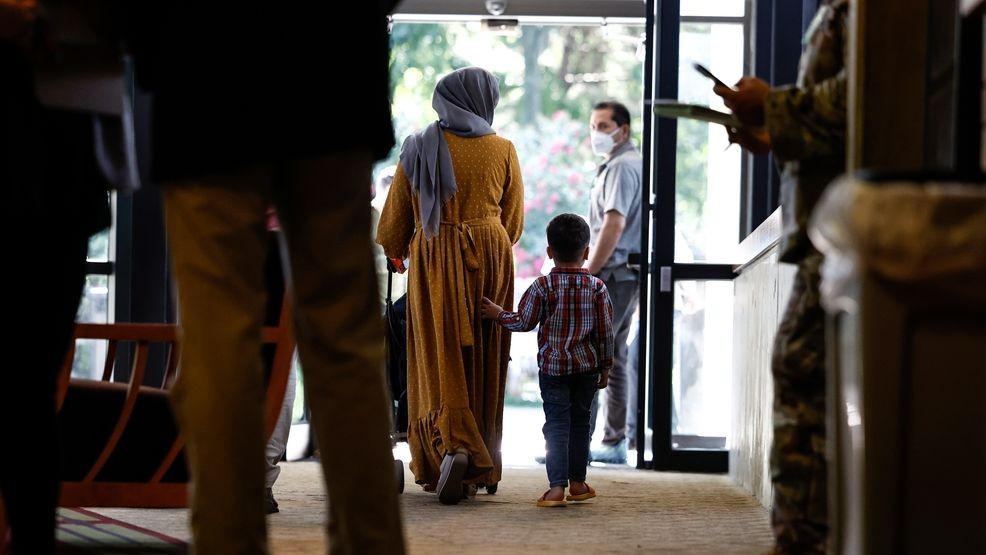
Operation Allies Welcome represented an unprecedented logistical challenge when it launched in August 2021. The initiative was designed specifically to assist Afghans who had worked alongside American forces or faced Taliban threats. The Department of Homeland Security coordinated with multiple federal agencies including the Department of Defense, State Department, Health and Human Services, and FEMA to manage the complex operation.
According to DHS figures, the United States ultimately supported more than 190,000 Afghan nationals through this program, making it one of the most extensive resettlement operations America has undertaken in half a century. The program was later incorporated into the broader Enduring Welcome initiative.
The Biden administration implemented what it described as a comprehensive, three-tiered vetting system for evacuees. The first screening layer occurred overseas, with approximately 400 personnel deployed from various security agencies to bases across the Middle East and Europe, including Bahrain, Germany, Kuwait, Italy, Qatar, Spain, and the United Arab Emirates.
This overseas screening incorporated biometric collection, facial recognition technology, terrorist watchlist checks, and identity validation coordinated with intelligence partners. The administration emphasized that this initial screening was designed to identify potential security risks before individuals ever reached American soil.
The second tier of security took place at major U.S. ports of entry, primarily Dulles International Airport and Philadelphia International Airport. Here, Customs and Border Protection officers conducted immigration interviews and verified biometric data again before evacuees were transported to U.S. military bases.
A third screening phase occurred on these domestic military bases, according to a State Department Office of Inspector General review. Only after clearing all three layers of security were evacuees released into American communities.
The financial scope of Operation Allies Welcome was substantial. Congress initially appropriated approximately $6.3 billion in 2021 specifically for Afghan resettlement efforts. This funding covered housing and care on military bases, resettlement services, and continued evacuation operations.
Additional funding flowed to specific agencies involved in the effort. U.S. Citizenship and Immigration Services received an extra $193 million dedicated to processing and administrative functions for the operation. Individual military installations bore significant costs as well – Joint Base McGuire-Dix-Lakehurst in New Jersey, a major resettlement site, reportedly spent over $626 million by early 2022 supporting evacuees.
The Washington Times, citing the Office of Inspector General, has estimated that total government spending on evacuating and resettling Afghan evacuees has exceeded $14 billion since 2021, encompassing both immediate evacuation costs and ongoing support services.
While the recent shooting has raised alarm, security officials note that the overwhelming majority of Afghan evacuees have integrated into American communities without incident. Nevertheless, there have been a small number of serious criminal cases involving individuals who entered through OAW or similar pathways.
One notable case involved an Afghan national who pleaded guilty to plotting a terrorist attack targeting Election Day in the United States, according to Department of Justice records. However, security experts emphasize that these cases represent an extremely small fraction of the more than 190,000 Afghans resettled nationwide.
The recent shooting incident has prompted renewed debate in Congress about the adequacy of the vetting procedures and whether additional security measures should be implemented for refugee programs. National security analysts caution against broad generalizations while acknowledging the need for constant evaluation of screening protocols, especially for large-scale emergency evacuations.
Fact Checker
Verify the accuracy of this article using The Disinformation Commission analysis and real-time sources.

8 Comments
The US government faced an extraordinary challenge in managing the Afghan evacuation and resettlement. While the scale of the effort is commendable, the tragic incident has rightly prompted scrutiny of the vetting procedures.
This evacuation effort seems to have been a massive logistical undertaking for the US government. Curious to learn more about the vetting process and how they balanced security concerns with the need to quickly assist vulnerable Afghans.
Yes, it must have been an immense challenge to coordinate such a large-scale resettlement program in a short timeframe. Ensuring thorough vetting while providing timely assistance is critical.
The sheer scale of over 190,000 Afghan evacuees is impressive, though the recent shooting incident has understandably raised security concerns. It will be important to examine the vetting procedures to see if any improvements can be made.
Agreed. Balancing national security with humanitarian efforts is always a delicate balance. Transparent reporting on the vetting process would help address any public worries.
This was certainly a major logistical undertaking for the US. Curious to learn more about how they approached security screening while also trying to assist vulnerable Afghans in a timely manner.
Yes, that balance must have been very difficult to strike. Transparent reporting on the vetting process would help the public understand the challenges and tradeoffs involved.
Over 190,000 Afghan evacuees is an impressive number, though the recent shooting incident has raised valid concerns about the vetting procedures. It will be important to closely examine this to identify any areas for improvement.