


Listen to the article
Public health experts are raising alarm over the implications of recent changes to vaccine policies, warning that distrust in medical institutions could have severe consequences for vulnerable communities, particularly on Chicago’s South Side.
The controversy stems from what observers describe as a reversal by the Centers for Disease Control and Prevention (CDC) of its longstanding position on vaccines and autism. This shift is being characterized by medical professionals as part of a troubling pattern that threatens public health infrastructure across the country.
Data shows that measles vaccination rates in Chicago Public Schools currently stand at 93%, falling short of the threshold needed for effective herd immunity. The impact is particularly pronounced in South Side schools serving children from marginalized communities, according to healthcare providers familiar with the situation.
Medical experts point to actions by the current administration, including the dismissal of vaccine specialists, politicization of childhood immunization schedules, and undermining of public health agencies, as contributing factors to these declining vaccination rates.
“While there has been intense focus on the financial implications and barriers to vaccine access, less attention has been paid to the harmful psychological impacts of misinformation,” said Dr. Julia Rosebush, associate professor of pediatrics in the infectious diseases section at University of Chicago Medicine Comer Children’s Hospital.
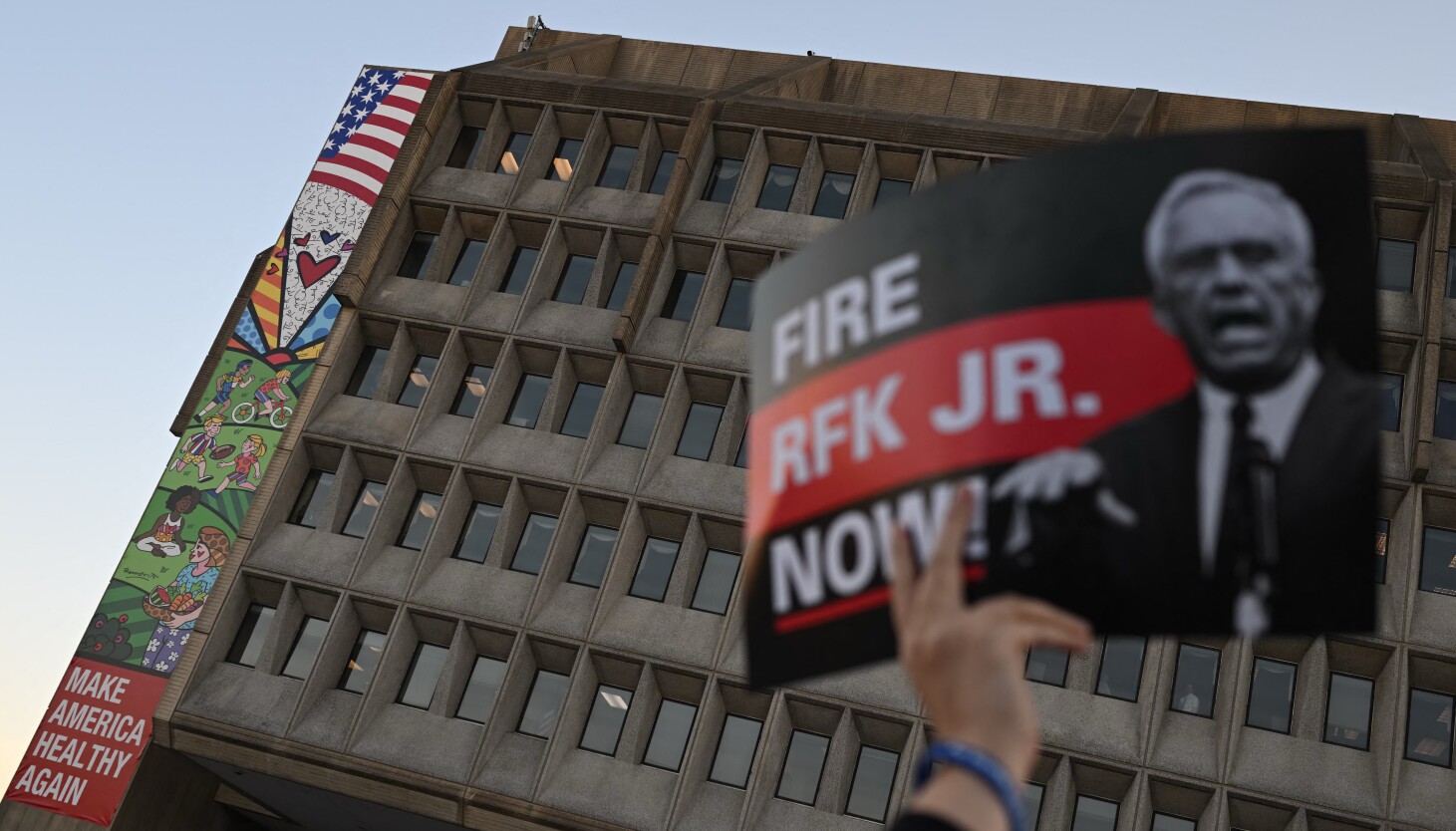
Health and Human Services Secretary Robert F. Kennedy Jr. has been specifically identified by medical professionals as a figure whose statements have fueled vaccine hesitancy. By questioning established vaccination protocols and suggesting links between vaccines and autism—connections that have been repeatedly disproven by scientific research—critics argue these actions exploit parental fears, particularly in communities with historical trauma related to medical institutions.
National surveys indicate parental confidence in federal public health agencies is already fragile, creating an environment where misinformation can spread rapidly. What was once considered routine pediatric care has transformed into a source of anxiety and contention for both caregivers and healthcare providers.
The impact of vaccine hesitancy varies significantly across socioeconomic lines. In affluent neighborhoods, families may have resources to seek alternative vaccination schedules or second opinions. However, in lower-income communities, particularly on Chicago’s South Side, families often face significant barriers to healthcare access, including transportation difficulties and fewer trusted providers.
Health experts warn that vaccine-preventable diseases can cause severe illness and may result in significant complications or death when medical care is delayed or inaccessible. The erosion of trust in evidence-based medicine threatens to undo progress made in building relationships between healthcare systems and historically marginalized communities.
“The loss of trust will undo much of the work health systems have done to rebuild trust among historically marginalized communities, increasing preexisting healthcare disparities,” noted Chuka Onuh, a medical student at the University of Chicago Pritzker School of Medicine.
Medical professionals are calling for a coordinated response to this growing crisis. Recommendations include direct engagement with caregivers’ concerns, expanded educational programming, and collaboration between public health departments, community health workers, and schools to address vaccination hesitancy.
Healthcare providers emphasize that the behaviors children witness today will influence their future health decisions and impact generational health outcomes. The situation in Chicago highlights broader national concerns about public trust in science and medicine.
“Chicago’s challenge isn’t just decreasing vaccination rates but the deliberate undermining of trust in science, medicine and the healthcare system,” said Dr. Rosebush. “On our South Side, where access is already fragile, further erosion of trust in the medical establishment could be disastrous.”
Despite these challenges, healthcare providers remain cautiously optimistic that through honest dialogue and collaborative efforts between clinicians, health systems, and communities, trust can be rebuilt to protect vulnerable populations and strengthen public health for future generations.
Fact Checker
Verify the accuracy of this article using The Disinformation Commission analysis and real-time sources.

29 Comments
Interesting update on Vaccine Misinformation Threatens Health of Chicago Youth, Particularly on South Side. Curious how the grades will trend next quarter.
Good point. Watching costs and grades closely.
I like the balance sheet here—less leverage than peers.
Interesting update on Vaccine Misinformation Threatens Health of Chicago Youth, Particularly on South Side. Curious how the grades will trend next quarter.
Nice to see insider buying—usually a good signal in this space.
Good point. Watching costs and grades closely.
Good point. Watching costs and grades closely.
Interesting update on Vaccine Misinformation Threatens Health of Chicago Youth, Particularly on South Side. Curious how the grades will trend next quarter.
Good point. Watching costs and grades closely.
Good point. Watching costs and grades closely.
If AISC keeps dropping, this becomes investable for me.
Good point. Watching costs and grades closely.
If AISC keeps dropping, this becomes investable for me.
Good point. Watching costs and grades closely.
Good point. Watching costs and grades closely.
If AISC keeps dropping, this becomes investable for me.
Good point. Watching costs and grades closely.
Good point. Watching costs and grades closely.
Exploration results look promising, but permitting will be the key risk.
Good point. Watching costs and grades closely.
Uranium names keep pushing higher—supply still tight into 2026.
Good point. Watching costs and grades closely.
Good point. Watching costs and grades closely.
The cost guidance is better than expected. If they deliver, the stock could rerate.
Good point. Watching costs and grades closely.
Exploration results look promising, but permitting will be the key risk.
Good point. Watching costs and grades closely.
Nice to see insider buying—usually a good signal in this space.
Interesting update on Vaccine Misinformation Threatens Health of Chicago Youth, Particularly on South Side. Curious how the grades will trend next quarter.