


Listen to the article
In a stunning pre-dawn operation on January 3, 2026, U.S. forces captured Venezuelan President Nicolás Maduro and his wife, Cilia Flores, in a swift raid on Caracas. President Donald Trump’s live announcement from the White House sent shockwaves through global politics and ignited an immediate firestorm on social media platforms.
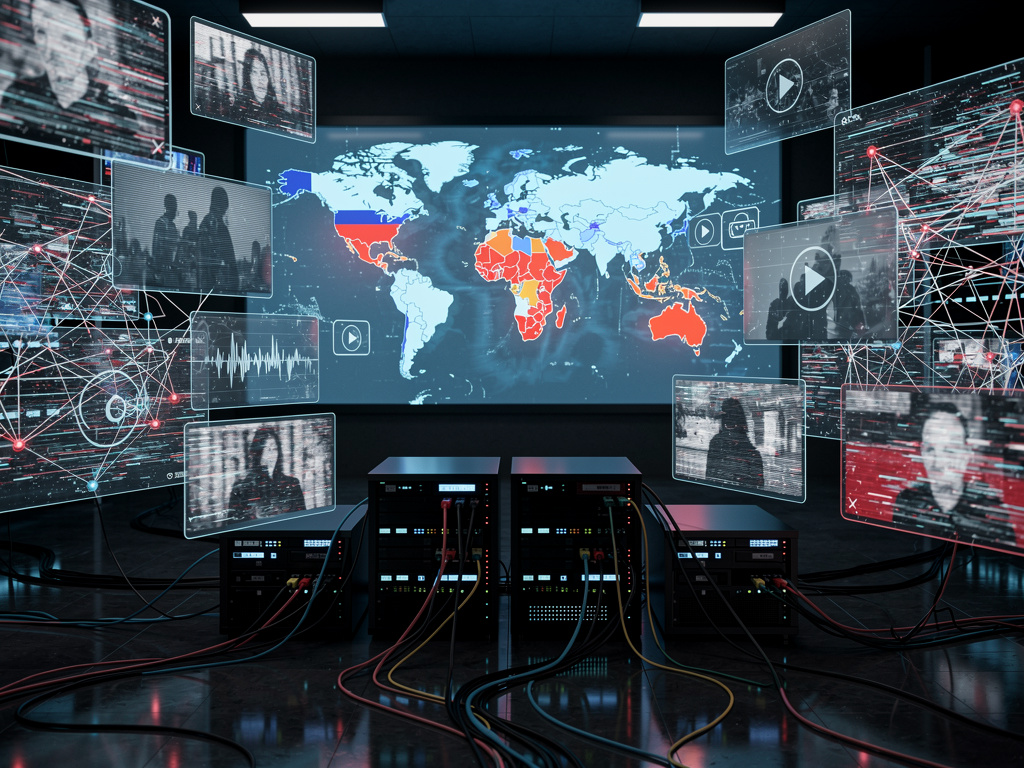
Within minutes of the announcement, a calculated wave of disinformation engulfed platforms like X, TikTok, and Instagram. Old videos from unrelated conflicts were quickly repurposed to depict alleged U.S. airstrikes on Venezuelan soil, while AI-generated images showing DEA agents storming Maduro’s residence began circulating widely.
“The speed and scale of false information spreading online highlights a growing vulnerability in our digital ecosystem,” said Dr. Elena Martinez, a disinformation researcher at Columbia University. “Tech platforms that have scaled back moderation efforts in recent years simply couldn’t contain the flood of falsehoods.”
The operation stemmed from long-standing U.S. indictments against Maduro for narco-terrorism and corruption, charges dating back to 2020. Following his capture, Maduro was transported via a U.S. warship to New York for arraignment, marking a historic escalation in American foreign policy reminiscent of the 1989 operation against Panama’s Manuel Noriega.
Industry analysts point to three key factors fueling the digital chaos. First, the retreat of content moderation by major tech companies created fertile ground for disinformation. Platforms had significantly reduced teams dedicated to fact-checking and algorithmic controls, citing free speech concerns and cost-cutting measures.
Second, widely available AI tools have democratized the creation of convincing fakes. Open-source generative models allowed users to produce realistic images of Maduro in handcuffs or U.S. troops clashing with Venezuelan forces. The European Broadcasting Union’s Spotlight initiative later dissected several viral images, revealing AI artifacts that confirmed their artificial origin.
Third, geopolitical motivations amplified the noise. Pro-Maduro accounts, some linked to state actors, pushed narratives framing the capture as imperialistic overreach, while opposition voices celebrated with exaggerated claims of liberation.
“What we’re seeing is information warfare in real-time,” said Carlos Ramirez, a former intelligence analyst now with the Atlantic Council’s Digital Forensic Research Lab. “The battle for narrative control began even before official details of the operation were fully released.”
The incident echoes past events where disinformation surged during crises. During Venezuela’s contested 2024 presidential election, Maduro’s regime banned platforms like X and WhatsApp while arresting dissenters. These tactics of authoritarian control now fuel online skepticism about the capture’s legitimacy.
Platform economics have also played a role in the crisis. Social media algorithms prioritize engagement over accuracy, rewarding sensational content regardless of its veracity. On TikTok and Instagram, short-form videos of purported arrests gained traction through viral challenges and duets, often stripped of crucial context.
Coordinated networks of accounts, possibly backed by foreign entities, further amplified false narratives using tactics like hashtag hijacking. Industry data suggests that up to 30% of initial posts about the capture contained verifiable falsehoods—a figure consistent with patterns seen in other high-stakes geopolitical events.
The fallout extends beyond social media into real-world diplomacy. Venezuela’s interim government demanded Maduro’s return, while Trump boldly stated the U.S. would “temporarily run” Venezuela—a comment that ignited further international concern and online debate.
“This combination of actual diplomatic tensions and manufactured outrage creates a perfect storm for misinformation,” said Maria Gonzalez, professor of international relations at Georgetown University. “Even seasoned analysts struggle to separate fact from fiction in this environment.”
Some limited technological countermeasures have emerged. X’s community notes feature, though imperfect, helped debunk several viral videos by crowdsourcing corrections. However, the operation’s middle-of-the-night timing caught many fact-checking organizations off guard, allowing false information to gain significant traction before being addressed.
Experts advocate for hybrid approaches combining AI moderation with human oversight. The Global Fact-Checking Network has attempted to verify claims in real-time, but scaling such efforts globally remains challenging.
As legal proceedings against Maduro begin in New York, the digital battle for narrative control continues. Venezuelan expatriate communities in Miami and elsewhere have become both consumers and amplifiers of information, making them targets for both legitimate news and manipulated content.
“What happened in the aftermath of Maduro’s capture represents a critical warning,” said Jonathan Torres, a technology policy advisor for the Organization of American States. “Without systemic improvements in our information ecosystem, future geopolitical events will face similar or worse disinformation challenges.”
The incident has renewed calls for international cooperation on digital threats, with organizations including the United Nations highlighting how disinformation can exacerbate conflicts and undermine diplomatic efforts.
As Venezuela faces an uncertain political future, the Maduro capture serves as a case study in the intersection of military operations, digital platforms, and information integrity—illustrating how in modern conflicts, the battles online can be just as consequential as those on the ground.
Fact Checker
Verify the accuracy of this article using The Disinformation Commission analysis and real-time sources.

12 Comments
This is a complex situation with major global implications. I’ll be following the developments closely, especially the impact on the mining and energy sectors.
The speed of the disinformation campaign is really concerning. Social media platforms need to do more to combat the spread of false information, especially around major geopolitical events.
I agree, the spread of misinformation on social media can have serious consequences. Rigorous fact-checking and content moderation are critical.
I wonder if the US capture of Maduro will lead to more political and economic stability in Venezuela, or if it will just trigger further unrest and instability.
That’s a good question. A lot will depend on how the transition of power is handled and whether the opposition can establish a functioning government.
Interesting that the US was able to capture Maduro after all these years. I wonder how this will impact the political and economic situation in Venezuela going forward.
Yes, it’s a significant development. The US has been pushing for Maduro’s ouster for a while now.
The scale of the disinformation campaign is really concerning. It just goes to show how vulnerable we are to the spread of false information, even around critical world events.
It’s alarming to see how quickly false narratives can spread on social media, even around major geopolitical events. The platforms really need to shore up their content moderation efforts.
This is bound to have major ramifications for the global mining and energy sectors, given Venezuela’s significant oil and mineral resources. I’ll be watching this story closely.
Good point. Venezuela’s oil and minerals are important globally, so Maduro’s capture could trigger major changes in those industries.
As a longtime investor in Latin American mining and energy stocks, I’m curious to see how this plays out. The political uncertainty could create both risks and opportunities.