


Listen to the article
Turkic States Join Forces to Combat Disinformation in Landmark Ankara Forum
A significant regional initiative addressing the growing threat of disinformation has commenced in Ankara as representatives from across the Turkic world gather for a two-day forum focused on information security challenges.
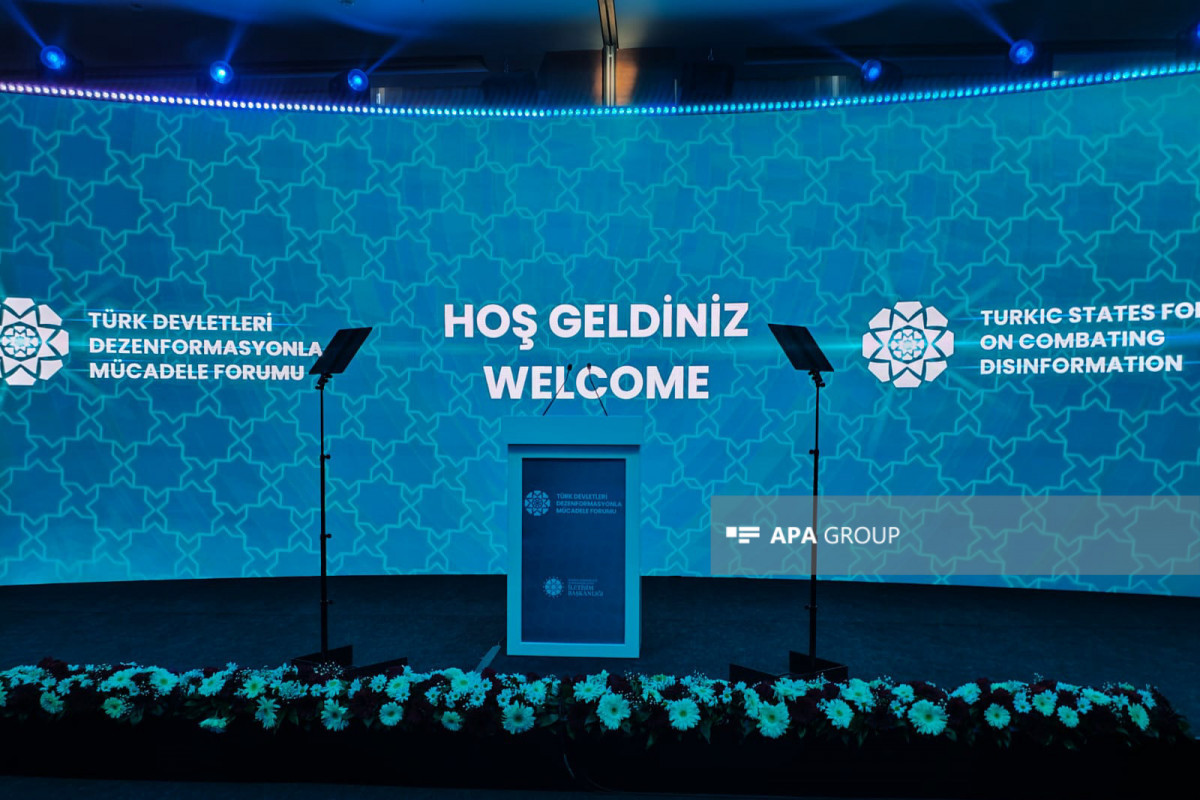
The Turkic States Forum on Combating Disinformation, organized by the Communication Directorate of Türkiye’s Presidential Administration, brings together government officials, media professionals, and subject-matter experts from eight countries to develop coordinated strategies against false information campaigns.
Delegates from Azerbaijan, Kazakhstan, Kyrgyzstan, Türkiye, Uzbekistan, Hungary, Turkmenistan, and the Turkish Republic of Northern Cyprus are participating in what observers describe as the most comprehensive regional effort to date addressing information threats in the post-Soviet Turkic sphere.
The gathering comes amid increasing global concern about the impact of disinformation on national security, democratic processes, and regional stability—issues that have particular resonance in a region that has experienced significant political transitions and conflicts in recent years.
“The primary goal is creating an effective communication environment among Turkic states while strengthening institutional cooperation in confronting disinformation challenges,” explained a senior Turkish official familiar with the forum’s objectives. “In an era when information can be weaponized, collective approaches are essential.”
Azerbaijan has sent a high-profile delegation, including Ahmad Ismayilov, Executive Director of the country’s Media Development Agency, and several key officials from the Presidential Administration’s communication departments. The delegation also includes representatives from Azerbaijan’s Center for Analysis of International Relations and the APA News Agency, underscoring the multi-dimensional approach to tackling disinformation.
The forum’s agenda tackles several critical areas: assessing disinformation’s impact on national security frameworks, analyzing how false narratives shape public opinion, and exploring mechanisms for coordinated responses across national boundaries. Sessions are examining both technological solutions and policy approaches to information security challenges.
This initiative aligns with broader objectives outlined in the Organisation of Turkic States’ Action Plan for Information for 2025, which emphasizes knowledge sharing and capacity building across the region. The action plan identifies media literacy, responsible digital technology use, and modernizing journalism practices as priority areas.
Regional media analysts note that the Turkic states face unique information security challenges, including external influence operations and the need to develop independent fact-checking capabilities while preserving freedom of expression. The region’s complex geopolitical position—with historical ties to Russia, growing connections with Europe, and increasing Chinese influence—makes information integrity particularly significant.
“This forum represents an important recognition that disinformation doesn’t respect national boundaries,” said a regional security expert who requested anonymity. “The Turkic states are increasingly aware that collective information security is as important as traditional security cooperation.”
The gathering also reflects the growing institutional maturity of the Organisation of Turkic States (formerly the Turkic Council), which has evolved from cultural cooperation to addressing contemporary challenges facing member states.
Participants are expected to discuss establishing permanent mechanisms for information sharing about disinformation threats and potentially creating a regional early warning system for detecting and responding to coordinated false information campaigns.
As the forum concludes tomorrow, participants are anticipated to issue a joint declaration outlining concrete steps for ongoing cooperation and possibly announcing new institutional frameworks for addressing information security across the Turkic world.
The initiative comes at a time when many countries worldwide are grappling with defining appropriate responses to disinformation while balancing security concerns with commitments to free expression and press freedom—a delicate balance that will likely feature prominently in the discussions.
Fact Checker
Verify the accuracy of this article using The Disinformation Commission analysis and real-time sources.
