


Listen to the article
Turkic States Forge Alliance to Combat Rising Disinformation Threats
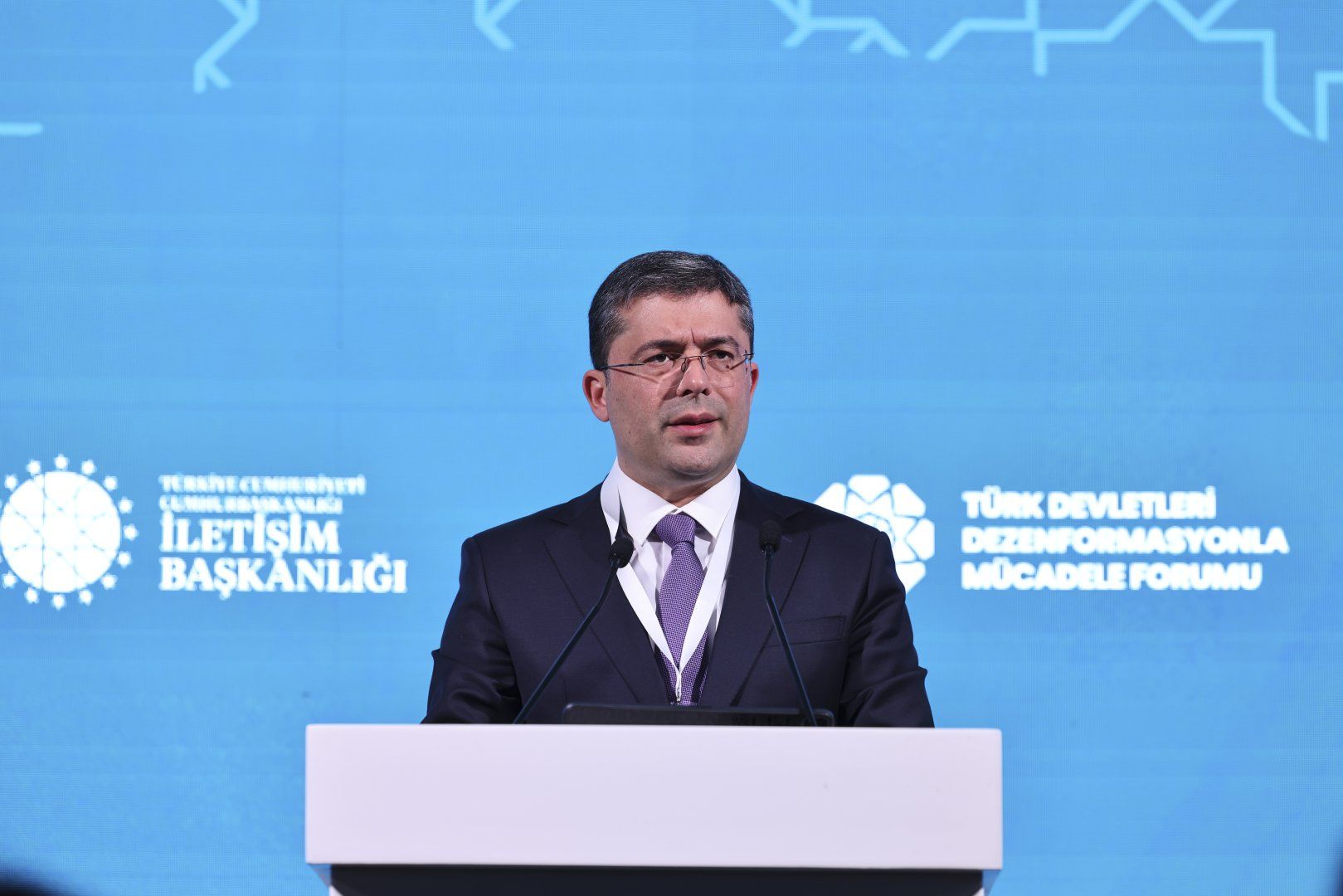
Cooperation among Turkic states is crucial for effectively combating sophisticated disinformation campaigns, according to Ahmad Ismayilov, Executive Director of Azerbaijan’s Media Development Agency, who addressed officials at a high-level forum in Ankara this week.
Speaking at the Forum on Combating Disinformation among Turkic States, Ismayilov highlighted the evolving nature of information warfare, noting that traditional monitoring approaches have become inadequate in the face of increasingly complex threats.
“Today, we increasingly understand that simple observation of social networks is insufficient. There is a growing need for deeper analysis and more accurate identification of information,” Ismayilov told the gathering of media experts and government representatives.
The forum, which aligns with the Organization of Turkic States (OTS) Action Plan for 2025, brought together delegates from member states to address growing concerns about coordinated disinformation campaigns targeting the region. Azerbaijan sent a substantial delegation, including officials from the Media Development Agency, Presidential Administration, analytical centers, and major news organizations.
Ismayilov emphasized how information threats have evolved from isolated political incidents into systematic, multi-level operations that directly target state interests. The rapid advancement of digital platforms and media technologies has transformed disinformation from an occasional concern into a continuous challenge for Turkic nations.
“What was previously local and episodic has evolved into a systematic, multi-level phenomenon,” he explained, pointing to the growing sophistication of fake content and the expanding reach of disinformation campaigns.
The Azerbaijani media official noted that disinformation targeting his country often adopts neutral or humanitarian disguises, particularly during periods when Azerbaijan implements strategic national projects. These campaigns aim to sow uncertainty and distrust among citizens while applying subtle pressure on institutions.
Azerbaijan has repeatedly warned about the weaponization of global disinformation tools, including fake news, deepfakes, algorithmic manipulation, and artificial intelligence misuse. These methods have increasingly become instruments of external pressure and interference in domestic affairs.
“These challenges require not only national responses but also coordinated, collective defense mechanisms,” Ismayilov stated, emphasizing that public awareness and inter-state trust must serve as foundations for effective countermeasures.
The Azerbaijan-Turkey relationship was highlighted as a model for cooperation in this domain, with joint initiatives already showing promising results in strengthening information security. Ismayilov praised Turkey’s recent efforts in this field as strategically significant, noting that consultations, expert engagement, technological solutions, and rapid response mechanisms have marked important progress.
Forum participants will discuss the impact of disinformation on national security, public opinion, and regional stability throughout the event. They will also work on developing practical mechanisms for joint action in the modern information environment.
The gathering reflects growing recognition among Turkic states that media literacy, information security, and ethical journalism standards must be treated as critical national security priorities. Ismayilov emphasized that education, analytical capabilities, and critical assessment skills should form an integral part of each country’s defense strategy.
“The fight against disinformation must be based on continuous dialogue, joint research, and experience-sharing, rather than fragmented efforts,” he concluded, calling for this direction to become a key priority on the agenda of joint platforms and coordination mechanisms within the OTS.
The forum represents a significant step in regional cooperation as Turkic states confront the challenging reality of a digital landscape increasingly dominated by sophisticated disinformation operations targeting their sovereignty, development, and strategic interests.
Fact Checker
Verify the accuracy of this article using The Disinformation Commission analysis and real-time sources.

9 Comments
It’s encouraging to see the Turkic states taking concerted action to address disinformation challenges. Building regional resilience against propaganda campaigns is an important priority.
Indeed. Fostering greater cooperation and information-sharing between member states will strengthen their collective defense against malicious actors.
Combating disinformation is a vital issue for the Turkic states. Collaboration and information-sharing are crucial to counter sophisticated propaganda campaigns that can undermine regional stability.
Agreed. A coordinated, multilateral approach will be more effective than individual efforts.
The rise of complex information warfare tactics highlights the need for advanced monitoring and analysis capabilities. Traditional social media monitoring may no longer be sufficient.
Absolutely. Investing in more sophisticated disinformation detection tools and techniques will be key for these countries.
The Turkic states face a complex and evolving threat landscape when it comes to information warfare. Developing robust, multilateral strategies will be crucial going forward.
Agreed. Addressing disinformation requires a comprehensive, long-term approach that adapts to new challenges and technologies.
Disinformation can have far-reaching consequences, undermining public trust and social cohesion. This forum represents a positive step towards a more coordinated regional response.