


Listen to the article
Turkish shopkeeper faces investigation for social media critique of economic conditions as government continues digital crackdown
Turkish authorities have launched a criminal investigation against a small business owner who posted a video criticizing the country’s difficult economic climate, marking the latest application of Turkey’s controversial “disinformation law” that has drawn widespread condemnation from human rights organizations.
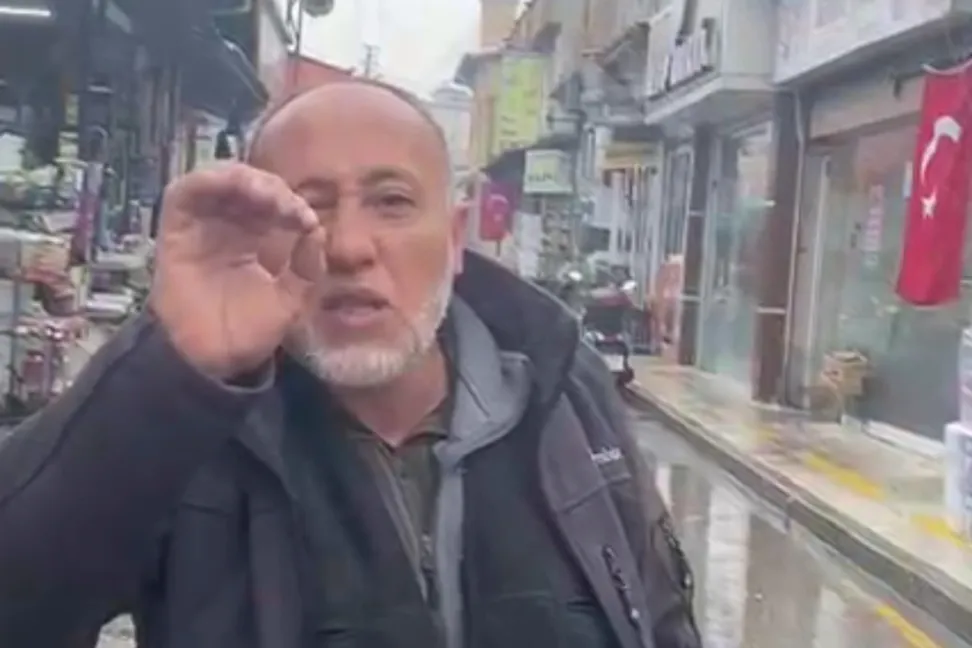
Murat Kırçı, a shopkeeper from the central province of Çorum, now finds himself under scrutiny from prosecutors after sharing a video on social media that highlighted the economic struggles of local merchants, according to reporting by Bold Medya news website.
The investigation falls under Article 217/A of the Turkish Penal Code, a provision that criminalizes sharing information deemed “misleading” or “harmful to public order.” This law, enacted in 2022, carries potential prison sentences of up to three years for those convicted.
In his video, which was directly addressed to Finance Minister Mehmet Şimşek, Kırçı described a dire situation for small businesses in his area, stating that many shopkeepers had not made any sales while still facing tax inspections. Following the video’s circulation, Kırçı was summoned by prosecutors for questioning.
Responding to the investigation on social media, Kırçı defended his statements, explaining that he was simply reporting the economic conditions he had personally observed among fellow merchants in his community. He indicated he would await the results of the investigation before making further comments.
Turkey’s economy has faced significant challenges in recent years, with persistently high inflation rates that have officially hovered around 65 percent, though independent economists suggest the actual figure could be substantially higher. Small businesses have been particularly hard hit by declining consumer purchasing power and rising operational costs.
The case highlights the increasingly restrictive environment for free expression in Turkey, particularly regarding economic matters. Since 2022, when the government introduced what critics call the “censorship law,” authorities have significantly expanded their legal authority to control online discourse.
The legislation was ostensibly introduced to combat misinformation and protect national security, but human rights watchdogs and international press freedom organizations have consistently criticized it as a thinly veiled tool for suppressing legitimate criticism and opposition voices.
Digital rights experts note that Turkey’s monitoring of online speech has intensified dramatically over the past decade. Government data indicates thousands of social media users face investigation annually for posts deemed critical of state institutions or government policies.
The European Court of Human Rights has repeatedly ruled against Turkey in cases involving freedom of expression, finding that the country’s broad application of criminal laws against critics violates international human rights standards.
Business associations representing small merchants have increasingly voiced concerns about both economic conditions and the shrinking space for public dialogue. Many fear that cases like Kırçı’s could further discourage citizens from speaking openly about economic hardships, creating an atmosphere of self-censorship.
Meanwhile, international financial institutions continue to express concern about Turkey’s economic trajectory and governance. The International Monetary Fund and World Bank have urged greater transparency in economic reporting and policy implementation, while foreign investors remain cautious about the country’s regulatory environment.
As Kırçı’s case proceeds through the legal system, it stands as a prominent example of the tension between Turkey’s efforts to control public discourse and the growing economic pressures facing ordinary citizens trying to navigate challenging times.
Fact Checker
Verify the accuracy of this article using The Disinformation Commission analysis and real-time sources.

10 Comments
While it’s understandable for governments to want to combat the spread of genuine disinformation, this case in Turkey seems to be an overreach that infringes on freedom of expression. I hope the authorities reconsider their approach.
Shopkeepers and small business owners are often on the frontlines of economic challenges. Their voices should be heard, not silenced through the use of heavy-handed laws.
This is a concerning development that underscores the growing crackdown on free speech and critical discourse in Turkey. Small business owners should be able to voice their economic concerns without fear of reprisal.
The government’s use of the ‘disinformation law’ to target this shopkeeper’s social media post is a worrying sign of the shrinking space for public debate in the country.
It’s troubling to see Turkey leveraging its ‘disinformation law’ to investigate and potentially punish a citizen for sharing their economic hardships online. This type of censorship stifles necessary public dialogue.
I hope the authorities reconsider this investigation and allow Turkish citizens to freely express their views on the country’s economic challenges without fear of legal repercussions.
This case highlights the broader issue of how governments can abuse ‘anti-disinformation’ laws to suppress legitimate criticism. Shopkeepers should be able to voice their struggles without facing criminal probes.
I’m curious to see how this situation evolves and whether the government will back down from pursuing charges against the shopkeeper. Transparency and accountability are crucial, especially during difficult economic times.
This is a troubling development that raises concerns about the state of press freedom and civil liberties in Turkey. I hope the government will reconsider its stance and allow citizens to freely discuss economic issues without fear of reprisal.
It’s concerning to see the ‘disinformation law’ being used in this manner, as it could have a chilling effect on public discourse and transparency around the country’s economic challenges.