


Listen to the article
In the wake of a tragic shooting that left one National Guard soldier dead and another critically wounded, the Trump administration has come under scrutiny for spreading unverified claims about the alleged gunman’s background and motives.
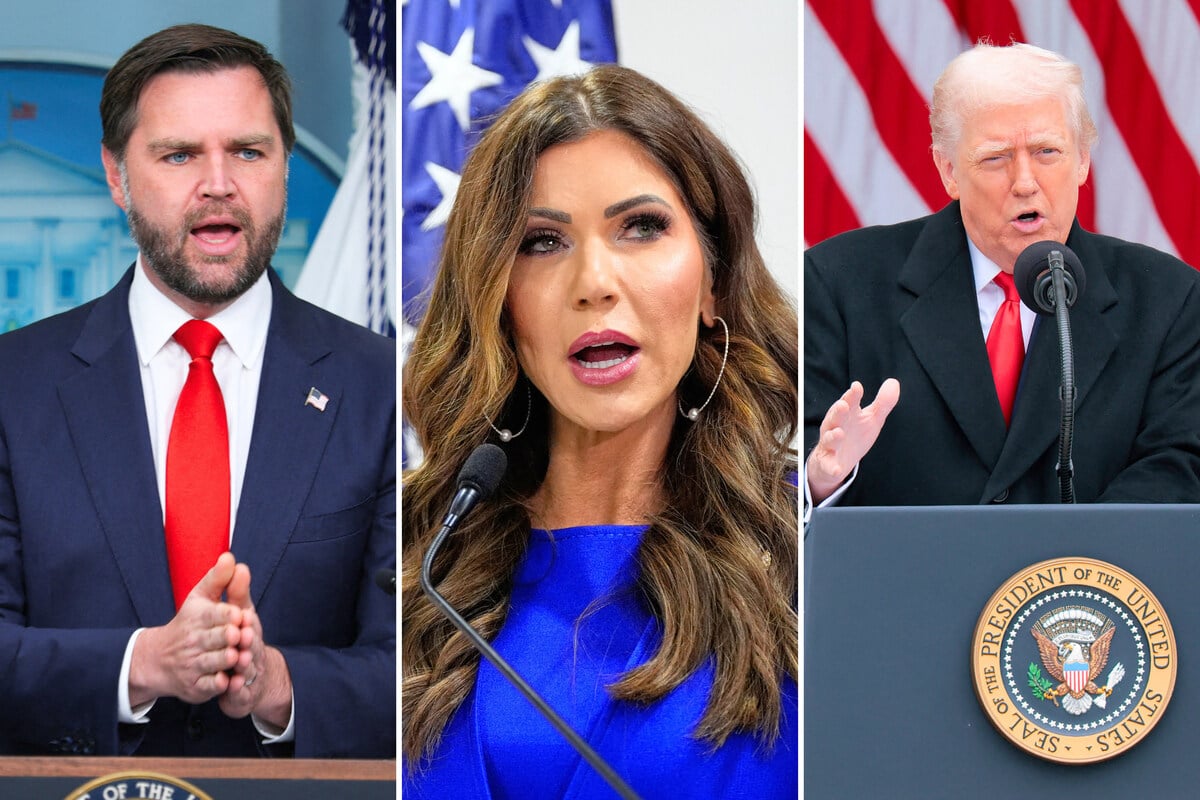
On Sunday, Homeland Security Secretary Kristi Noem told NBC News that Rahmanullah Lakanwal, the Afghan national accused of shooting two National Guard troops near the White House last Wednesday, had been “radicalized since he’s been here in this country.” Despite making this definitive-sounding assertion, Noem acknowledged that her department has yet to establish a clear motive for the attack.
“We do believe it was through connections in his home community and state, and we’re going to continue to talk to those who interacted with him, who were his family members,” Noem stated during the interview.
Twenty-year-old Sarah Beckstrom was killed in the shooting, while 24-year-old Andrew Wolfe remains hospitalized with life-threatening injuries. Both were on duty near the White House perimeter when Lakanwal allegedly opened fire at close range.
The Trump administration has moved swiftly to implement immigration restrictions in response, targeting Afghan nationals for deportation and indefinitely suspending all Afghan immigration applications. These policy changes have been accompanied by a concerted effort to lay blame for the incident on former President Joe Biden’s administration.
Noem explicitly rejected any suggestion that the Trump administration had played a role in vetting or admitting Lakanwal, claiming the process “all happened” under Biden. She doubled down on this narrative in a post on X, asserting that Lakanwal was “one of the many unvetted, mass paroled into the United States” under Operation Allies Welcome on September 8, 2021.
However, reporting from multiple news outlets paints a more complex picture of Lakanwal’s immigration status. According to The Washington Post, Lakanwal had worked with the CIA in Afghanistan, a position that required vetting. When he fled Afghanistan, he entered the US under Operation Allies Welcome, which involved additional screening by the FBI, CIA, and National Counterterrorism Center.
ABC News has reported that while Lakanwal arrived during Biden’s presidency, he did not apply for asylum until last year. His asylum application was approved in April 2024, during Trump’s current term.
Vice President JD Vance has used the tragedy to defend his past criticism of Biden’s immigration policies. “I remember back in 2021 criticizing the Biden policy of opening the floodgate to unvetted Afghan refugees,” Vance wrote on social media. “Friends sent me messages calling me a racist. It was a clarifying moment. They shouldn’t have been in our country.”
The administration’s response has raised concerns about the politicization of the tragedy and the accuracy of information being shared with the American public. Security experts note that comprehensive vetting processes were in place for Afghan allies during the US withdrawal from Afghanistan, though they acknowledge that no screening system is infallible.
Law enforcement officials continue to investigate Lakanwal’s background and possible motives, with federal agencies working to determine if there were any warning signs or security lapses that might have prevented the attack.
Meanwhile, military communities across the country are mourning the loss of Beckstrom, with fellow service members describing her as dedicated and professional. The incident has renewed debates about the deployment of National Guard troops for domestic security operations and the adequacy of protective measures for military personnel serving in non-combat roles.
As the investigation continues, questions remain about how the administration’s immigration policies will evolve in response to this tragedy and what impact these changes might have on thousands of Afghan allies who supported American operations during the two-decade war.
Fact Checker
Verify the accuracy of this article using The Disinformation Commission analysis and real-time sources.

30 Comments
Production mix shifting toward Disinformation might help margins if metals stay firm.
Good point. Watching costs and grades closely.
Exploration results look promising, but permitting will be the key risk.
If AISC keeps dropping, this becomes investable for me.
Production mix shifting toward Disinformation might help margins if metals stay firm.
Good point. Watching costs and grades closely.
Nice to see insider buying—usually a good signal in this space.
Good point. Watching costs and grades closely.
Good point. Watching costs and grades closely.
I like the balance sheet here—less leverage than peers.
Good point. Watching costs and grades closely.
Good point. Watching costs and grades closely.
The cost guidance is better than expected. If they deliver, the stock could rerate.
Good point. Watching costs and grades closely.
Good point. Watching costs and grades closely.
Nice to see insider buying—usually a good signal in this space.
Good point. Watching costs and grades closely.
Good point. Watching costs and grades closely.
The cost guidance is better than expected. If they deliver, the stock could rerate.
Good point. Watching costs and grades closely.
Good point. Watching costs and grades closely.
Nice to see insider buying—usually a good signal in this space.
Interesting update on Trump Administration Spreads False Claims About National Guard Shooter, Shifts Blame to Biden. Curious how the grades will trend next quarter.
Uranium names keep pushing higher—supply still tight into 2026.
Good point. Watching costs and grades closely.
Good point. Watching costs and grades closely.
Interesting update on Trump Administration Spreads False Claims About National Guard Shooter, Shifts Blame to Biden. Curious how the grades will trend next quarter.
Silver leverage is strong here; beta cuts both ways though.
Good point. Watching costs and grades closely.
Good point. Watching costs and grades closely.