


Listen to the article
Spain’s Disinformation Crisis: Truth in the Age of Digital Falsehoods
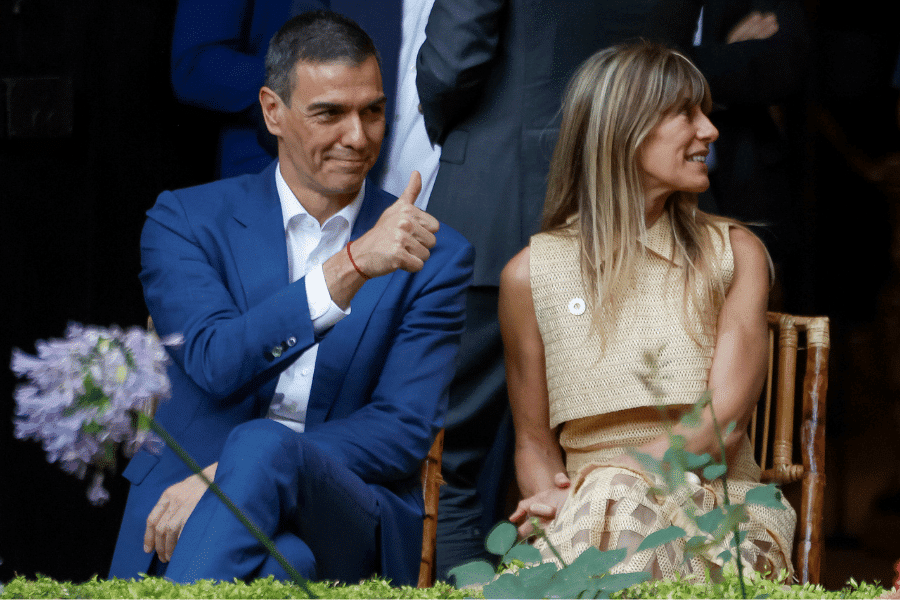
A web of bizarre fabrications surrounds Spanish Prime Minister Pedro Sánchez and his wife Begoña Gómez. According to circulating claims, she was born male, discovered with 500 kilos of gold in her Canary Islands home, faces blackmail over stolen mobile data, and even leads a drug cartel.
These outlandish narratives represent the troubling evolution of Spain’s disinformation landscape. While false information isn’t new to Spanish politics, experts note a disturbing trend: these fabrications now form increasingly coherent alternative realities that millions of citizens inhabit online.
The phenomenon has intensified since Sánchez took power in 2018 after leading a no-confidence vote against then-Prime Minister Mariano Rajoy, whose government fell amid corruption scandals. Sánchez campaigned on anti-corruption promises, making recent scandals within his own Spanish Socialist Workers’ Party (PSOE) particularly damaging.
“This latest corruption case confirms the narrative that all politicians lie, steal, and serve their personal interests,” explains Alba Tobella, director of Catalan fact-checking platform Verificat. “Every corruption case further reinforces this idea.”
Several high-ranking PSOE officials recently resigned following a corruption investigation that revealed private messages discussing large sums of money and escort services. Though Sánchez acted swiftly by removing those implicated, the damage was done in a country deeply sensitive to political corruption.
According to a recent Eurobarometer survey, 90% of Spaniards believe corruption is “widespread” in their country – among the worst perceptions in the European Union. This environment creates fertile ground for disinformation to flourish.
Verificat has tracked systematic attempts to delegitimize Sánchez since he took office. “Anything that can be used against Pedro Sánchez will be,” Tobella noted. “Any failure in Spain is directly linked to him.”
Disinformation surges have coincided with significant national events, including the 2017 Catalonian independence referendum and the 2024 Valencia flooding disaster that killed at least 229 people. In both cases, public distrust of official information created vacuums that misinformation quickly filled.
What distinguishes today’s disinformation environment is its increasing sophistication. “Hoaxes are becoming increasingly complex and nuanced,” Tobella said. “It’s like a complete disconnection of the audience from the truth, as well as a lack of interest in seeking the facts.”
The fabrications spread primarily through social media platforms, WhatsApp messages, and certain websites. Some politicians, particularly from the radical-right Vox party led by Santiago Abascal, amplify these messages to their followers.
Sebastiaan Faber, professor of Hispanic Studies at Oberlin College, sees clear parallels with disinformation tactics in other democracies, particularly the United States. “What is going on is a very conscious undermining of trust,” Faber explained. “Creating doubt about science, the judicial system, public health institutions. The goal is to push people away from traditional institutions so that maintaining them will be seen as less important.”
Faber, who has written extensively on Spain’s Civil War and the Franco dictatorship, notes disturbing historical echoes. “They try to keep sending the message that any left-leaning government is illegitimate,” he said. “That goes back to ’36. The Franco regime was based on the idea that the elected government had forged the election results and that they were financed by Russia, with anti-Spanish ideas.”
This strategy bears striking similarities to what former Trump advisor Steve Bannon called “flooding the zone with shit” – overwhelming the public with so many falsehoods that distinguishing truth becomes impossible. These tactics have crossed the Atlantic multiple times, from Franco’s Spain to Trump’s America and back again.
While Faber believes most citizens aren’t likely to fully embrace the most outlandish claims about Sánchez, he acknowledges that “receptiveness for fake news is very much defined by your political preferences and the information bubbles you’re in.” The recent corruption cases may make right-leaning citizens more susceptible to believing additional falsehoods about the government.
Meanwhile, many on the left feel a growing sense of hopelessness. Tobella stresses the importance of recognizing corruption isn’t limited to one political side, citing the ongoing case against long-serving Catalonian leader Jordi Pujol, who faces serious charges of money laundering and criminal association after 24 years in power.
“If it is said that there is no corruption in Catalonia, I think that is maybe the oldest myth going around,” Tobella emphasized. “It is clear that there are also very serious cases here.”
The response to this democratic crisis? According to those on the frontlines of fact-checking, the answer lies in methodically countering falsehoods with verified information – essentially flooding the zone with truth instead of falsehoods.
As Spain navigates this treacherous information landscape, the resilience of its democratic institutions may depend on citizens’ ability to distinguish reality from fabrication in an increasingly polarized environment.
Fact Checker
Verify the accuracy of this article using The Disinformation Commission analysis and real-time sources.

7 Comments
The article highlights the troubling rise of disinformation in Spanish politics. It’s a complex issue with no easy solutions, but increased media literacy and rigorous fact-checking seem like crucial first steps.
Fascinating insights into the strategic use of disinformation. It’s concerning how these false narratives can gain traction and create alternative realities, even in established democracies like Spain. Fact-checking efforts will be crucial to counter this trend.
The article raises important questions about the role of disinformation in modern political warfare. The Spanish case highlights the need for robust media literacy programs and stronger safeguards against the spread of misinformation.
This is a timely and insightful look at the strategic use of disinformation. The Spanish case study provides a sobering example of how false narratives can undermine public trust and create parallel realities. Vigilance and fact-checking will be key.
This is a timely and important topic. Disinformation is a global challenge, and it’s alarming to see how it can manifest in specific countries like Spain. Maintaining a healthy, fact-based political discourse is essential for democracy.
The corruption scandals surrounding Spanish politicians, both current and former, only serve to erode public trust. Disinformation thrives in an environment of mistrust, and it’s a vicious cycle that needs to be broken.
Disinformation can have far-reaching consequences, as this case in Spain demonstrates. It’s a concerning trend that deserves close attention and a coordinated response from both the government and the public.