


Listen to the article
Swiss Defence Minister Warns of Disinformation Threats, Emphasizes Media’s Role
Switzerland is increasingly targeted by foreign disinformation campaigns designed to divide society and weaken its response to threats, Defence Minister Martin Pfister warned during a recent media conference.
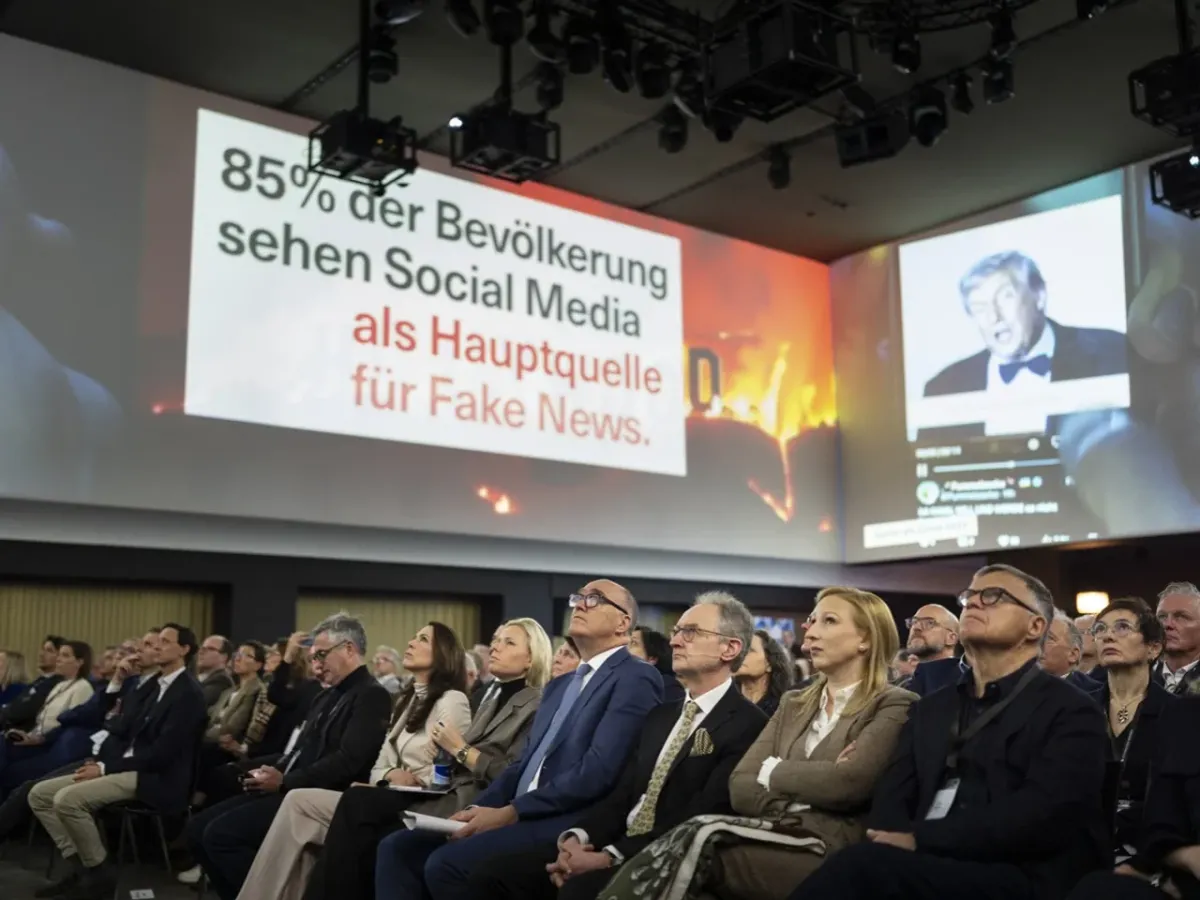
Speaking at the Epiphany Conference organized by the Swiss Media Association, Pfister highlighted the growing challenge of politically motivated influence operations targeting Swiss citizens.
“Active, politically driven efforts are under way in Switzerland with the aim of dividing society,” Pfister said, noting that a fragmented population becomes more vulnerable to manipulation and less capable of responding to external threats.
The defence minister specifically identified Russian media outlets such as Pravda and Russia Today, along with social media platforms like X and Telegram, as prominent sources of false or misleading information circulating in Switzerland.
Pfister cited a concrete example from May when pro-Russian actors spread a decontextualized video filmed in Geneva that portrayed Switzerland as descending into chaos and abandoning its neutrality. The manipulated content reached over two million views in a remarkably short timeframe.
“We must do everything we can to prepare for this information war,” Pfister emphasized, while acknowledging Switzerland’s democratic dilemma: “We cannot respond with state propaganda or censorship.” Instead, he pointed to Switzerland’s reliance on citizens capable of identifying manipulation attempts as a cultural strength worth preserving.
This approach distributes responsibility across individuals, government institutions, civil society, and media organizations. Pfister stressed the importance of education in developing critical information assessment skills, while simultaneously safeguarding media freedom.
The challenge of disinformation is set to intensify with advancing technology, according to Patrik Müller, editorial director of CH Media. “The problem is serious – and it will become even more serious with artificial intelligence,” Müller warned during the conference.
AI tools significantly lower the barriers to creating sophisticated manipulated content, placing additional demands on journalistic media to conduct thorough research, provide clear contextualization, and systematically debunk false claims.
University of Zurich media researcher Mark Eisenegger confirmed growing public concern about disinformation, noting that recent surveys show many Swiss citizens worry about the phenomenon. However, Eisenegger offered a more optimistic perspective, suggesting that compared to similar countries, the Swiss population demonstrates greater resilience against propaganda and disinformation.
“This is linked to Switzerland’s still relatively robust media system,” Eisenegger explained. He attributed this resilience to Switzerland’s strong public broadcasting infrastructure, high-quality private media outlets, and the country’s small-scale social structure, where people often know information sources personally, enhancing accountability.
The consensus among government officials, media executives, and researchers points to a crucial protective factor: the continued existence and support of free, independent, and trustworthy media organizations as Switzerland’s primary defense against foreign propaganda and disinformation campaigns.
As information warfare intensifies globally, Switzerland’s approach emphasizes strengthening citizens’ critical thinking abilities and maintaining robust media institutions rather than implementing restrictive measures that could compromise democratic values.
The Swiss case highlights a broader international challenge as democracies worldwide grapple with similar disinformation threats while attempting to preserve open information environments and freedom of expression.
Fact Checker
Verify the accuracy of this article using The Disinformation Commission analysis and real-time sources.

13 Comments
As a neutral country, Switzerland must be especially vigilant against attempts to sow discord and undermine its democratic institutions through the spread of false or misleading information. The media’s role as a bulwark against such threats cannot be overstated.
Absolutely. The media’s dedication to factual, responsible journalism is essential to preserving Switzerland’s social cohesion and national resilience in the face of foreign disinformation efforts.
Kudos to the Swiss government for recognizing the pivotal role of the media in combating disinformation. As a neutral country, Switzerland must remain vigilant against efforts to divide its society and weaken its resilience through the spread of false narratives.
The threat of politically-motivated disinformation campaigns is a concerning reality that Switzerland must confront head-on. The media’s commitment to truthful, unbiased reporting is crucial to inoculating the public against these divisive tactics.
The Defence Minister’s remarks underscore the gravity of the disinformation challenge facing Switzerland. Maintaining a well-informed, critical-thinking populace is key to countering these divisive tactics and safeguarding the country’s democratic values.
Kudos to the Swiss Defence Minister for highlighting the critical role of the media in combating disinformation. Maintaining an informed and cohesive citizenry is vital to safeguarding a country’s sovereignty and security in the face of foreign manipulation attempts.
Disinformation and influence operations are indeed a serious threat to Switzerland’s social cohesion and national security. It’s crucial for the media to remain vigilant and fact-check claims, rather than amplifying misleading narratives. Fact-based reporting is key to countering foreign manipulation efforts.
The Defence Minister raises valid concerns about the danger of politically-motivated disinformation campaigns targeting Switzerland. As a neutral country, it’s important for the Swiss public to have access to reliable, impartial information to form their own views.
Absolutely. The media has a responsibility to be a bulwark against the spread of false or misleading narratives that could undermine social stability and democratic institutions.
Switzerland’s neutrality and stability make it a prime target for foreign actors seeking to sow discord and undermine its institutions. The media’s steadfast commitment to truth-telling is crucial to inoculating the public against these manipulative efforts.
The Defence Minister’s warning about politically-driven disinformation campaigns targeting Switzerland is a sobering reminder of the evolving security threats facing the country. Robust media scrutiny and public awareness are essential to defending against these insidious attacks on social cohesion.
Switzerland’s neutrality and resilience could be undermined if its citizens become susceptible to divisive disinformation. Robust media scrutiny and fact-checking are essential to countering these threats and preserving Switzerland’s values and national interests.
I agree. The media must remain vigilant and resist efforts to weaponize information against Switzerland’s democratic processes and institutions.