


Listen to the article
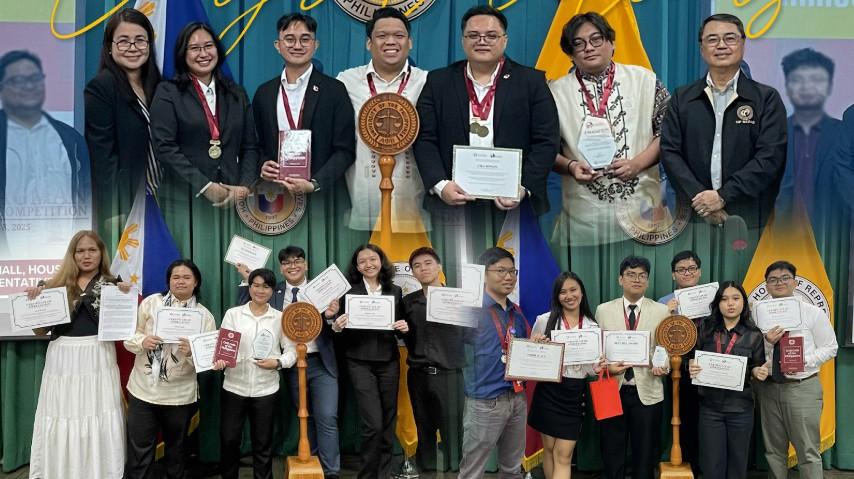
In a recent competition showcasing young legal minds, three student teams from various universities in Metro Manila and Baguio City emerged victorious at a mock bill drafting event held at the House of Representatives in Quezon City. The competition, organized to honor the legacy of the late lawmaker and human rights advocate Edcel Lagman, brought together 89 students from 15 schools nationwide.
The competition culminated with simulated congressional committee hearings at the Nograles Hall, where students demonstrated their analytical reasoning and proposed practical solutions to pressing societal issues. According to Howard Lopez, project head for the competition and a student at the UP National College of Public Administration and Governance, the event was designed to nurture critical thinking, policy innovation, and legislative skills among emerging leaders.
Larah Lagman-Ramirez, daughter of Edcel Lagman and legislative officer for Albay 1st District Representative Krisel Lagman, attended the conclusion of the event on November 8th, highlighting the family’s continued commitment to legislative development and youth engagement.
Taking the top spot was Team Frankie and the Ube Jam Factory, composed of students from Baguio’s Saint Louis University School of Law. Their mock bill, the “Confidential & Intelligence Funds (CIF) Utilization and Accountability Act,” proposed stronger internal control mechanisms and an oversight board to review the country’s CIF spending, which they identified as having significant weaknesses in accountability.
“Being active on the issues of today is safeguarding the future,” the team told GMA Integrated News. Their proposal aims to prevent corruption, ensure proper use of confidential funds, and establish penalties for misuse of these resources. Team Frankie not only won overall first place but also secured the best defense award, with team member Frank Rick Almario recognized as best speaker.
The second-place winners, Team House of Parliamentarians, comprised students from the Polytechnic University of the Philippines-Manila and University of Makati School of Law. Their entry focused on holding social media companies accountable for disinformation on their platforms.
“Students should be involved in policymaking because we are among the most affected by passed bills, along with future generations,” the team explained. Their 15-page proposal shifts accountability from users to social media platforms themselves, arguing that these companies’ responsibility to safeguard truth should be legally mandated. They noted that while many laws attempt to combat disinformation, punishment often falls on ordinary users, as seen with the Cybercrime Prevention Act of 2012, which criminalized online libel.
Team BHH from the University of the Philippines secured third place with their “Magna Carta of Alternatively-Employed Workers Act.” This proposal addresses the transformation of the Philippine labor force, which increasingly consists of short-term, project-based, contractual, and platform-mediated workers, including delivery riders, online tutors, and digital gig workers.
“The country’s legal and institutional framework remains largely designed for traditional, long-term employment that no longer captures the full diversity of work arrangements,” the team explained. Their bill aims to safeguard and empower Filipino workers across diverse employment types, sending a message that all workers matter regardless of their job’s nature.
The competition highlights growing interest among Filipino youth in policy development and legislative processes. Team BHH emphasized the importance of education beyond classrooms, stating, “When the youth use their knowledge to empathize, speak up, and stand for what is right, we become more than students but beacons of honor, service, and hope for our country.”
This mock bill drafting competition not only honored Edcel Lagman’s legislative legacy but also demonstrated the capacity of young Filipinos to engage with complex policy issues affecting their country’s future. By tackling issues ranging from government transparency and accountability to labor rights and social media regulation, these student teams showcased the next generation’s readiness to contribute meaningfully to national discourse and development.
Fact Checker
Verify the accuracy of this article using The Disinformation Commission analysis and real-time sources.

20 Comments
Combating disinformation, corruption, and labor discrimination are all vital challenges that require innovative solutions. I’m curious to learn more about the specific proposals put forward by the winning student team.
Me too, the article summary provides an intriguing glimpse into their work, but more details would be helpful to fully understand their approach and recommendations.
This mock legislative competition sounds like a great way to engage young people in the policymaking process and nurture their leadership potential. I hope the students’ ideas gain traction and inspire real-world change.
Empowering young people to tackle complex societal issues through mock legislation is a great initiative. I wonder how the students’ policy proposals might influence future real-world policymaking.
That’s a good point. While this was a simulated exercise, the students’ ideas could potentially inspire or inform future legislative efforts to address these challenges.
Interesting to see young legal minds tackling important societal issues through mock legislation. Developing critical thinking and policy innovation skills in the next generation of leaders is crucial.
I agree, this kind of educational initiative helps prepare students to become effective policymakers and advocates. Kudos to the organizers for creating this valuable learning experience.
This mock legislation competition sounds like a great way to engage young people in the policymaking process and cultivate the next generation of leaders. Kudos to the organizers for creating this valuable learning experience.
It’s encouraging to see the next generation of leaders taking on complex societal issues through this kind of experiential learning. I wonder how the students’ proposals might translate to actual legislative reforms.
That’s a good point. While the mock setting provides valuable practice, the true test will be whether the students’ ideas can be effectively implemented in the real world.
Developing critical thinking and leadership skills in students through this kind of experiential learning is so valuable. I’m eager to learn more about the specific policy proposals put forward by the winning team.
Addressing societal challenges like disinformation, corruption, and labor discrimination through student-led policy proposals is a commendable approach. I’m interested to see how the winning team’s ideas could translate to real-world change.
Agreed, it would be insightful to understand the specific legislative solutions the students put forward and how they might be implemented in practice.
This mock legislation event sounds like a fantastic way to nurture the next generation of leaders and policymakers. I’m eager to learn more about the winning team’s proposed solutions to combat disinformation, corruption, and labor discrimination.
Developing critical thinking and policy innovation skills in students is so important. This mock legislation event seems like a fantastic way to empower young people and prepare them for future leadership roles.
This mock legislation competition sounds like a fantastic way to nurture critical thinking and policy innovation skills in the next generation of leaders. I’m curious to learn more about the winning team’s proposed solutions.
Engaging young people in the policymaking process through a mock legislation competition is a commendable approach. I’m curious to see how the students’ ideas might influence future real-world legislative efforts.
Agreed, it would be interesting to see if any of the students’ proposals gain traction and potentially inform actual policy changes down the line.
Tackling disinformation, corruption, and labor discrimination through student-led policy proposals is an admirable initiative. I’m curious to learn more about the specific solutions put forward by the winning team.
Same here. The article summary whets the appetite, but more details on the students’ legislative ideas would be fascinating to read about.