


Listen to the article
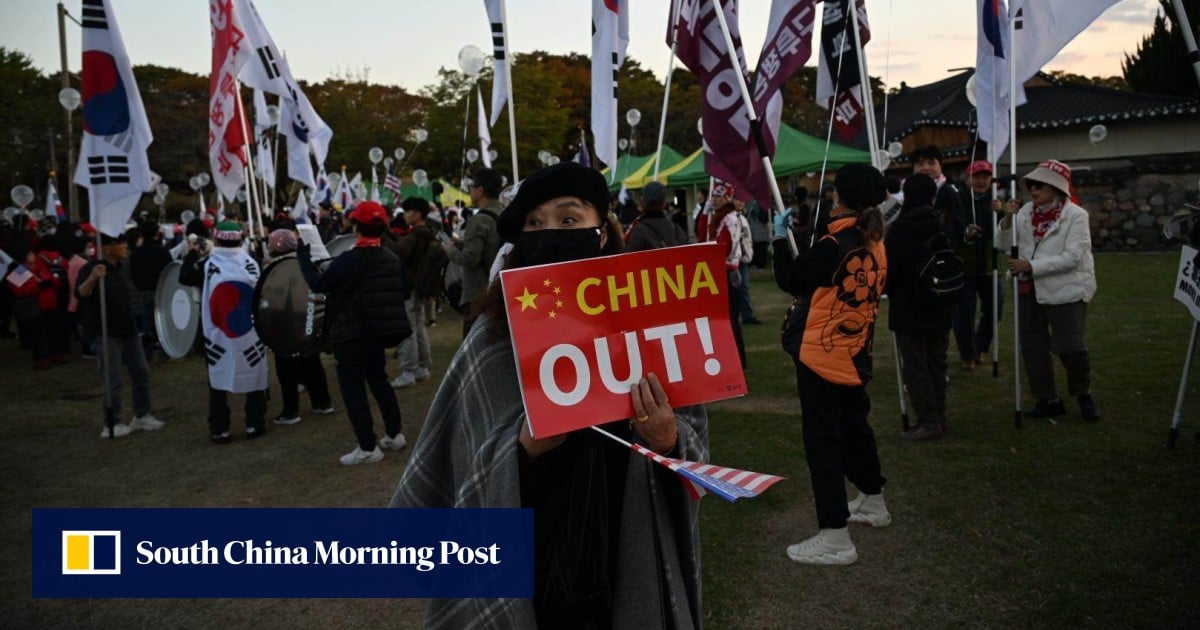
In South Korea, a wave of accusations blaming China for political unrest has swept through right-wing circles following the recent election that brought opposition leader Lee Jae-myung to power. Despite the widespread nature of these claims, evidence supporting them remains elusive, pointing instead to domestic political tensions and growing anti-Chinese sentiment.
Former President Yoon Suk-yeol’s supporters have circulated numerous allegations across online forums and social media platforms, claiming that Beijing orchestrated protests against his administration, funded impeachment efforts, and manipulated public opinion ahead of June’s snap election. These narratives gained significant traction among conservative YouTubers and were even legitimized by some lawmakers.
Yoon himself contributed to these suspicions during a televised address last December. While defending a controversial decree that ultimately failed, he warned that “forces linked to North Korea and China are threatening our democracy from within,” a statement that further inflamed tensions and reinforced conspiracy theories among his base.
However, a thorough examination of the most prominent claims—including alleged arrests of Chinese spies and Beijing-funded protest movements—has revealed no substantial evidence supporting these narratives. Experts analyzing these claims suggest they represent a domestic phenomenon rather than a foreign influence campaign, reflecting South Korea’s internal political divisions and growing skepticism toward China.
“There used to be goodwill towards China, but as competition deepened and cultural disputes intensified, frustration turned into resentment,” explains Ha Nam-suk, a political analyst who has studied the evolution of South Korea’s relationship with China.
This deterioration in South Korean attitudes toward China represents a significant shift from previous decades. Relations between the two countries have grown increasingly complex as economic interdependence has been overshadowed by geopolitical competition, territorial disputes, and cultural disagreements.
The timing of these anti-China narratives coincides with broader geopolitical tensions in the region. South Korea has found itself navigating difficult terrain between its security alliance with the United States and its economic relationship with China, the country’s largest trading partner. This balancing act has become increasingly difficult as U.S.-China competition intensifies.
The proliferation of these conspiracy theories also reflects the polarized nature of South Korean politics. The country’s sharp partisan divide has created fertile ground for narratives that cast political opponents as not just ideological rivals but potentially agents of foreign powers. Such rhetorical strategies can effectively mobilize base supporters but may ultimately undermine democratic discourse.
Media experts point out that the spread of these narratives has been amplified by South Korea’s highly connected digital environment. The country boasts one of the world’s highest internet penetration rates, creating conditions where unverified claims can rapidly reach massive audiences and become entrenched in public consciousness before fact-checking can occur.
Lee Jae-myung’s victory in June’s snap election represented a significant political shift, with his Democratic Party securing control after a contentious campaign period. While his administration now faces the challenge of addressing these conspiracy theories, they must simultaneously manage the actual complexities of South Korea’s relationship with China.
The phenomenon extends beyond mere political rhetoric, potentially affecting diplomatic relations and public policy. South Korean officials must now contend with both the realities of the nation’s relationship with Beijing and the domestic perception that China represents a threat to Korean democracy and sovereignty.
As South Korea continues navigating these complex waters, the challenge for political leaders and civil society will be distinguishing legitimate concerns about Chinese influence from unfounded conspiracy theories that could damage both domestic unity and international relations.
Fact Checker
Verify the accuracy of this article using The Disinformation Commission analysis and real-time sources.

9 Comments
This is a complex and sensitive issue that deserves careful analysis. While concerns about foreign influence are understandable, it’s crucial that any claims are backed by credible evidence to avoid fueling dangerous conspiracy theories. An impartial investigation could help bring much-needed clarity to the situation.
The accusations of Chinese meddling in South Korean politics raise important questions about national sovereignty and foreign influence. However, without clear evidence, these claims risk becoming a convenient scapegoat for deeper domestic issues. A thorough, impartial investigation would be helpful to shed light on the situation.
Well said. Allegations of foreign interference should not be taken lightly, but they must be substantiated to avoid further polarization. Robust checks and balances are crucial to maintaining the integrity of the democratic process.
It’s troubling to see allegations of Chinese interference in South Korea’s political process, but the lack of concrete evidence is worrying. Disinformation can be a powerful tool for sowing division, and it’s important to approach these claims with caution and objectivity.
Agreed. Unfounded conspiracy theories can be very damaging, especially in a politically charged environment. A fact-based approach is essential to understand the root causes of the tensions and find constructive solutions.
The accusations of Chinese interference in South Korean politics are troubling, but the lack of concrete evidence is concerning. Disinformation can be a powerful tool for sowing division, and it’s important to approach these claims with a critical eye and a commitment to facts.
Absolutely. Unfounded conspiracy theories can be very damaging, especially in a politically charged environment. A thorough, impartial investigation would be the best way to understand the root causes of the tensions and find constructive solutions.
This is a complex and sensitive issue that deserves careful consideration. While concerns about foreign influence are understandable, it’s crucial that any claims are backed by credible evidence to avoid further polarization. An impartial investigation could help bring much-needed clarity to the situation and ensure the integrity of the democratic process.
This is a concerning development in South Korean politics. While concerns about foreign interference are understandable, it’s crucial that claims are backed by solid evidence rather than fueling conspiracy theories. A thorough, impartial investigation would help bring clarity to this complex situation.