


Listen to the article
Meta Faces Senate Subpoena After Skipping Disinformation Hearing
A Senate committee plans to subpoena Meta, Facebook’s parent company, after representatives failed to attend a critical hearing on bills targeting online disinformation, social media algorithms, and troll farms in the Philippines.
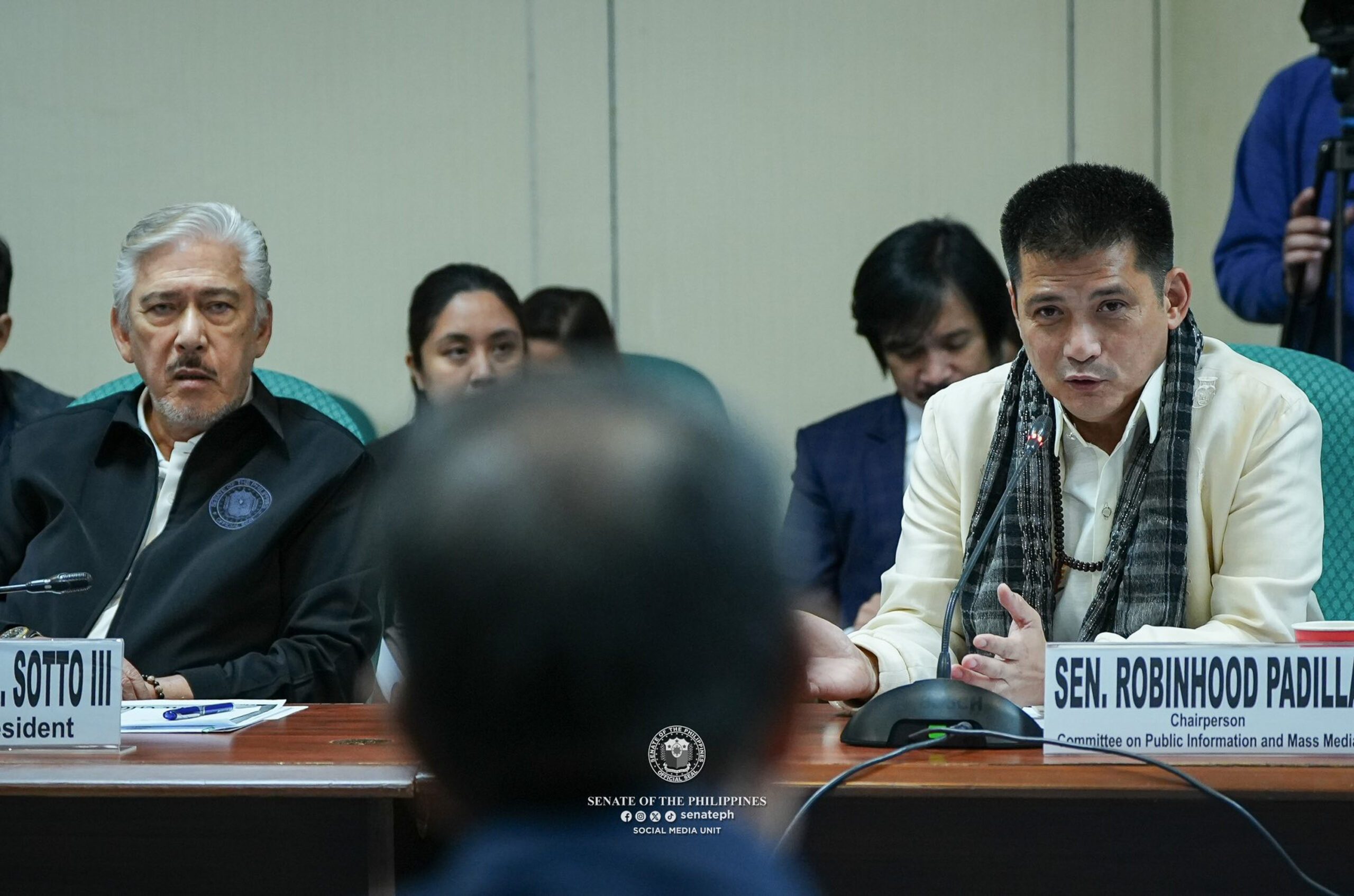
During Monday’s hearing of the Senate committee on public information and mass media, Senator Rodante Marcoleta made the motion to compel Meta’s attendance after the company submitted an excuse letter rather than sending representatives. Committee chairman Senator Robin Padilla expressed visible frustration with the company’s continued absence.
“That’s been the case since the 19th Congress, excuse after excuse,” Padilla remarked before seconding Marcoleta’s motion for a subpoena.
Meta’s absence was particularly notable as its platforms were frequently referenced throughout the hearing. By contrast, TikTok sent Yves Gonzalez, its head of government affairs and public policy, to participate in the discussions.
The hearing focused on three interrelated bills aimed at combating the Philippines’ growing disinformation problem. Senate Bill 191, the proposed Anti-False Content and Fake News Act, targets the deliberate creation and spread of harmful false or misleading online content. The legislation would empower the Department of Justice’s Office of Cybercrime to issue rectification orders, takedown orders, and access-blocking directives, with provisions for due process and appeals.
Proponents argue that existing legal remedies move too slowly to counter the rapid spread of false information online, often leaving victims without timely recourse.
Senate Bill 1441, the Social Media Fairness and Algorithmic Transparency Act, shifts focus to the underlying systems that determine what Filipinos see online. This legislation would require major platforms to disclose how their algorithms rank, amplify, or suppress content, particularly political material, and submit to regular audits and transparency reporting.
Senators repeatedly questioned why algorithms that influence elections and public discourse operate without local oversight. Senate President Vicente Sotto III warned in the bill’s explanatory note that algorithm-driven feeds often prioritize sensational content over verified journalism.
“Traditional journalism is struggling to compete with sensationalist content, leaving citizens exposed to rumor over fact,” Sotto wrote. “Democracy cannot thrive if truth is drowned out by algorithmic manipulation and if political discourse is filtered by hidden, profit-driven formulas.”
The third proposal, Senate Bill 1490 or the Anti-Troll Farm Act, seeks to criminalize the operation, financing, or concealment of organized troll farms. The bill specifically targets the use of public funds, government facilities, or equipment for coordinated disinformation campaigns. Bill author Padilla characterized troll farms as organized machinery rather than organic online behavior, with impacts extending beyond politics into governance and national stability.
During the hearing, Sotto raised the possibility of requiring identity verification on social media platforms, suggesting that anonymity enables fake accounts and repeat disinformation offenders. He proposed limiting users to one account per person, potentially linked to the national ID system to strengthen accountability.
Fact-checkers at the hearing emphasized the limitations of their work. Gemma Mendoza, Rappler’s lead researcher on disinformation and platforms, explained that while they rate content on Facebook, they have no control over algorithmic outcomes or final decisions about content moderation. The sheer volume of content also restricts what independent groups can review.
Law enforcement representatives noted that takedown requests typically receive immediate action only in cases involving terrorism, child exploitation, or national security. Most disinformation and political falsehoods remain largely dependent on platform cooperation.
Throughout the discussions, lawmakers and legal experts repeatedly emphasized the need to balance regulation with freedom of expression. Padilla assured that the proposed legislation would not harm press freedom, stating, “We will make sure that freedom of the press will not be harmed.”
Some experts raised concerns that the proposed measures could potentially be weaponized through cyber libel claims if adequate safeguards aren’t included. They urged lawmakers to explicitly protect political speech, satire, parody, and public participation.
The committee is expected to continue deliberations through technical working groups in upcoming sessions, with Meta now likely to face a formal subpoena to ensure their participation.
Fact Checker
Verify the accuracy of this article using The Disinformation Commission analysis and real-time sources.

14 Comments
This is an important issue that goes beyond just the Philippines. Online disinformation is a global problem that requires coordinated action from governments and tech companies.
I hope the subpoena process leads to meaningful reforms and increased accountability for social media platforms. The public deserves transparency on these matters.
Meta’s repeated absence is concerning. They need to be held accountable and provide transparency on their algorithms and content moderation practices.
The Senate’s determination to subpoena Meta is a strong message. Platforms cannot simply ignore requests for information on such critical issues.
Interesting development. Meta’s repeated refusal to attend hearings on disinformation and troll farms raises serious concerns. The Senate seems determined to compel their participation – let’s see how this plays out.
Meta’s absence is quite puzzling. They should be transparent and accountable, especially on issues of online manipulation and misinformation.
It’s troubling to see Meta repeatedly refusing to participate in these hearings. Their cooperation is essential for understanding the extent of the disinformation problem.
The proposed legislation seems like a reasonable approach to addressing online manipulation. I’m curious to see how it evolves and what impact it may have.
The Philippines’ disinformation problem is concerning, and it’s good to see the Senate taking steps to address it. I hope the subpoena compels Meta to cooperate and shed light on their practices.
It’s encouraging to see TikTok participating in the discussions. Platforms need to be proactive in tackling online manipulation, not just reactive.
This is a complex issue with serious implications for democracy. I’m glad the Senate is taking it seriously and using its investigative powers to get to the bottom of Meta’s role.
The proposed legislation sounds like a step in the right direction. Combating disinformation and troll farms is crucial for maintaining a healthy online ecosystem.
This is an important issue that deserves thorough investigation. I’m curious to see what information the Senate panel is able to uncover through the subpoena process.
Meta’s reluctance to engage raises red flags. They need to be held accountable and provide answers on their role in the spread of disinformation.