


Listen to the article
Russia’s Psychological Operations Command: Inside GRU Unit 54777
Russia’s GRU Unit 54777, also known as the 72nd Center of the Special Service or the Foreign Information and Communication Service, has emerged as one of Moscow’s most potent weapons in the global information war. Operating in the shadows since its formation in 1991, this specialized unit has transformed from a Soviet-era defensive propaganda arm into an aggressive psychological operations force that shapes narratives worldwide.
The unit represents a significant evolution in Russia’s information warfare strategy. Where Soviet propaganda was largely reactive and focused on wartime operations, Unit 54777 conducts continuous psychological warfare during both peace and conflict, with authority to involve any state body, public organization, or religious institution in its campaigns.
“This marked a decisive shift in doctrine,” explains one intelligence analyst familiar with the unit’s operations. “By transferring PSYOPS to military intelligence, its character fundamentally changed from periodic defensive messaging to constant psychological engagement.”
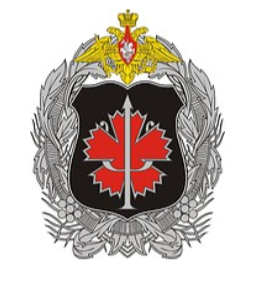
The unit’s symbol combines the psychological science glyph (Ψ) with a red carnation—a heraldic motif long associated with Russian military intelligence—reflecting its hybrid warfare approach that blends traditional propaganda with modern information operations.
A Complex Web of Front Organizations
Unit 54777 operates through an intricate network of front organizations that provide civilian or NGO cover for its psychological operations. The most prominent of these is InfoRos, formally registered as a news and analytical agency.
Despite presenting itself as an independent media outlet, InfoRos has been identified by the European Union and numerous intelligence agencies as a critical component of Russia’s information operations apparatus. According to a 2023 European Council press release, InfoRos has established over 270 media proxy online outlets disseminating pro-Russian propaganda supporting Moscow’s war in Ukraine.
A comprehensive investigation by OpenFacto in 2022 mapped more than 1,300 domains registered by InfoRos, with nearly identical digital architectures designed to create an echo chamber where Kremlin narratives appear to emerge organically at local levels rather than through centralized automation.
Another key front is the Institute of the Russian Diaspora (IRD), co-founded by Alexander Starunsky, a former Unit 54777 commander, alongside GRU officer Sergey Panteleyev. The institute operates russkie.org, which the EU has identified as part of InfoRos’s disinformation network. IRD also maintains websites for organizations like the World Coordinating Council of Russian Compatriots Living Abroad and the Foundation for Supporting the Rights of Compatriots Living Abroad.
Command Structure and Operations
Unit 54777 falls under Russia’s Ministry of Defense, currently led by Andrei Belousov, and operates as part of the GRU’s psychological operations apparatus. Some analysts position it within the GRU’s 12th Information Operations Directorate, though this remains unconfirmed.
According to RAND sources, before the Ukraine crisis, the unit employed approximately 80 specialists divided across five sections: foreign military information, psychological and information operations, teleradio broadcasts, mass media liaison, and editing and publications. However, the current size is almost certainly larger given the scale and persistence of its output across multiple organizations, regions, and media platforms.
The unit has regional PSYOP branches in every Russian military district, including Leningrad (unit 03126), Central (unit 03138 in Yekaterinburg), Southern (unit 03128 in Rostov-on-Don), and Eastern (unit 03134 in Khabarovsk).
Key figures in the organization include Aleksandr Starunsky, former commander and co-founder of InfoRos; Anastasia Kirillova, General Director of InfoRos who was sanctioned by the EU in 2023; Nina Dorokhova, another founder and General Director of InfoRos; and Aleksandr Kostyukhin, another unit commander who spent seven years under diplomatic cover in Turkey.
Battlefield Tested: From Chechnya to Ukraine
Unit 54777’s operational history reveals a pattern of sophisticated information manipulation campaigns. Its first major testing ground came during the Chechen wars, where it was tasked with reshaping perceptions of the conflict by framing Chechen nationalism as part of global terrorism—a strategy known as “securitization.”
According to leaked memoirs of Colonel Alexsandr Golyev published in the “Aquarium Leaks,” officers collected and edited battlefield footage to portray Chechen groups as criminal organizations aligned with jihadist movements. The unit produced propaganda films like “Dogs of War” and “Werewolves,” blending operational footage with carefully selected scenes to portray separatists as savage extremists.
“The messaging was designed to align Russia’s actions with the early global terrorism discourse,” notes one security analyst, “and to discourage criticism of human rights abuses by portraying Moscow as facing the same enemy as Western governments.”
In Ukraine, Unit 54777 significantly expanded its operations after 2014. Western intelligence officials report that the unit oversaw influence activities designed to deepen political fractures within Ukraine and weaken public confidence in Kyiv’s leadership. Operatives developed false online personas posing as Ukrainian patriots to spread claims of political dysfunction, corruption, and military incompetence.
In 2015, the unit sent fabricated emails to multiple U.S. senators, designed to appear from an authentic Ukrainian nationalist organization, claiming widespread corruption in Ukraine’s armed forces and requesting Western intervention.
Information War Tactics
Unit 54777 employs a sophisticated arsenal of information warfare tactics:
- The creation of front organizations and pseudo-news portals to obscure Russian state attribution
- Narrative manipulation and securitization that portrays adversaries as existential threats
- “Firehosing” falsehoods by rapidly creating numerous websites to flood the information space
- Black propaganda that falsely claims to come from other actors
- Astroturfing that creates fake grassroots support networks
- Bandwagon appeals that create illusions of broad consensus through overwhelming repetition
As artificial intelligence capabilities advance, the unit is expected to increase its use of automated content generation and persona management, enabling campaigns to pivot quickly to new narratives and saturate information spaces more effectively.
Despite its central role in Russian information campaigns, Unit 54777 has received far less scrutiny than other Russian cyber units—likely due to its deliberately low profile and the limited publicly available information. However, as digital forensic techniques improve, careful analysis of its network operations may reveal additional details about this shadowy but influential force in global information warfare.
Fact Checker
Verify the accuracy of this article using The Disinformation Commission analysis and real-time sources.
