


Listen to the article
Study Shows Kremlin Propaganda Significantly Influences Russian Soldiers’ Combat Motivation
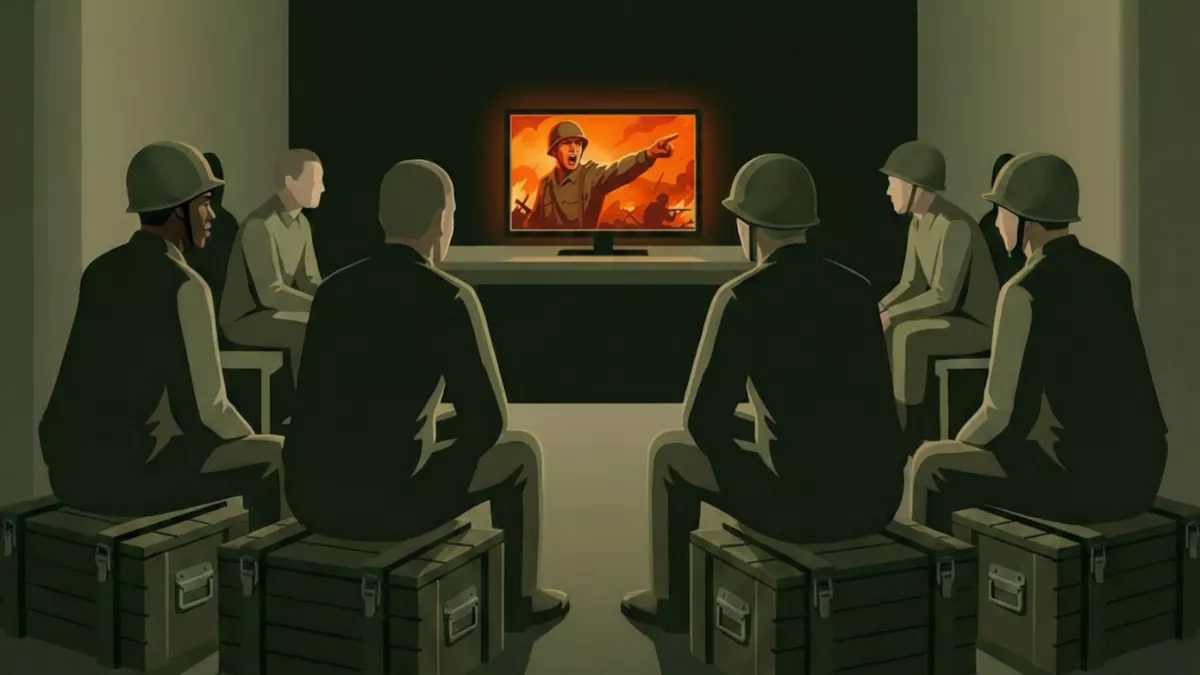
A groundbreaking study has revealed measurable links between belief in Russian propaganda and soldiers’ battlefield behavior during the invasion of Ukraine. The research, conducted by non-governmental organization LingvaLexa with support from Ukraine’s Office of the Prosecutor General, surveyed 1,060 Russian prisoners of war to determine how state-sponsored narratives shape combat motivation.
The findings paint a concerning picture: nearly 77 percent of surveyed Russian soldiers believed at least one Kremlin propaganda narrative, while over 68 percent considered the so-called “Special Military Operation” to be legitimate and necessary to some degree.
“Propaganda is not merely a background element of war, but one of its driving mechanisms,” note the researchers, who found that soldiers heavily influenced by Russian state messaging were six times more likely to view the invasion as justified and twice as likely to express willingness to return to combat after being captured.
These propaganda-influenced soldiers also demonstrated significantly higher tendencies to dehumanize Ukrainians and normalize violence against them. Perhaps most troublingly for Ukraine’s defensive efforts, these individuals were substantially less likely to surrender voluntarily, potentially prolonging the conflict.
The study challenges assumptions that Russian soldiers are primarily motivated by financial incentives or coercion. While enlistment bonuses may initially attract recruits, researchers found it was ideological conviction that sustained their willingness to fight despite experiencing the realities of modern warfare.
Anti-Western narratives formed a cornerstone of Russia’s propaganda strategy, constituting nearly half (45 percent) of the state-sponsored messaging used to justify the invasion. Approximately 80 percent of captured soldiers expressed some belief in claims that “NATO is waging war against Russia through Ukraine” or that “Russia is fighting against NATO.”
Other anti-Western narratives portrayed Ukraine as a Western puppet state, claimed NATO operated biological weapons laboratories in Ukraine, and framed the invasion as a moral crusade against Western values, particularly regarding LGBTQ+ rights.
“Looking through the eyes of Russian soldiers, our study suggests they perceived themselves already at war with Europe and fighting NATO on the ground in Ukraine,” the researchers explain. “This information war does not end at Ukraine’s borders. Its goal is not only to mobilize Russian soldiers but also to undermine the unity and values of European societies.”
The study’s findings carry significant implications for international law and accountability mechanisms. The researchers argue that propaganda should be classified as a “full-fledged weapon of war” and those responsible for creating and disseminating it should face legal consequences.
“The activities of propagandists who act as mouthpieces of aggressive state policy should be qualified as complicity in the crime of aggression,” the report states, adding that responsibility should extend beyond direct perpetrators to include high-ranking officials who plan and coordinate propaganda campaigns.
Despite international legal obligations for states to prohibit war propaganda, the researchers note that sanctions remain insufficient. They advocate for a broader approach to accountability that better aligns with principles of justice and international criminal law.
The study was led by Anna Vyshniakova, an international criminal lawyer and Head of LingvaLexa NGO, who specializes in war crimes investigations and accountability for war propaganda. Jais Adam-Troian, an Assistant Professor of Psychology at Heriot-Watt University Dubai and a fellow at the NATO Strategic Communications Centre of Excellence in Riga, contributed expertise on propaganda, conspiracy theories, and counter-terrorism.
Their work represents a significant contribution to understanding how disinformation functions not just as background noise but as a critical component of modern warfare – one that shapes perceptions, motivates combatants, and potentially extends conflicts by hardening attitudes against surrender or negotiation.
Fact Checker
Verify the accuracy of this article using The Disinformation Commission analysis and real-time sources.

20 Comments
The researchers’ finding that propaganda-influenced soldiers were more likely to dehumanize Ukrainians is particularly disturbing. This highlights the dangerous impact of disinformation on human rights and the conduct of war.
Agreed. Addressing the dehumanization of Ukrainians driven by Russian propaganda must be a priority to prevent further atrocities and protect civilian lives.
This study provides valuable insights into the Kremlin’s propaganda machine and its effects on Russian soldiers. It’s a sobering reminder of the need for robust, independent media and effective counter-narratives.
Absolutely. Strengthening media freedom and access to accurate information should be a key part of the international response to this conflict.
The link between belief in propaganda and increased willingness to continue fighting is particularly worrying. This suggests the Kremlin’s messaging is having a direct impact on combat motivation.
Yes, this is a troubling finding. It shows how crucial it is to disrupt the Kremlin’s propaganda machine and provide Russian soldiers with accurate information about the war.
This study highlights the grave consequences of allowing unchecked propaganda to shape the beliefs and actions of soldiers. It’s a stark reminder of the importance of media literacy and access to credible information.
Absolutely. Empowering people with the critical thinking skills to recognize and resist propaganda is crucial, both in times of war and peace.
The findings that over two-thirds of Russian soldiers view the invasion as legitimate is quite alarming. It demonstrates the Kremlin’s ability to indoctrinate their troops with false narratives.
Absolutely. This underscores the importance of independent, factual reporting to challenge the Kremlin’s propaganda and provide a clearer picture of the realities on the ground.
The researchers’ conclusion that propaganda is a driving mechanism of war, not just a background element, is an important insight. It underscores the need for a comprehensive strategy to counter disinformation.
Agreed. Addressing the role of propaganda in fueling this conflict should be a top priority for the international community.
The researchers’ findings underscore the importance of understanding the psychological and social dimensions of war, not just the military and political aspects. Addressing the role of propaganda is crucial.
You make an excellent point. A holistic, multidisciplinary approach is needed to address the complex challenge of disinformation and its impact on the conduct of war.
The fact that nearly 77% of Russian soldiers believed at least one Kremlin propaganda narrative is deeply concerning. It shows the scale of the challenge in combating the spread of disinformation.
You’re right, this underscores the need for a multi-faceted approach to counter Russian propaganda, involving fact-checking, media literacy campaigns, and international cooperation.
This is a concerning study. It shows how effective Russian propaganda can be in shaping the beliefs and combat motivation of their soldiers. It’s crucial to understand the power of disinformation, especially in the context of war.
You’re right, this highlights the need to counter Russian propaganda more effectively. Educating soldiers and the public about these manipulation tactics is an important step.
This study is a wake-up call for the international community to take the threat of Russian propaganda more seriously. The consequences of failing to counter it effectively could be devastating.
Absolutely. Concerted, coordinated action to expose and debunk Kremlin disinformation is essential to undermine its influence and protect both soldiers and civilians.