


Listen to the article
International Experts Gather in Luxembourg to Combat Disinformation Threats to Democracy
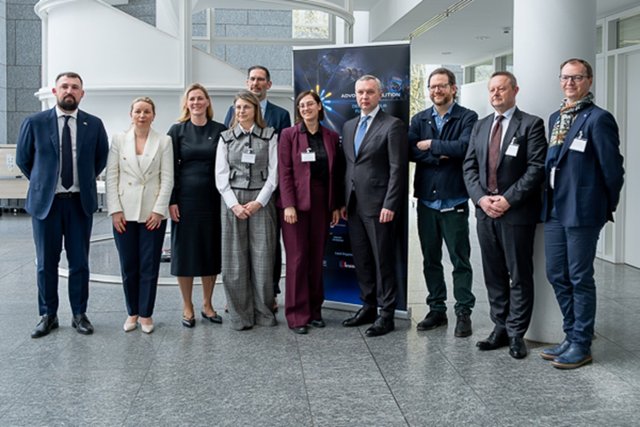
A high-profile conference addressing the growing challenge of disinformation brought together approximately 70 policymakers, researchers, and diplomats at the University of Luxembourg’s Kirchberg Campus on Wednesday, April 15, 2026.
The event, titled “Disinformation as a threat to democracy and peace in Europe,” was jointly organized by the Embassies of Poland and Romania in Luxembourg, the European Commission’s Luxembourg Representation, and the University of Luxembourg. It formed part of the recently launched Advocacy Coalition initiative supporting Ukraine under the “Defending Our Future Now” banner.
Romania’s Ambassador to Luxembourg, Livia Rusu, opened proceedings by framing disinformation as “no longer a marginal issue but a strategic challenge.” Ambassador Rusu emphasized that combating this threat requires critical thinking, transparency, and accountability to build more resilient societies. She highlighted Romania’s integrated response strategy, which focuses on proactive communication and media literacy support, while stressing that coordinated action is essential since disinformation “knows no borders.”
Rafał Hykawy, Chargé d’Affaires at the Polish Embassy, noted that disinformation campaigns frequently originate from authoritarian states, with Russian narratives particularly targeting the EU and NATO. He cited specific campaigns designed to portray Ukrainian refugees negatively in Poland. While acknowledging that disinformation tactics have existed throughout history, Hykawy emphasized that their scale and sophistication have evolved dramatically with modern technology.
The Ukrainian perspective came from Ambassador Yaroslav Melnyk, who described disinformation as “one of the defining challenges” for European democracy and a “daily reality” for Ukraine. He characterized these tactics as a “strategic weapon” designed to erode public trust and exhaust societies through confusion and doubt. Melnyk called for collective action grounded in shared democratic values, including greater support for critical thinking education and independent journalism.
The technological dimensions of the problem were addressed by Pascal Steichen, Chair of the European Cybersecurity Competence Centre’s Governing Board. Steichen highlighted how social media algorithms and artificial intelligence increasingly “push” certain beliefs, making it harder to distinguish between legitimate information and falsehoods. He emphasized connections between disinformation operations and broader cybercrime ecosystems, while acknowledging progress through EU regulatory initiatives like the Digital Services Act and AI Act.
In a powerful demonstration of emerging technological threats, the conference featured what initially appeared to be a multilingual video message from Prof. Marie-Hélène Jobin, Vice Rector at the University of Luxembourg. The message was later revealed to be an AI-generated avatar, dramatically illustrating how easily realistic disinformation can be created. The real Prof. Jobin subsequently warned that such technologies threaten credibility, trust, and ultimately democracy itself, while noting that AI represents both a significant part of the problem and potentially its solution.
The conference continued with two expert panels. The first, “Disinformation: facts and impact,” featured Roman Osadchuk from LetsData, who focused on disinformation as a component of Russian hybrid warfare. Prof. Dr. Alina Bârgăoanu from Romania highlighted how foreign and domestic interference often reinforce each other, referencing Romania’s annulled 2024 presidential elections as an example. Aleksandra Wójtowicz from the Polish Institute of International Affairs addressed emerging challenges like TikTok LIVE streams, which are particularly difficult to moderate and can rapidly spread harmful content.
The second panel, “Countering disinformation,” featured Elīna Pinto from the European Commission, who discussed strategic communication approaches; Magdalena Wilczyńska from Poland’s National Research Institute for Cybersecurity, who outlined specific countermeasures against disinformation campaigns; and Prof. Mark Cole from the University of Luxembourg, who analyzed European legal and policy responses to the disinformation challenge.
The discussions highlighted the multifaceted nature of modern disinformation threats and the need for coordinated responses across governments, institutions, and civil society. Participants emphasized that effective countermeasures must combine technological solutions, regulatory frameworks, educational initiatives, and international cooperation to protect democratic values and processes across Europe.
The conference concluded with interactive Q&A sessions followed by a networking reception, providing participants with opportunities to forge connections and discuss potential collaborative efforts to address these critical challenges to European democracy and security.
Fact Checker
Verify the accuracy of this article using The Disinformation Commission analysis and real-time sources.

14 Comments
Kudos to the organizers for bringing together this diverse group of experts to tackle the disinformation challenge. Sharing best practices and fostering international cooperation will be crucial in this fight.
I’m curious to learn more about the specific strategies and initiatives that will be discussed at the conference. Tackling disinformation requires a multifaceted approach.
This conference highlights the global nature of the disinformation challenge and the need for coordinated international efforts to address it. I’m curious to learn about the specific strategies and best practices that will be discussed.
Yes, cross-border collaboration and the exchange of ideas will be crucial in developing effective countermeasures against the spread of disinformation.
Disinformation is a serious threat that can undermine public trust and social cohesion. This conference is a timely and important step in addressing this pressing issue.
I hope the conference will also explore ways to empower citizens and civil society to play a more active role in identifying and countering the spread of disinformation.
Combating disinformation is essential for the health of our democratic systems. I’m glad to see policymakers, researchers, and diplomats coming together to find collaborative solutions.
Agreed. Building a more resilient society requires a multifaceted approach that combines digital literacy, transparency, and accountability.
Disinformation is a complex challenge that requires a multi-faceted approach. Strengthening media literacy and promoting transparency and accountability are crucial steps to build resilience against these threats to democracy.
I agree – coordinated action between policymakers, researchers, and the public is essential to combat the spread of disinformation effectively.
As the world becomes more digitally connected, the spread of misinformation poses a significant risk to the integrity of our democratic processes. This conference is a timely and important step in addressing this critical issue.
Absolutely. Building public awareness and critical thinking skills is key to empowering citizens to identify and resist the influence of disinformation campaigns.
Disinformation poses a serious threat to the integrity of our democratic systems. I’m glad to see this conference bringing together a diverse group of experts to tackle this complex issue.
Absolutely. Empowering citizens with the tools and knowledge to identify and resist the influence of disinformation should be a key priority.