


Listen to the article
Youth Must Lead Fight Against Online Misinformation, Says Ghanaian MP
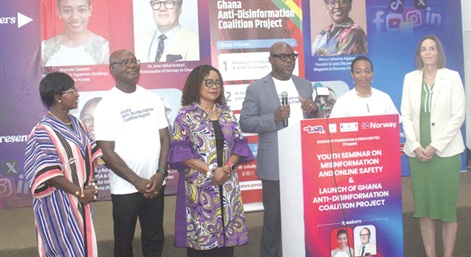
Member of Parliament for Klottey Korle, Dr. Zanetor Agyeman-Rawlings, has called on young people to take a proactive stance in combating the growing threat of misinformation and disinformation online. Speaking at the launch of the Ghana Anti-Disinformation Coalition (GADC) Project in Accra last Wednesday, the MP emphasized that while the internet has become an essential tool in daily life, it carries significant risks when used without proper vigilance.
“Remember that not everyone online is who they say they are,” Dr. Agyeman-Rawlings cautioned the audience of over 300 young people from junior and senior high schools and tertiary institutions. The youth seminar, held at the Ghana-India Kofi Annan ICT Centre, focused on equipping participants with skills to navigate digital spaces safely and responsibly.
The GADC Project, organized by Penplusbytes with funding from the Norwegian government, operates under the theme “Fake News, Real Consequences: Empowering Young Minds to Combat Misinformation and Stay Safe Online.” The initiative comes at a critical time as Ghana, like many countries, grapples with the proliferation of false information that can impact social cohesion and democratic processes.
Dr. Agyeman-Rawlings highlighted the profound mental health implications of online misinformation on young people. “Misinformation can affect the mental health of young people, making them anxious and creating the impression that harmful behavior is normal,” she explained. “Not everything you see online reflects real life. You have the right to protect your mind and your peace.”
The MP’s remarks underscored the dual role of young people as both potential victims and powerful agents of change in the fight against misinformation. “You can choose to be different. You can choose to be someone who checks facts, someone who speaks the truth, someone who helps others understand what is real. That is how change begins,” she stated.
Jerry Sam, Executive Director of Penplusbytes, provided context on the broader GADC initiative, describing it as a three-year, nationally coordinated effort designed to reduce the spread and societal impact of disinformation. The project will employ collaborative action, localized research, and AI-powered innovation to address these challenges.
“The project will bring together media organizations, civil society, technology innovators, and community leaders to build a resilient, evidence-based information ecosystem grounded in verified facts and local knowledge,” Sam explained. He added that the initiative aligns with Penplusbytes’ core mission to strengthen good governance in Africa through digital technologies.
The Norwegian government’s involvement reflects growing international concern about disinformation’s threat to democratic institutions. Deputy Ambassador of Norway to Ghana, Ingrid Skjolaas, noted that while disinformation is not a new phenomenon, “its speed, scale, and intensity with which it spreads needed to be curtailed.”
“We have partnered with Penplusbytes because we know their solid work and we believe in the need to engage and join forces. Information must be a force to strengthen and build our societies, not threaten them and undermine democratic values,” Skjolaas emphasized.
Dr. Agyeman-Rawlings also addressed educators and facilitators at the event, stressing that their role extends beyond traditional teaching to shaping how young people understand and interpret the world around them. She called for learning environments where students feel safe to question, challenge, and think independently without fear of being wrong.
The MP emphasized the importance of adult role models in this effort, urging them to verify information, speak truthfully, and maintain openness to learning. “When young people feel supported and respected, they become more confident, more thoughtful, and better equipped to navigate the online world responsibly,” she concluded.
The GADC initiative represents a significant step in Ghana’s efforts to combat disinformation, particularly as the country approaches its 2024 general elections, when information integrity will be crucial for democratic participation and national stability.
Fact Checker
Verify the accuracy of this article using The Disinformation Commission analysis and real-time sources.

25 Comments
Interesting update on Dr Agyeman-Rawlings Urges Public to Actively Combat Mis- and Disinformation. Curious how the grades will trend next quarter.
Good point. Watching costs and grades closely.
Good point. Watching costs and grades closely.
I like the balance sheet here—less leverage than peers.
Silver leverage is strong here; beta cuts both ways though.
Good point. Watching costs and grades closely.
Good point. Watching costs and grades closely.
Interesting update on Dr Agyeman-Rawlings Urges Public to Actively Combat Mis- and Disinformation. Curious how the grades will trend next quarter.
Good point. Watching costs and grades closely.
Nice to see insider buying—usually a good signal in this space.
Good point. Watching costs and grades closely.
Good point. Watching costs and grades closely.
Nice to see insider buying—usually a good signal in this space.
Nice to see insider buying—usually a good signal in this space.
The cost guidance is better than expected. If they deliver, the stock could rerate.
Good point. Watching costs and grades closely.
Production mix shifting toward Disinformation might help margins if metals stay firm.
Uranium names keep pushing higher—supply still tight into 2026.
I like the balance sheet here—less leverage than peers.
Good point. Watching costs and grades closely.
Interesting update on Dr Agyeman-Rawlings Urges Public to Actively Combat Mis- and Disinformation. Curious how the grades will trend next quarter.
Good point. Watching costs and grades closely.
Good point. Watching costs and grades closely.
Exploration results look promising, but permitting will be the key risk.
Nice to see insider buying—usually a good signal in this space.