


Listen to the article
EU Sanctions Russian Organizations for Disinformation Campaigns Against Ukraine
The European Union has imposed sanctions on two Russian organizations, Euromore and the Foundation for the Support and Protection of the Rights of Compatriots Living Abroad (Pravfond), for conducting influence operations targeting European audiences, according to a Council of the EU announcement on April 21, 2026.
The move represents the latest in a series of EU sanctions against entities and individuals pushing disinformation about Russia’s war in Ukraine. According to EU officials, both organizations operate as key instruments in Russia’s foreign influence and propaganda strategy, with direct state funding and oversight.
Euromore functions as a media platform operating within the pro-Kremlin information architecture, while Pravfond has served as a financing channel for various Russian operations and pro-Kremlin actors across several European countries. Both entities are accused of undermining international support for Ukraine through coordinated disinformation campaigns.
Intelligence analysts note these organizations form part of what experts classify as “Foreign Information Manipulation and Interference” (FIMI) operations. These campaigns have consistently pushed false narratives portraying Ukraine as a terrorist actor and NATO as an aggressor directly involved in the conflict with Russia.
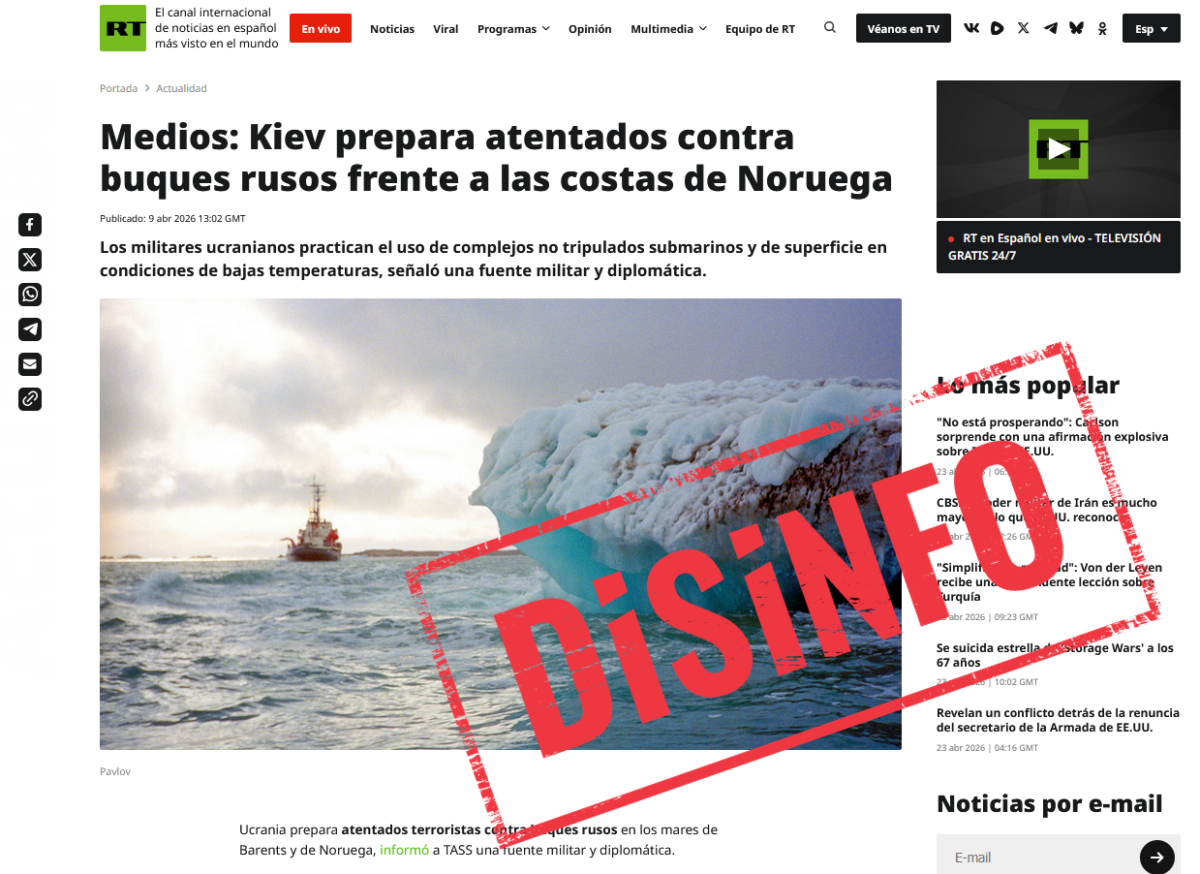
One recurring false narrative spread by these networks claims Ukraine is planning terrorist attacks against Russian ships in the Barents and Norwegian Seas with Norway’s support. Security experts say this represents a deliberate attempt to frame Western support as direct involvement that risks escalating into a wider war with Russia.
“These accusations follow a familiar pattern we’ve seen since 2022,” said Maria Kowalski, a disinformation researcher at the European Centre for Information Integrity. “The strategy aims to isolate Ukraine from its international partners by associating legitimate defense efforts with terrorism.”
Another persistent disinformation campaign concerns the Bucha massacre. Since Russian forces withdrew from the Kyiv suburb in March 2022, leaving behind evidence of widespread civilian killings, pro-Kremlin outlets have promoted multiple contradictory narratives—first denying the killings occurred, then claiming they were staged, and now alleging that Ukraine is eliminating witnesses through “violent mobilization” to battlefields.
These claims contradict extensive documentation gathered by international investigators, including the United Nations Human Rights Monitoring Mission in Ukraine, which confirmed Russian forces carried out summary executions of civilians in Bucha.
Perhaps most persistent in the disinformation ecosystem is the “secret biolabs” conspiracy theory, which falsely claims Western governments operate military laboratories in Ukraine to conduct hazardous biological experiments. Despite being repeatedly debunked by international organizations including the World Health Organization, this narrative continues to circulate through Russian state media channels.
The sanctions reflect growing concern about Russia’s expanding information operations. Recent reports from the EU’s Rapid Alert System identified a 40% increase in coordinated Russian disinformation campaigns targeting European audiences over the past year, with particular focus on countries providing military support to Ukraine.
Financial analysts note the sanctions will restrict these organizations’ ability to operate in EU financial systems and prevent European businesses from providing services to them. The practical impact will likely disrupt their funding channels and limit their operational capacity within the European information space.
The EU’s move comes amid increasing international efforts to counter state-sponsored disinformation. Last month, G7 countries announced a joint initiative to enhance information resilience and improve coordination in identifying and exposing foreign interference campaigns.
Media literacy experts emphasize that recognizing these tactics remains crucial for public resilience against disinformation. As these narratives evolve, they often incorporate AI-generated content and exploit legitimate news outlets to appear more credible—as demonstrated by recent false claims about a NATO weapons depot allegedly destroyed by Russian forces, which originated from an AI-generated article.
Fact Checker
Verify the accuracy of this article using The Disinformation Commission analysis and real-time sources.

24 Comments
Exploration results look promising, but permitting will be the key risk.
Good point. Watching costs and grades closely.
Good point. Watching costs and grades closely.
If AISC keeps dropping, this becomes investable for me.
The cost guidance is better than expected. If they deliver, the stock could rerate.
Good point. Watching costs and grades closely.
Exploration results look promising, but permitting will be the key risk.
Exploration results look promising, but permitting will be the key risk.
Good point. Watching costs and grades closely.
Good point. Watching costs and grades closely.
I like the balance sheet here—less leverage than peers.
Good point. Watching costs and grades closely.
Good point. Watching costs and grades closely.
Production mix shifting toward Disinformation might help margins if metals stay firm.
Good point. Watching costs and grades closely.
Good point. Watching costs and grades closely.
Nice to see insider buying—usually a good signal in this space.
The cost guidance is better than expected. If they deliver, the stock could rerate.
Good point. Watching costs and grades closely.
Good point. Watching costs and grades closely.
The cost guidance is better than expected. If they deliver, the stock could rerate.
Nice to see insider buying—usually a good signal in this space.
Good point. Watching costs and grades closely.
Good point. Watching costs and grades closely.