


Listen to the article
Virginia Redistricting Map Ruled Unconstitutional, Igniting Political Battle
A contentious redistricting battle in Virginia has reached a critical juncture after a county judge blocked certification of a narrowly approved ballot measure that would have dramatically reshaped the state’s congressional map in Democrats’ favor. The ruling, issued Wednesday by Tazewell County Circuit Court Judge Jack Hurley, has propelled the dispute toward Virginia’s Supreme Court in a case that could significantly impact control of Congress.
The April 21 referendum passed by a slim margin of 51.5% to 48.5%, with more than three million Virginians turning out to vote on the high-profile measure. The proposed map would have dramatically shifted the state’s political balance, potentially creating a 10-1 advantage for Democrats in congressional representation.
Republican House leader Del. Terry Kilgore expressed frustration with what he described as an unprecedented partisan push by Democrats. “This is Virginia. We normally get along, normally go through things the right way,” Kilgore told Fox News Digital. “I’ve been here over 30 years… I’ve never seen anything like this so partisan since I’ve been here, and it was a very sad day for the Commonwealth.”
Judge Hurley’s decision cited procedural failures in how the legislature advanced the amendment and “misleading” ballot language that he said improperly influenced voters. The ballot question had asked voters if they wanted to approve a new congressional map that would “restore fairness” in elections, language Republicans argued lacked neutrality.
Virginia Attorney General Jay Jones, a Democrat, immediately announced plans to appeal the decision. “Virginia voters have spoken, and an activist judge should not have veto power over the People’s vote. We look forward to defending the outcome of last night’s election in court,” Jones said Wednesday.
The legal challenge is one of multiple lawsuits contesting the redistricting referendum as unconstitutional and unlawful. The Virginia Supreme Court is scheduled to hear oral arguments on Monday in a related case, during which the high court could also address issues raised in other lawsuits still proceeding through lower courts.
Jason Snead, executive director of the Honest Elections Project, which filed an amicus brief in one of the cases, explained that Republicans have raised several procedural concerns. These include allegations that Democrats unconstitutionally extended a special legislative session to pass the amendment and failed to comply with a law requiring ballot language to be posted for 90 days.
“[The Virginia Supreme Court] has really been backed into a corner by this, and I think that they understand that they’re going to have to get an answer here very quickly,” Snead said, predicting a ruling by May. The deadline for candidates to qualify for the ballot is May 26, adding urgency to the court’s deliberations.
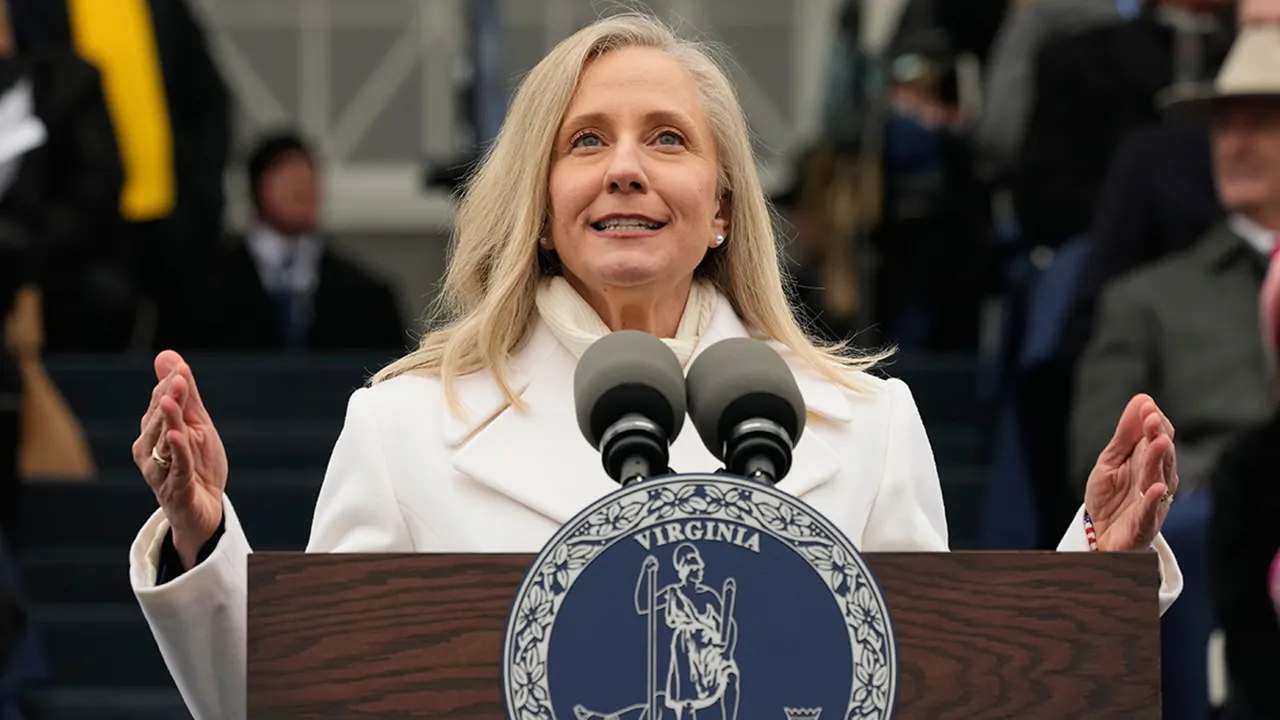
The redistricting controversy has spotlighted tensions between newly elected Democratic Governor Abigail Spanberger and her previous statements on the issue. Spanberger had previously vowed to leave Virginia’s maps to the redistricting commission but reversed that stance when signing the amendment, characterizing it as a “temporary response” to national redistricting fights.
Democratic leader Don Scott had framed the amendment as “about leveling the playing field across the country,” citing Republican gerrymandering in states like Texas, North Carolina, and Missouri. Critics note he omitted mention of Democratic-friendly mid-cycle redistricting efforts in California and Utah.
The narrow margin of approval for the referendum has become a political talking point itself. Kilgore suggested it demonstrated Virginia’s true political character: “They thought we were going to lose by 15 points, and that would make their argument that Virginia is a 10-1 state. Of course it was like at 2% and that shows you how close Virginia really is, that we are a 6-5 state.”
The case highlights the nationwide battle over redistricting, with both parties engaged in efforts to redraw maps to their advantage in multiple states. The Virginia dispute is particularly significant given the state’s swing status and the potential impact on the closely divided U.S. House of Representatives.
Legal experts predict the Virginia Supreme Court will move quickly to resolve the matter, with a decision expected within weeks. The court previously allowed the referendum vote to proceed in March after Judge Hurley had initially blocked it, stating at the time that “it is the process, not the outcome, of this effort that we may ultimately have to address.”
Fact Checker
Verify the accuracy of this article using The Disinformation Commission analysis and real-time sources.

4 Comments
The growing partisan divide in Virginia is troubling, and this redistricting battle is just the latest example. I hope the state can find a way to move forward in a more collaborative and bipartisan manner.
Redistricting is always a contentious issue, with both parties trying to gain an advantage. I’m curious to see if the court will uphold the proposed map or if it will be ruled unconstitutional.
It’s concerning to hear that the redistricting process has become so partisan in Virginia. Hopefully, the state’s Supreme Court can provide a fair and impartial ruling on the matter.
This redistricting battle in Virginia certainly highlights the growing partisan divide in the state. It will be interesting to see how the state’s Supreme Court rules on the case and the potential impact on congressional representation.