


Listen to the article
East Village Residents Who Supported Mamdani Now Suing to Block Homeless Shelter
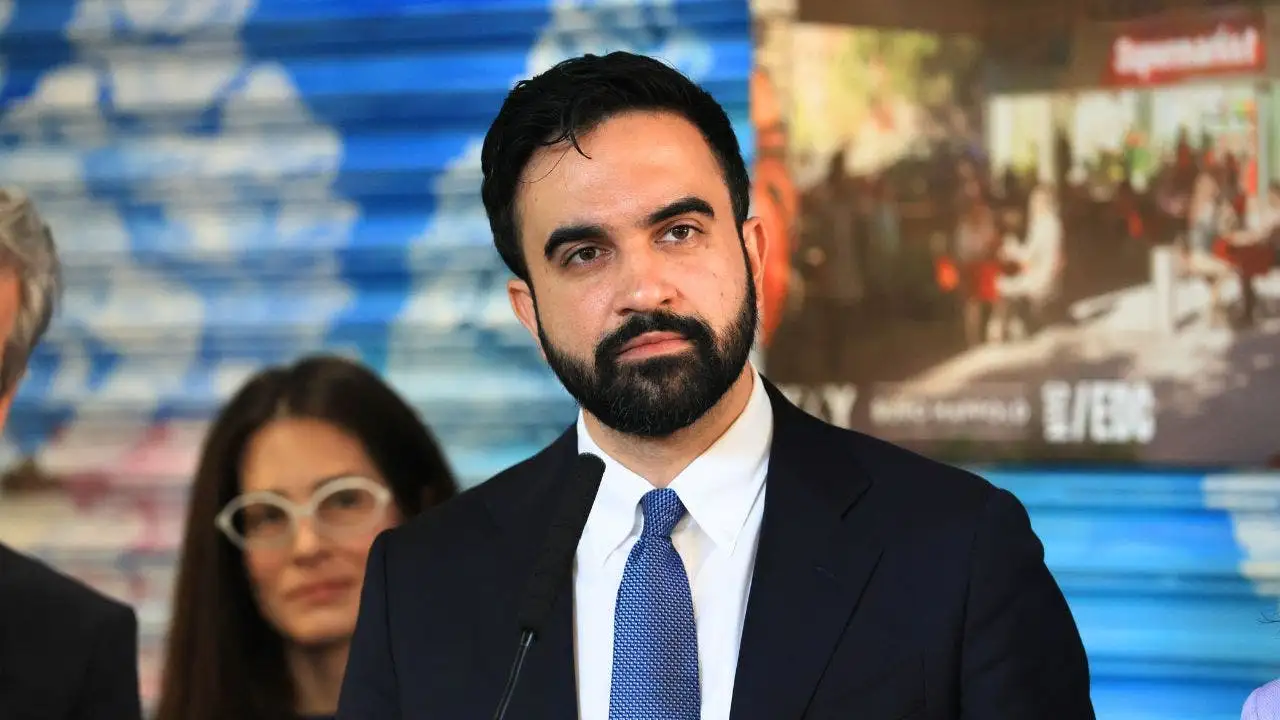
East Village residents who overwhelmingly supported New York Mayor Zohran Mamdani in the last election have filed a lawsuit to prevent a building in their neighborhood from being converted into a temporary homeless shelter, highlighting growing tensions between progressive policies and community concerns.
The lawsuit, filed with the New York City Supreme Court on Monday, comes from an area that voted for Mamdani by a 40-point margin. Ten residents joined the Village Organization for the Integrity of Community Engagement (VOICE) in their legal challenge against the city’s plans to transform a building at 8 East 3rd Street into an intake shelter for homeless adult men.
Election District 45, which includes East Village, delivered a decisive 70.1% victory for Mamdani over independent candidate Andrew Cuomo, who received just 26.0% of the vote. This stark contrast between electoral support and opposition to specific policies has drawn attention from political observers nationwide.
The legal filing argues that city officials circumvented proper environmental and legal safeguards by fast-tracking the shelter project. “It challenges the city’s hastily made and legally invalid decision to locate a new citywide homeless adult male intake center at 8 East 3rd Street without following any of the legal requirements that must precede such a significant and consequential decision,” the complaint states.
According to court documents, Mamdani’s administration relied on an emergency declaration from 2022 that was originally issued to handle an influx of asylum-seekers. Critics argue this represents an inappropriate use of emergency powers for a different purpose than originally intended.
The mayor’s office has presented the East 3rd Street location as a necessary replacement for the Bellevue Shelter, which officials claim has deteriorated beyond usability. “The Department of Social Services (DSS) and Department of Homeless Services (DHS) will immediately implement an operational plan to vacate 30th Street and relocate the critical functions to other sites,” Mamdani’s office stated in a press release. Approximately 250 individuals currently housed at Bellevue would need relocation by mid-March.
The administration has also announced plans for a second accommodation site at 333 Bowery Street, scheduled to open May 1, designed to house families without minor children. This forms part of a broader strategy to address homelessness across the city, though implementation has proven contentious.
The situation has prompted reactions from national political figures, particularly conservatives who view it as evidence of hypocrisy among progressive voters. “No one is more ‘not in my backyard’ than white progressives. This community voted for Mamdani in a landslide but don’t want to live with the consequences,” remarked Michael Henry, a former New York attorney general candidate.
Senator Ted Cruz (R-Texas) simply commented “Oops” on social media, while Senator Rick Scott (R-Florida) expressed that he was “not shocked” by the residents’ opposition to the shelter.
The controversy highlights the complex political dynamics at play in urban housing policy, where progressive ideals often clash with neighborhood concerns about safety, property values, and quality of life. The tension between supporting policies in principle and accepting their implementation locally—often characterized as “NIMBY” (Not In My Back Yard) sentiment—presents a significant challenge for Mamdani’s administration.
The New York Supreme Court has not yet responded to requests for emergency relief that would pause the city’s plans, leaving the fate of the shelter project temporarily uncertain.
This case may serve as a bellwether for how the Mamdani administration navigates the practical implementation of its progressive agenda in the face of community resistance, even from neighborhoods that strongly supported his election.
Fact Checker
Verify the accuracy of this article using The Disinformation Commission analysis and real-time sources.

18 Comments
The contrast between the mayor’s electoral support and the community’s opposition to the shelter is striking. It underscores how progressive policies can sometimes clash with neighborhood-level concerns. Navigating these tensions will require empathy, flexibility, and a willingness to incorporate community input.
While the goal of providing shelter for the homeless is a worthy one, the fast-tracking of this project seems to have disregarded valid community concerns. A more collaborative approach may have yielded better results.
This is a complex issue with valid arguments on both sides. While addressing homelessness is crucial, the local community’s perspective on the shelter location and process shouldn’t be disregarded either. I hope the mayor and residents can find a mutually agreeable path forward.
This situation underscores the need for inclusive, transparent decision-making processes that engage all stakeholders. Effective policymaking requires balancing different interests and perspectives.
The contrast between the overwhelming support for Mayor Mamdani and the opposition to this specific policy is intriguing. It highlights the complexities of translating progressive ideals into effective, community-supported actions.
It’s admirable that the East Village community was so supportive of Mayor Mamdani, but this lawsuit shows the challenges of implementing policies that impact local neighborhoods. Finding the right balance is crucial.
This is an interesting case study on the tensions that can arise between progressive policies and local community concerns. It highlights the complexity of balancing different priorities and interests.
It’s disheartening to see a community that strongly supported a progressive candidate now suing to block one of his policies. This underscores the need for better communication and collaboration.
This case highlights the ongoing challenge of balancing progressive ideals with the practical realities of local communities. It will be interesting to see how the legal proceedings unfold.
Absolutely. Navigating these tensions requires nuance and compromise. I hope the city and residents can find a solution that addresses the needs of the homeless while respecting the community’s voice.
Interesting to see the tension between progressive policies and community concerns. It’s a delicate balance to strike, especially when it comes to issues like homelessness. I wonder if there are any creative solutions that could address both the needs of the homeless and the concerns of local residents.
This is a complex issue without easy solutions. While the mayor has a mandate to address homelessness, the community’s concerns about the shelter location and process also seem legitimate. Finding the right balance will require nuance, compromise, and a sincere effort to address all stakeholders’ needs.
I’m curious to see how this plays out. Residents clearly feel their voices aren’t being heard, even after supporting a progressive candidate. It’ll be interesting to follow the legal challenge.
I’m skeptical of the city’s handling of this situation. Circumventing proper environmental and legal safeguards is concerning and undermines trust in the political process.
I agree, the lack of transparency and community engagement is troubling. Policymakers should strive for inclusive decision-making to build support and address legitimate concerns.
This highlights the challenges of implementing progressive policies at the local level. Residents may support the broader goals, but balk when specific projects are proposed in their own neighborhoods. Finding the right approach to address homelessness while respecting community input will be crucial.
This situation raises important questions about the role of local input in policymaking. While the goal of providing shelter is laudable, the process seems to have lacked sufficient community engagement.
I’m curious to see how this plays out. On one hand, the mayor has a mandate to address homelessness. But the community concerns about the shelter location and process also seem valid. Hopefully the two sides can find a compromise that works for everyone involved.