


Listen to the article
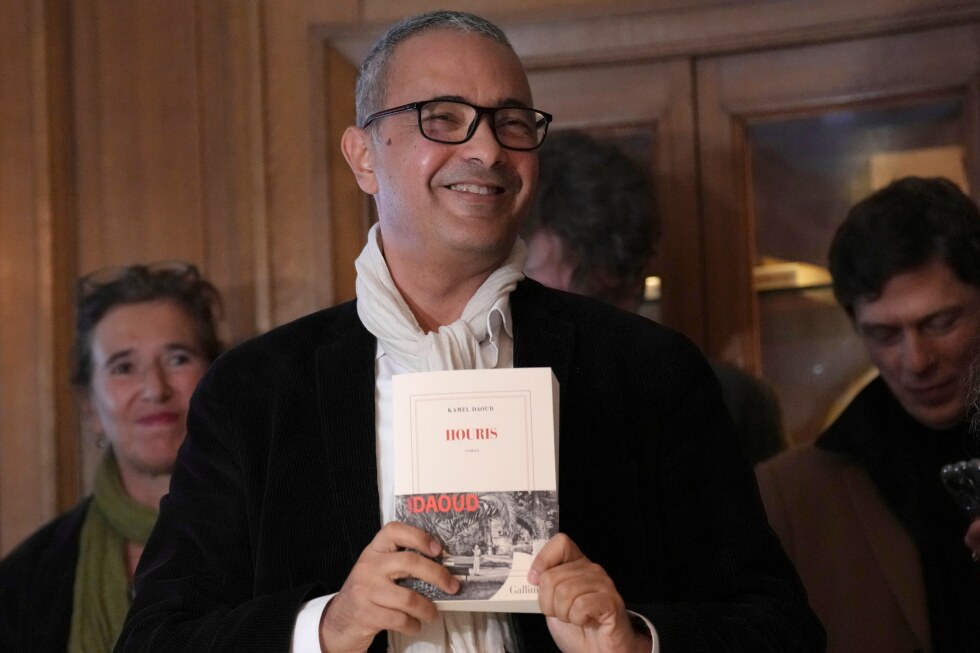
French-Algerian author Kamel Daoud has been sentenced to three years in prison in Algeria for his Goncourt Prize-winning novel “Houris,” the writer announced Wednesday on social media platform X. The verdict, delivered Tuesday, also includes a fine of 5 million Algerian dinars (approximately $38,000).
Daoud, who currently resides in France, said his conviction stems from Algeria’s Charter for Peace and National Reconciliation, a 2005 referendum-approved measure that offered widespread pardons to both armed Islamists and security forces following the country’s devastating civil war.
“The text punishes any public mention of the civil war,” Daoud explained in his statement. “Ten years of war, nearly 200,000 dead according to estimates, thousands of terrorists granted amnesty… and only one guilty party: a writer.”
The legal action against Daoud originated in the Algerian city of Oran. Beyond this recent sentence, Algerian authorities issued two international arrest warrants against him in May 2025 and have threatened to strip him of his Algerian nationality.
“Houris” (translated as “Virgins” in English) centers on victims of Algeria’s “black decade,” a period of intense violence in the 1990s when tens of thousands were killed during an Islamist insurgency. The conflict erupted in 1991 after the military-backed government canceled a second round of legislative elections following an Islamist victory in the first round.
The novel, which received France’s prestigious Goncourt Prize in 2024, tells the story of a young girl named Aube who survives a terrorist attack in her village of Had Chekala in western Algeria despite having her throat slit. Following publication, an Algerian woman named Saâda Arbane accused Daoud of appropriating her personal story without permission.
Arbane had previously been treated by Daoud’s wife, Aicha Dahdouh, a psychiatrist at Oran University Hospital specializing in trauma related to civil war violence. “Kamel Daoud and his wife asked for my permission to use my story, and I refused every time,” Arbane stated during appearances on Algerian television, calling it “an invasion of her privacy.”
A legal collective formed to support Arbane, citing the Charter for Peace and National Reconciliation provisions that prohibit public discussion of this traumatic period in Algeria’s history.
Daoud’s case highlights the continuing tensions surrounding artistic expression and historical memory in Algeria. The government’s response to his work underscores the sensitive nature of addressing the civil war’s legacy, which remains a heavily controlled narrative in the country despite the conflict having ended nearly three decades ago.
This is not an isolated incident in Algeria’s recent approach to dissident writers. Another French-Algerian author, Boualem Sansal, faced similar legal consequences for his work. Sansal, whose writings have criticized Islam, colonialism, and contemporary Algerian leadership, was convicted of undermining national unity and insulting public institutions. He received a five-year prison sentence under Algeria’s anti-terrorism laws before being granted a humanitarian pardon following intervention by Germany’s president. Sansal returned to France last year after serving one year in prison.
Literary and human rights organizations have expressed concern about Algeria’s increasing restrictions on freedom of expression, particularly regarding discussion of the country’s recent history. The prosecution of acclaimed writers like Daoud and Sansal signals a troubling pattern of suppressing literary works that challenge official narratives.
Despite these legal challenges, Daoud’s “Houris” continues to receive international acclaim for its powerful portrayal of civil war trauma. The Goncourt Prize recognition has amplified the novel’s visibility, bringing greater attention to both the artistic merit of Daoud’s work and the complex political environment that now threatens its author with imprisonment.
Fact Checker
Verify the accuracy of this article using The Disinformation Commission analysis and real-time sources.

9 Comments
Deeply concerning that a celebrated author is being jailed for his writings in Algeria. This seems like a worrying crackdown on free expression and creative freedom. I hope the international community speaks out against this injustice.
Agreed, this case highlights the ongoing challenges to civil liberties in Algeria. Writers and artists should not face imprisonment for their work.
Deeply troubling to see a respected author like Kamel Daoud facing prison time for his novel. This is a clear attempt to censor critical voices and restrict freedom of expression. I hope the international community condemns this unjust verdict in the strongest terms.
Agreed, this case is emblematic of the ongoing crackdown on dissent and creative freedom in Algeria. The authorities’ actions are a disturbing affront to fundamental human rights that deserve widespread condemnation.
This is a disappointing development for free speech and the arts. Imprisoning an acclaimed author over the content of their novel is a disturbing abuse of power. I hope Daoud’s case sparks renewed efforts to safeguard creative freedoms in Algeria.
The harsh sentence imposed on Kamel Daoud raises serious concerns about the state of civil liberties in Algeria. Writers and intellectuals should be able to explore sensitive topics without fear of legal retribution. I hope this case prompts greater scrutiny of Algeria’s human rights record.
It’s disheartening to see a writer facing such severe penalties for their novel. Censorship and persecution of artists is a troubling trend. I hope Daoud’s case brings greater attention to the need for protecting freedom of expression in Algeria.
Sadly, this is not an isolated incident. Authoritarian regimes often try to silence critical voices through the legal system. The international community must condemn these actions and stand up for fundamental human rights.
This is an alarming development and a troubling setback for free speech and artistic expression in Algeria. Imprisoning a celebrated author over the content of their novel is a grave violation of human rights that must be condemned. I hope the international community pressures Algeria to uphold its commitments to civil liberties.