


Listen to the article
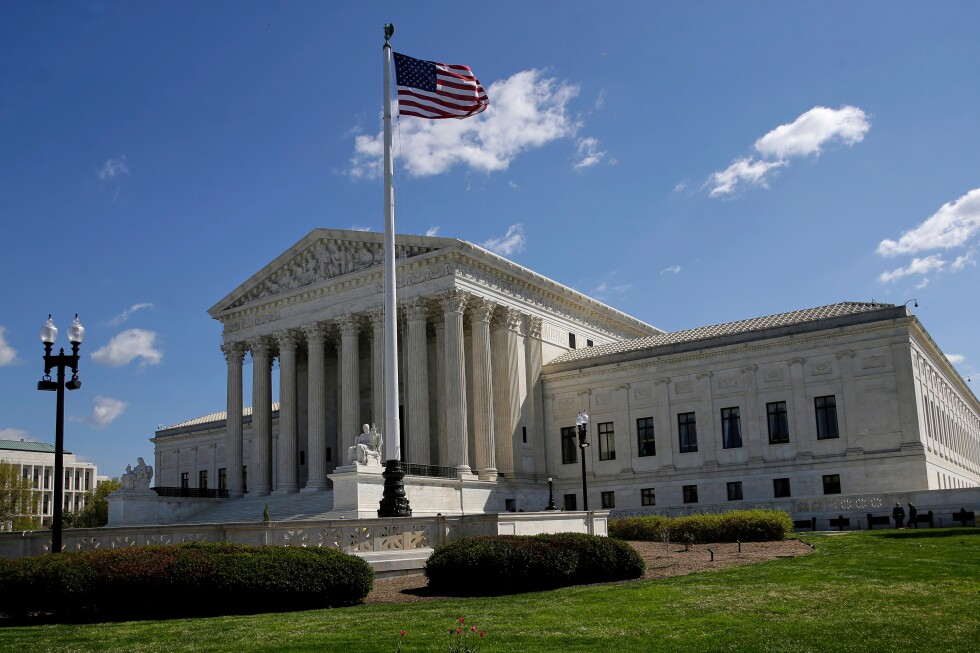
In a significant legal development, the Supreme Court ruled 6-3 on Wednesday in favor of former Army Specialist Winston Hencely, allowing him to proceed with a lawsuit against government contractor Fluor Corporation following a 2016 suicide bombing in Afghanistan that left him severely injured.
The case stems from a tragic Veterans Day weekend attack at Bagram Airfield, where Hencely confronted Ahmad Nayeb, an Afghan employee of Fluor, who was attempting to detonate an explosive vest at a 5K race. When stopped, Nayeb immediately detonated the device, killing five people and wounding more than a dozen others.
Hencely suffered catastrophic injuries in the explosion. Court documents detail how projectiles fractured his skull and tore through his brain, leaving him without full use of much of the left side of his body. He continues to suffer from abnormal brainwaves, seizures, and traumatic brain injury.
An Army investigation later determined that Fluor had failed to properly supervise Nayeb, who constructed the explosive vest while on the job site inside the base. This finding became the foundation for Hencely’s legal action against the company.
The veteran filed his lawsuit in South Carolina, where two of Fluor’s subsidiaries are headquartered. His claims center on negligent supervision, negligent entrustment of tools, and negligent retention of an employee under state law.
Irving, Texas-based Fluor Corporation, a major engineering construction company with extensive government contracts, attempted to shield itself from liability by arguing that it was operating during wartime for the federal government, which typically enjoys immunity from such lawsuits.
However, the Supreme Court disagreed with this reasoning. Justice Clarence Thomas, writing for the majority, explained that while companies are protected when fulfilling government contracts as directed, that protection doesn’t extend to alleged failures in carrying out basic supervisory duties. The majority opinion held that Fluor’s alleged negligence in monitoring Nayeb fell outside the scope of governmental immunity protections.
The 6-3 decision featured an ideologically diverse majority, with Justices Thomas, Sonia Sotomayor, Elena Kagan, Neil Gorsuch, Amy Coney Barrett, and Ketanji Brown Jackson ruling in Hencely’s favor.
Chief Justice John Roberts joined Justices Samuel Alito and Brett Kavanaugh in dissent. Writing for the minority, Alito expressed concern that Hencely’s lawsuit could interfere with the government’s wartime powers and decision-making, including policies that required contractors to maximize employment of Afghan nationals during U.S. operations in the country.
The ruling represents a significant victory for military personnel seeking legal recourse against government contractors for alleged negligence in conflict zones. It establishes that contractors cannot always claim immunity when their employees cause harm, particularly when that harm stems from alleged failures in basic supervision and security protocols.
For Fluor Corporation, which has numerous contracts with the U.S. government for projects worldwide, the decision creates potential exposure to similar claims. The company will now have to defend itself against Hencely’s allegations in South Carolina courts.
The case also highlights the complex relationship between the military, private contractors, and host nation employees in war zones. U.S. military operations in Afghanistan and Iraq relied heavily on contractors who employed tens of thousands of local nationals, creating security challenges that this case brings into sharp focus.
With the Supreme Court’s decision clearing the path forward, Hencely’s lawsuit will now return to lower courts where the merits of his specific claims against Fluor will be evaluated. The outcome could potentially influence how government contractors approach security protocols and employee supervision in conflict areas around the world.
Fact Checker
Verify the accuracy of this article using The Disinformation Commission analysis and real-time sources.

9 Comments
Suicide bombings are the epitome of senseless violence. I’m glad the courts are allowing this lawsuit to move forward so the veteran can seek justice and compensation. Proper contractor oversight is critical for base security.
This case highlights the immense sacrifices our veterans make to serve their country. The veteran deserves every opportunity to seek justice and compensation for his life-altering injuries. I hope the courts rule in his favor.
As a former service member, I’m deeply saddened to hear about this horrific attack and the veteran’s life-changing injuries. I hope the courts hold the contractor accountable and provide the veteran with the support he needs to heal.
This is a tragic case, but I’m glad the Supreme Court has cleared the way for the veteran to seek justice against the contractor. Proper vetting and supervision of local hires is critical for the safety of military personnel and civilians on bases.
Tragic stories like this demonstrate the ongoing risks our troops face even on secure military bases. Rigorous contractor oversight is essential to protect our service members. I’m glad the courts are allowing this lawsuit to proceed.
This is a heartbreaking case, but I’m encouraged to see the courts siding with the veteran. Accountability for contractors who fail to uphold their duty of care is essential. I hope this lawsuit leads to meaningful change.
Suicide bombings are horrific acts of violence. While nothing can undo the trauma the veteran experienced, I’m hopeful this lawsuit will shed light on any negligence or failures that contributed to the attack. Justice and accountability are crucial.
It’s heartbreaking to hear about the veteran’s severe injuries. I hope he is able to get the compensation and support he needs to continue his recovery. Holding contractors accountable for security lapses is an important step.
While nothing can undo the trauma the veteran endured, I’m hopeful this lawsuit will lead to positive changes in how military contractors are vetted and supervised. Service members deserve the utmost care and protection.