


Listen to the article
Slovak Yogi Leads Cross-Border Movement Against Wind Energy
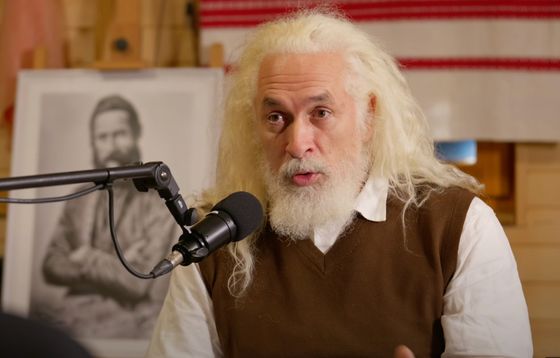
A growing anti-wind turbine movement spanning Slovakia and the Czech Republic is gaining momentum, with surprising leadership coming from a Slovak yogi with interests in Eastern spirituality and Slavic culture. Daniel Máčovský, who runs the website zapravdu.sk, has emerged as a central figure in coordinating opposition to wind energy projects across both nations.
The movement’s impact became evident earlier this year when residents of Dedina Mládeže, a southern Slovak village, rejected the construction of wind farms in a local referendum. Similar votes have occurred throughout Slovakia, with SME daily noting last summer that anti-wind energy sentiment has strengthened considerably.
Opponents frequently circulate claims about health dangers from turbine infrasound and property devaluation in nearby areas. These arguments spread rapidly through social media, particularly in Facebook groups where Slovak activists have successfully exported their messaging to the Czech Republic.
Political figures in both countries have amplified these concerns. Filip Turek, the Czech government’s newly appointed plenipotentiary for climate policy, recently dismissed wind energy as “a disaster that has no impact on our energy mix.” Meanwhile, Slovak Environment Minister and Deputy Prime Minister Tomáš Taraba stated last year that his ministry “does not plan to support the construction of wind farms” and intends to “tighten the conditions” for approval.
The cross-border nature of this opposition appears increasingly coordinated. Máčovský works closely with Katarína Ondrušová, a local politician from the Slovak village of Dubovce, who has become a regular presence at Czech community meetings where wind projects are being considered. According to the Prague-based Association for International Affairs, Máčovský’s Facebook group serves as “a key Slovak node” for anti-wind activism.
Máčovský’s background is noteworthy. His organization, Bhaku Joga Centrum, registered zapravdu.sk in late 2017 with stated goals of promoting “selfless love for God” and supporting “cultural and spiritual understanding between the West and the East.” Wind energy was not mentioned in these initial objectives.
His focus shifted to wind farms last March when he began publishing articles about alleged negative impacts and created the Facebook group “For the truth about wind farms,” which now has over 6,000 members. Máčovský told Deník Referendum that his activism was triggered by plans for nearly 70 wind turbines near his home in Hlohovec by the Nuclear Energy Company Slovakia.
“Whether it’s vaccinations or now wind turbines, when they want to interfere with my freedom or space, it turns me on,” he explained, noting his activism began during the COVID-19 pandemic.
Since then, Máčovský has initiated nationwide petitions against wind farms and created detailed guides for blocking their construction. His website offers instructions for organizing local opposition, including petition templates and arguments for public discussions. For a fee of 37 euros, he even sells a book summarizing alleged scientific studies on wind turbines’ negative effects.
Health experts challenge these claims. Zděnka Vandasová from the Czech National Institute of Public Health states that while wind turbine noise can be unpleasant, specific health consequences remain unproven. “Infrasound is part of traffic noise or common sounds of nature… There is no evidence that infrasound from wind turbines has a more significant impact on residents than other audible noise,” she noted.
Similarly, research by David Slavata from the Technical University of Ostrava and Bohumil Frantál from the Academy of Sciences found minimal impact on property values. Their study comparing municipalities with and without wind farms showed price decreases in only one of six locations, and by just five percent.
The movement’s reach extends beyond online activism. In the Czech village of Velká Skrovnice, Mayor Pavel Chalupa observed how initial public support for a seven-turbine project by Redwood Capital shifted after opponents created a Facebook group and invited Ondrušová to speak at a community discussion. “She was sitting there with a bunch of complete strangers at a table and then she took the floor,” Chalupa recalled. Following her claims about health hazards, locals launched a petition, and the council terminated negotiations with the investor.
Ondrušová has also appeared alongside far-right politicians in Czech communities. At a February meeting in Věžky concerning a wind project by Jipocar, she shared the stage with former SPD candidate Tomia Okamura and senator Jana Zwyrtek Hamplová, known for spreading disinformation about COVID-19.
When questioned about potential Russian connections, both Máčovský and Ondrušová strongly denied such ties. “I would be happy if someone paid us and I would not be ashamed of it,” Máčovský stated, claiming his activities are funded by small donors through his website. However, they operate within a network of disinformation media that Czech investigative journalists have linked to Russian influence operations.
Climate disinformation expert Vojtěch Pecka notes that opposition to wind turbines stems from various motivations, including conspiratorial thinking, environmental concerns, and possibly economic and geopolitical interests. He explains that disinformation campaigns typically mix truth with exaggeration rather than complete fabrication. “Usually, some basis of truth is taken and then significantly exaggerated,” Pecka observes, making claims difficult for the average person to fully evaluate.
As renewable energy remains central to European climate goals, this cross-border resistance presents a significant challenge to wind energy development in both countries.
Fact Checker
Verify the accuracy of this article using The Disinformation Commission analysis and real-time sources.

10 Comments
Interesting to see the Russian influence behind these anti-wind energy campaigns in Eastern Europe. It’s concerning how disinformation and propaganda can spread rapidly on social media, swaying public opinion. I wonder what the underlying motivations are for stoking this opposition.
Fascinating to see how disinformation and propaganda can spread across borders, fueling public opposition to renewable energy projects. This underscores the importance of media literacy and critical thinking when it comes to evaluating the credibility of online narratives.
The information about Russian involvement is quite alarming. It highlights the need for greater transparency and independent fact-checking when it comes to public debates on major infrastructure decisions like this. Manipulating local sentiments is a worrying tactic.
This is a complex issue with valid concerns on both sides. But the Russian angle is very concerning. We need to be wary of foreign powers exploiting domestic debates for their own strategic interests, even on local energy projects.
This is a troubling development. While I understand concerns about wind farms, the revelation of Russian influence is extremely worrying. We need robust safeguards to protect our democratic processes from foreign interference, even at the local level.
The Russian connection is very concerning. It’s crucial that we scrutinize the sources and motivations behind these anti-wind campaigns, rather than simply accepting the narratives at face value. Maintaining energy security and independence should be a top priority.
This is a complex issue with valid concerns on both sides. However, the potential for foreign meddling is deeply troubling. We need robust safeguards to protect our democratic processes and ensure energy decisions are made in the best interests of citizens, not geopolitical agendas.
This is a worrying trend. While I understand concerns about wind farm impacts, it’s troubling to see foreign actors exploiting these issues for their own geopolitical agenda. We need to be vigilant about identifying and countering such malign influence campaigns.
Agreed. Transparency and fact-based debate are crucial when it comes to important energy infrastructure decisions. Allowing misinformation to drive the narrative undermines rational policymaking.
The role of a Slovak yogi in leading this cross-border anti-wind movement is intriguing. I wonder what his motivations and connections are. Regardless, it’s clear a lot more scrutiny is needed to uncover the web of influence behind these campaigns.