


Listen to the article
Railway Explosion in Poland Triggers Wave of Disinformation
An explosion that damaged a railway track near the village of Mika in Poland on Sunday night has sparked a surge of misinformation and anti-Ukrainian sentiment online, despite Polish officials pointing to Russian involvement. The damaged rail line is a critical route for transporting aid into Ukraine, an aspect that gives the incident strategic significance beyond mere infrastructure damage.
Polish Prime Minister Donald Tusk declared on Tuesday that “all facts point to a Russian trace,” stating that two Ukrainian citizens working for Russia are suspected of carrying out the attack. These suspects were already known to Polish authorities, according to Tusk’s statement to parliament.
However, an extensive analysis by the European research collective Res Futura Data House reveals a troubling trend in online discussions about the incident. After examining more than 14,000 online statements related to the railway damage, researchers found that 42% of posts blamed Ukrainians for the sabotage, while only 24% attributed responsibility to Russians. The remaining 19% suggested involvement by Polish state services.
“These indications are often based on previous events, such as fires at facilities in Poland, vandalism or the presence of Ukrainians near strategic infrastructure,” Res Futura explained in their report. “It is often hypothesized that these actions were retaliatory or provocative, allegedly to draw Poland into a direct conflict with Russia.”
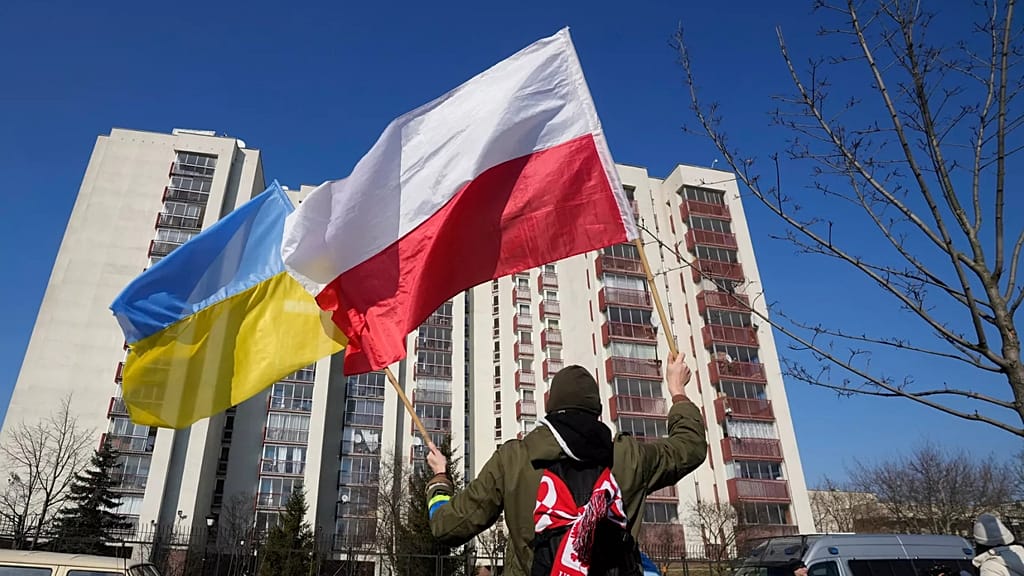
The proliferation of anti-Ukrainian narratives comes at a sensitive time for Poland, which has hosted one of the largest populations of Ukrainian refugees since Russia’s full-scale invasion began. Nearly 2 million Ukrainians have sought refuge in Poland, placing significant demands on the country’s resources and social infrastructure.
During his parliamentary address, Prime Minister Tusk warned against the rising tide of anti-Ukrainian sentiment and disinformation, emphasizing their alignment with Russian strategic interests.
“It is becoming increasingly easy to whip up anti-Ukrainian resentments for known reasons, as more and more Polish citizens are carrying the burden of the fact that we are hosting such a large number of refugees and migrants,” Tusk stated. “From the point of view of Russian interests, the awakening of radically anti-Ukrainian emotions and disinformation has a double value for Russian services.”
Deputy Prime Minister and Foreign Minister Radosław Sikorski echoed these concerns on social media, calling those who blame Ukraine for Russia’s actions “political saboteurs.” Sikorski highlighted Russia’s massive investment in disinformation and propaganda aimed at turning Polish public opinion against Ukraine, the European Union, and Ukrainian refugees.
“Russia spends billions on fueling such sentiments, on disinformation and propaganda. It wants to set a part of public opinion against our neighbors, against the EU and against refugees from Ukraine who have fled to Poland from Russian bombs,” Sikorski wrote.
Despite these warnings from senior government officials, anti-Ukrainian rhetoric continues to gain traction among some political figures in Poland. Grzegorz Braun, Member of the European Parliament and leader of the far-right Polish Crown Confederation, described the explosion as “another anti-Polish provocation” being exploited by “warmongers” to escalate tensions.
Sławomir Mentzen, leader of the Confederation party currently the third-largest political force in Poland, attempted to connect the incident to broader migration concerns, writing: “They let in a Ukrainian who had been convicted of sabotage there and who has now blown up tracks in Poland. We cannot let everyone in. Poland must vet people who want to come to us!”
In response to the growing wave of misinformation, Poland’s Ministry of Digitalization has issued warnings on its website, urging citizens to exercise caution when consuming news about the incident. “Disinformation activity conducted in the Russian and Polish infosphere has been identified since Sunday. It is intended to redirect responsibility for the sabotage of the Polish railway lines to the Ukrainian side and to discredit the actions taken by the Polish services responsible for security,” the ministry stated.
The incident comes at a critical juncture in Poland’s support for Ukraine and highlights the vulnerability of critical infrastructure in NATO’s eastern flank. It also demonstrates the effectiveness of Russia’s information warfare tactics in sowing division among Ukraine’s strongest European allies.
Fact Checker
Verify the accuracy of this article using The Disinformation Commission analysis and real-time sources.

13 Comments
Disinformation campaigns can be insidious and difficult to counter. But maintaining transparency and promoting fact-based narratives will be key to combating these efforts.
Well said. Vigilance and a commitment to truth-telling will be essential in navigating this situation. Allowing falsehoods to proliferate unchecked would only compound the challenges.
This is a concerning report. If Russia is indeed behind these disinformation efforts, it’s a clear attempt to sow discord and undermine Ukraine. We need to stay vigilant and fact-check claims carefully during these tense times.
Agreed. Disinformation can be a powerful weapon, especially when aimed at a vulnerable situation like this. Fact-based reporting and analysis will be crucial to countering these efforts.
This is a complex situation that warrants a measured, evidence-based approach. While the Russian involvement is concerning, we should avoid speculation and focus on the facts as they emerge.
The strategic significance of this rail line underscores the importance of protecting critical infrastructure, especially during times of conflict. Robust security measures will be essential.
Agreed. Safeguarding supply routes for humanitarian aid should be a top priority. Securing these vital links will help mitigate the impact of such attacks.
I’m glad to see the Polish government is taking this seriously and investigating the suspected Russian involvement. Transparency and accountability will be key to addressing these kinds of hybrid threats.
The disparity in online narratives is quite telling. It seems the disinformation campaign is already in full swing. We’ll need robust fact-checking and public education to counter these distortions.
Absolutely. The prevalence of false narratives blaming Ukraine is very concerning. Combating this kind of coordinated manipulation will require a concerted, evidence-based response.
I’m curious to see the results of the Polish investigation. Determining the true perpetrators behind this incident will be crucial for crafting an appropriate response.
The strategic importance of that rail line for aid transport makes this attack particularly troubling. Whoever is responsible, the damage could have serious humanitarian consequences that shouldn’t be overlooked.
You’re right, the impact on aid delivery is a major concern here. Maintaining critical infrastructure is vital, so this kind of sabotage can’t be tolerated.