


Listen to the article
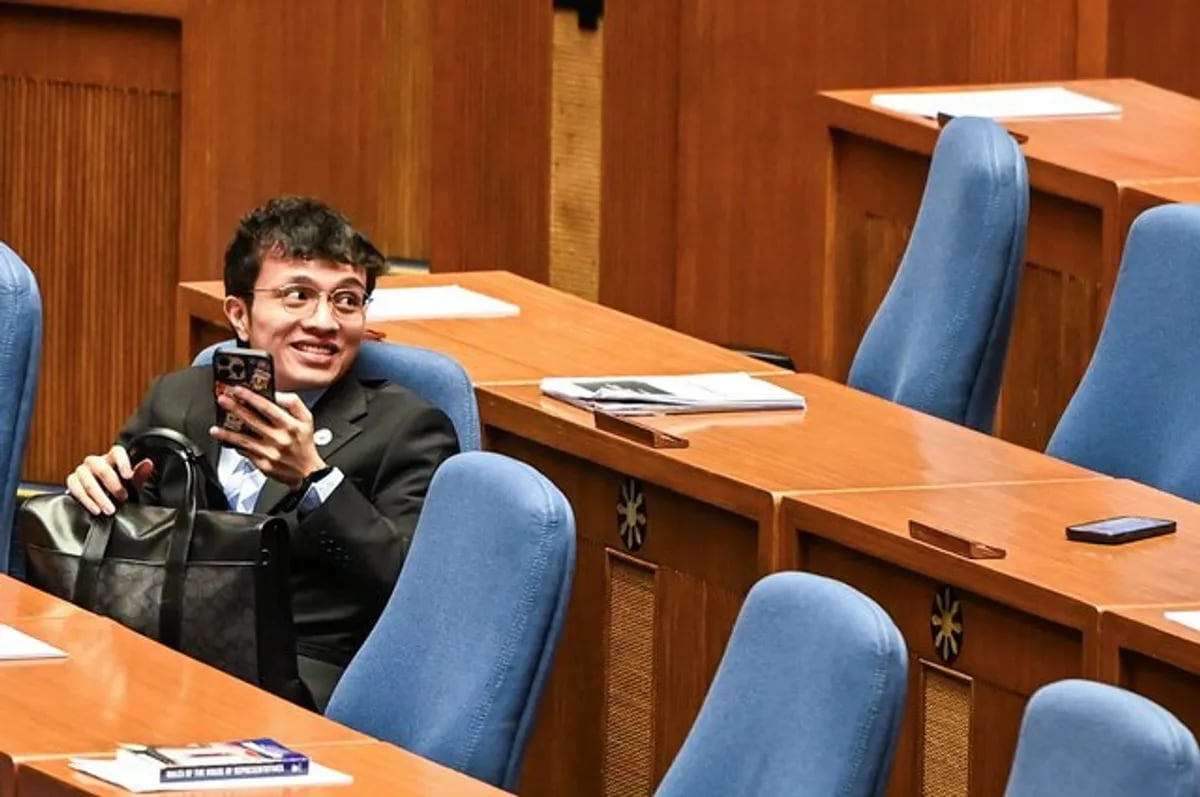
The Office of the President took aim Tuesday at La Carlota City Councilor Kiko Barzaga, accusing him of using President Ferdinand Marcos Jr.’s name to justify his inflammatory social media posts and disinformation campaign targeting Vice President Sara Duterte.
Presidential Communications Secretary Cheloy Garafil said Barzaga’s recent actions have no connection to the administration, emphasizing that the official “is not affiliated with the Office of the President and does not represent President Ferdinand R. Marcos Jr.”
“His statements, opinions, and the continued spread of disinformation regarding Vice President Sara Duterte are solely his own and do not reflect the position of the presidency,” Garafil stated in a firmly worded message to media outlets.
The rebuke comes amid escalating political tensions between the Marcos and Duterte camps, which had previously joined forces under the “UniTeam” banner during the 2022 elections that swept them into power. The alliance has visibly frayed in recent months as the Vice President has become increasingly critical of administration policies.
Barzaga, a local official from Negros Occidental, has gained notoriety for his social media posts attacking the Vice President. His recent activities appeared designed to amplify divisions between the country’s top two officials. The Palace statement makes clear that these efforts are neither sanctioned nor endorsed by President Marcos.
Political analysts note this public distancing represents a significant development in the evolving relationship between the President and Vice President. Maria Santos, a political science professor at the University of the Philippines, told reporters, “The Palace statement demonstrates the administration’s desire to maintain at least a veneer of unity despite the obvious cracks in the relationship.”
The controversy emerges during a particularly challenging period for the administration, which is navigating economic pressures, regional security concerns, and ongoing recovery efforts from recent natural disasters. Political infighting threatens to distract from governance priorities and undermine public confidence in leadership stability.
Vice President Duterte has yet to respond directly to Barzaga’s attacks or the Palace’s statement. However, her spokesperson, Reynold Munsayac, previously condemned what he called “orchestrated efforts to malign the Vice President’s character” through social media disinformation campaigns.
The timing is particularly sensitive as both Marcos and Duterte prepare for their respective State of the Nation Address (SONA) and Counter-SONA presentations in the coming weeks. These parallel addresses will be closely scrutinized for signs of further political divergence.
Digital rights advocates have pointed to this incident as another example of how social media is being weaponized in Philippine politics. “This pattern of using local officials to test political messaging while maintaining plausible deniability has become standard practice,” said James Rivera of Digital Democracy Philippines.
For context, the Marcos-Duterte partnership has been showing signs of strain since late 2023, when the Vice President resigned from her Cabinet position as Education Secretary. She has since adopted a more independent political stance and has occasionally criticized administration policies.
Political observers suggest the Palace’s strong statement may indicate President Marcos’s desire to prevent further deterioration in their working relationship. “This clear disavowal of Barzaga’s tactics suggests the President doesn’t want to be seen as endorsing personal attacks against his Vice President, even as their political differences become more apparent,” said political analyst Ramon Casiple.
The incident highlights the fragility of political alliances in Philippine governance and the increasing role of social media in amplifying divisions. It also demonstrates how local officials can become proxies in higher-level political conflicts.
As the 2025 midterm elections approach, political alignments are expected to shift further, with both the Marcos and Duterte camps potentially reconfiguring their alliances and support bases in preparation for the next electoral cycle.
Fact Checker
Verify the accuracy of this article using The Disinformation Commission analysis and real-time sources.

5 Comments
It’s troubling to see growing political tensions between the Marcos and Duterte camps, which could undermine public trust. Hopefully, the administration can work to mend these rifts and focus on serving the people.
This seems like a concerning case of a local official misusing the President’s name to spread disinformation. The Palace’s firm rebuke is appropriate to uphold transparency and accountability in the government.
This situation highlights the importance of having a transparent and accountable government. The Palace’s swift response is a positive step, but more needs to be done to ensure that disinformation is not allowed to take root.
As a concerned citizen, I hope the administration can find a way to bring the Marcos and Duterte camps together and focus on the real issues facing the country, rather than engage in political infighting.
The use of social media to spread disinformation is a serious issue that needs to be addressed. The government should take strong action against those who try to manipulate public opinion through false or misleading claims.