


Listen to the article
The spread of fake news, from early hoaxes to today’s AI-driven threats, remains one of society’s most pressing challenges, according to experts tracking the evolution of misinformation across time.
From the 19th century to the present, fabricated stories have demonstrated their power to manipulate public perception and trigger widespread panic. The phenomenon has deep historical roots, with two incidents standing as powerful examples of how false information can capture public imagination.
In 1835, The Sun newspaper published a series of articles claiming British astronomer Sir John Herschel had discovered bat-winged men living on the moon. The fabricated story, written by Richard Adams Locke, became a sensation despite its outlandish claims. The newspaper never issued a retraction, and Herschel himself reportedly found the use of his name in the hoax both amusing and irritating.
A century later, in 1938, Orson Welles’ radio dramatization of H.G. Wells’ “The War of the Worlds” triggered similar mass confusion when listeners mistook the fictional alien invasion narrative for actual news coverage.
These historical cases highlight how misinformation can thrive even without today’s rapid digital distribution channels. However, the current landscape presents far greater challenges, according to recent global risk assessments.
Both the UN Global Risk Report 2024 and the World Economic Forum’s Global Risk Report 2025 have identified disinformation as one of the world’s top threats. The problem is particularly acute in India, where more than 806 million people have internet connections and 491 million use social media platforms, according to the “Digital 2025: India” report.
Research from the University of Oxford and fact-checking organizations like Alt News and BOOM indicates that India experiences the highest volume of misinformation shared on social media globally. This proliferation occurs in a context of linguistic and cultural diversity, political polarization, and social divisions that create fertile ground for misleading content.
“Without parallel investment in information and media literacy, India remains particularly vulnerable to disinformation campaigns,” said Dr. Fazlunnisa H, Assistant Professor at the University of Madras. “We’re seeing the effects of this vulnerability play out in real time across various platforms.”
The consequences extend beyond mere confusion. Misinformation fuels societal mistrust, deepens polarization, and can directly threaten public safety. The scientific community has also experienced damaging hoaxes, such as the 1989 cold fusion scandal, where two chemists claimed to achieve fusion at room temperature. The premature announcement, which bypassed proper peer review, initially generated enormous excitement before being thoroughly debunked.
The media environment itself contributes to the problem. India’s declining position in the Press Freedom Index reflects shrinking space for independent journalism, with many outlets prioritizing sensationalism over accuracy in pursuit of higher ratings and engagement. Digital platforms often manipulate algorithms to drive traffic, sometimes spreading unverified claims to achieve viral status.
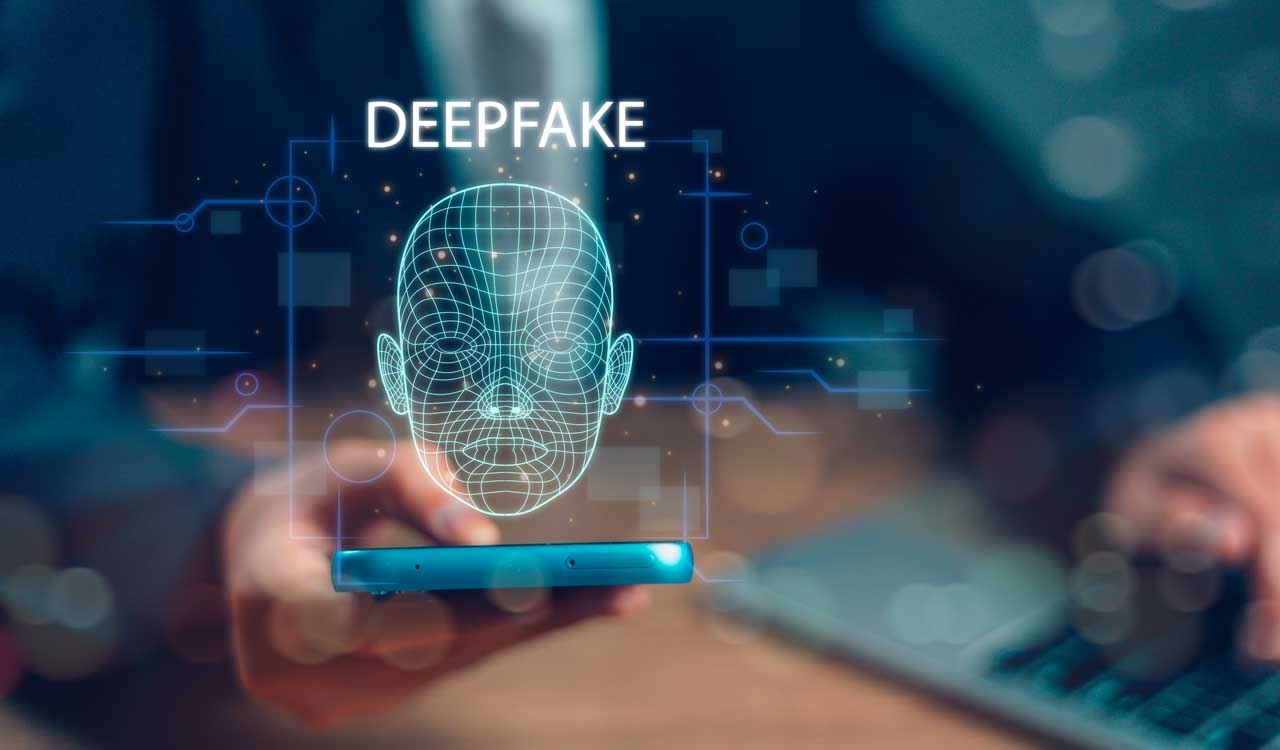
The emergence of artificial intelligence has dramatically escalated these challenges. Generative AI technologies now enable the creation of deepfakes, synthetic voices, and hyper-realistic images that are increasingly difficult to distinguish from authentic content. In regions with low digital literacy, these sophisticated tools can rapidly amplify confusion.
“Every person with a smartphone and internet access is simultaneously a consumer and creator of content,” noted Ramakrushna Baral, UGC-JRF Research Scholar. “Without robust regulation and technological safeguards, we risk drowning in a sea of misinformation that obscures truth.”
India has implemented several legal measures to combat the problem. Section 353 of the BNS 2023 criminalizes the dissemination of false claims intended to incite public disorder or threaten national sovereignty. The 2021 Intermediary Guidelines & Digital Media Ethics Code Rules require platforms to remove unlawful content and trace sources. However, enforcement remains inconsistent, and proposals for government fact-checking units have drawn criticism from free speech advocates.
Addressing misinformation effectively requires a comprehensive approach beginning with fundamental literacy skills—information, media, legal, civic, and political—according to experts. This includes creating an ecosystem that involves partnerships between government agencies, educational institutions, libraries, and information centers, supported by AI-powered monitoring systems that limit the spread of false content.
Particularly important is encouraging critical thinking among students and young adults, promoting fact-checking practices, and emphasizing transparent reporting standards. The most crucial step may be the simplest: teaching people to resist sharing information received on social media without verification.
“In a democracy, informed citizens remain our strongest defense against manipulation,” said Dr. Kabita Baral of Berhampur University. “If misinformation continues to masquerade as truth, it endangers not just individuals but the democratic process itself.”
Fact Checker
Verify the accuracy of this article using The Disinformation Commission analysis and real-time sources.

9 Comments
The historical cases mentioned in this article demonstrate how the spread of misinformation is not a new problem, but one that has persisted for centuries. From moon hoaxes to alien invasions, the public’s willingness to believe compelling narratives over verifiable facts remains a challenge. As technology advances, the ability to fabricate and disseminate false information will only become more sophisticated, underscoring the need for media literacy and a skeptical approach to news consumption.
These historical cases highlight how the blurring of truth and fiction has long been a challenge. While modern disinformation may be more technologically advanced, the human tendency to believe compelling narratives over verifiable facts remains. Combating this requires critical thinking and a healthy skepticism of extraordinary claims.
It’s concerning how even respected outlets like The Sun and Orson Welles’ radio show were willing to spread misinformation for the sake of sensationalism. This underscores the need for strong media ethics and fact-checking, especially with the rise of AI-generated content. We must be discerning consumers of news.
Interesting to see how fake news has evolved from newspaper hoaxes to radio dramatizations, and now AI-driven threats. The core issue seems to be the human desire for sensational stories over boring facts. Maintaining a well-informed public remains an ongoing battle in the information age.
These early examples of fake news and disinformation highlight the timeless appeal of sensational stories over mundane facts. Even prestigious outlets like The Sun and Orson Welles’ radio show were willing to sacrifice truth for the sake of captivating their audiences. As the digital age has amplified this dynamic, the need for critical thinking and fact-checking has never been more important.
These historical examples of misinformation show how susceptible the public can be to captivating narratives, even when they defy logic and evidence. As technology advances, the ability to fabricate and spread false information will only become more sophisticated. Vigilance and media literacy are essential to navigating this landscape.
Fascinating how fake news and disinformation have such a long history, even before the digital age. These 19th and 20th century examples show how easily the public can be manipulated by fabricated stories, whether about moon inhabitants or alien invasions. Reminds us to be vigilant about verifying information from reputable sources.
The examples of The Sun’s moon hoax and Orson Welles’ radio play demonstrate the power of storytelling to shape public perception, even in the absence of truth. In today’s digital landscape, where information can spread rapidly, the need for critical analysis of news sources is paramount. We must be discerning consumers of media.
Fake news and disinformation are not new phenomena, as these historical cases illustrate. What’s changed is the speed and scale at which misinformation can now spread. While technological advances have exacerbated the problem, the underlying human tendency to believe compelling narratives remains a challenge. Strengthening media literacy is crucial.