


Listen to the article
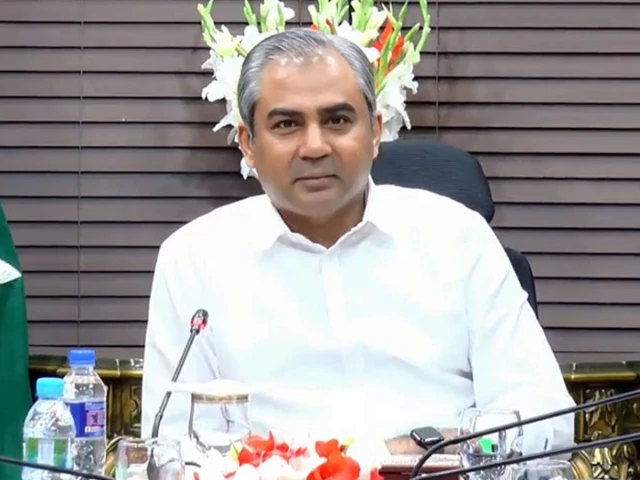
Pakistan’s Interior Minister Mohsin Naqvi announced a major government offensive against misinformation on Monday, claiming that “90 percent of online news is false” and will now face coordinated state action. Speaking at a press conference in Lahore, Naqvi outlined plans for a collaborative effort between the information ministry and the National Cyber Crime Investigation Agency (NCCIA) to combat what he described as rampant fake news.
“We will no longer allow individuals to declare a living person dead, a dead person alive, or make any allegation they please without evidence,” Naqvi stated. While affirming his commitment to freedom of expression, he drew a clear line at fabricated content, emphasizing that these liberties do not extend to manufacturing false information.
The interior minister highlighted the structural differences between mainstream media and social media platforms, noting that traditional journalists operate within an editorial system with accountability measures. “If you have evidence, report a story. But you cannot fabricate content on social media and hide behind freedom of speech,” he said.
According to Naqvi, while Pakistan Electronic Media Regulatory Authority (PEMRA) already monitors and responds to inaccurate reporting in mainstream outlets, social media currently lacks a similar accountability framework. He indicated that a regulatory body for online content was “already being established” to address this gap.
In a notable warning, Naqvi addressed Pakistani nationals abroad who he claimed were involved in disinformation campaigns targeting state institutions. “Those sitting out there — you are also coming back soon. If you think you will get protection here, that is not possible. You will be answerable,” he declared. He specifically mentioned political campaigns originating from India, stressing that the country’s integrity represented a “red line” that should not be crossed.
The press conference also addressed tensions regarding the repatriation of undocumented Afghan migrants, which Naqvi said was progressing smoothly in Punjab, Sindh, and Balochistan but facing resistance in Khyber Pakhtunkhwa (KP). He claimed that Afghan camps that had been de-notified by the federal government were still operating in KP, creating a policy conflict.
“Our message to the KP government is simple: prioritize your country over politics. National security is not an area where a province can run its own policy,” Naqvi stated firmly. He warned of potential legal consequences if KP authorities continued to resist federal directives on migrant repatriation, and indicated that Afghans who return to Pakistan after being repatriated would face arrest.
The repatriation drive comes amid deteriorating relations between Pakistan and Afghanistan, with Islamabad pointing to security concerns as a primary motivation for the policy. The initiative has drawn criticism from human rights organizations concerned about the humanitarian implications, particularly for Afghans who have lived in Pakistan for decades.
Addressing public concerns about passengers being prevented from boarding flights at Pakistani airports, Naqvi clarified that only 50-70 travelers daily were being stopped due to incomplete documentation. He directed the Federal Investigation Agency (FIA) to release this data to counter what he described as “agent mafia-led disinformation campaigns.”
Naqvi also commented on speculation regarding the delay in officially notifying the newly created Chief of Defence Forces (CDF) position, explaining that establishing new constitutional systems takes time. “The Constitution has been amended, a new institution is being established. A system takes time,” he noted.
The CDF role, created through the recent 27th Constitutional Amendment, replaces the Chairman Joint Chiefs of Staff Committee. Field Marshal Asim Munir, the current Chief of Army Staff (COAS), is expected to assume this position. The restructuring represents a significant change in Pakistan’s military command structure, with the government set to determine how responsibilities will be divided between the COAS and CDF positions.
Naqvi concluded his remarks by reiterating the government’s commitment to combating fake news, stating, “We will not allow fake news to create panic in the garb of journalism,” and emphasizing that national security and public confidence cannot be compromised.
Fact Checker
Verify the accuracy of this article using The Disinformation Commission analysis and real-time sources.

8 Comments
Appreciate the minister’s acknowledgment of the structural differences between traditional and social media. Enforcing accountability for fabricated content is important, but the execution will determine whether this is an effective and fair policy.
While combating misinformation is important, a ‘large-scale crackdown’ raises red flags. The nuances of implementation will be critical to ensure this doesn’t become a tool for censorship or political suppression.
Distinguishing between mainstream media and social media content is an important nuance. Fact-checking and editorial oversight are critical, but care must be taken to preserve open discourse. This will be an interesting policy to watch unfold.
Agreed, the challenge is finding the right balance. Too heavy-handed an approach could backfire, but doing nothing also has risks. It will require thoughtful implementation to be effective.
Cracking down on online misinformation is a complex challenge. It requires balancing free expression with accountability for fabricated content. Curious to see the details of Pakistan’s approach and how they ensure legitimate criticism is not stifled.
Addressing online misinformation is a global priority, but the approach matters greatly. I’m curious to see the specifics of Pakistan’s plan and how they’ll ensure it doesn’t inadvertently stifle legitimate debate and criticism.
Curious to see how Pakistan defines ‘fabricated content’ and ‘false information’ in practice. Overly broad interpretations could infringe on legitimate discourse. Balancing public interest with free expression will be the challenge.
Rampant fake news online is a global problem, so Pakistan’s efforts to address it are notable. However, a ‘crackdown’ raises concerns about overreach and censorship. The details of their approach will be crucial in evaluating its merits.