


Listen to the article
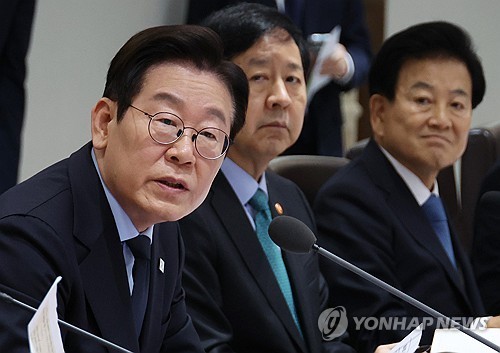
In a decisive call to action, President Lee Jae Myung demanded stringent measures against the proliferation of hate speech and disinformation during Tuesday’s Cabinet meeting in Seoul, characterizing such expressions as criminal acts that require immediate intervention.
The South Korean leader expressed particular concern about extreme rhetoric spreading across social media platforms, which he believes exacerbates social anxiety amid growing polarization in Korean society.
“There are still anachronistic acts of discrimination and hatred based on race, origin or nationality in some parts of our society,” President Lee stated. “On social media, hate speech targeting specific groups is spreading indiscriminately, while false and manipulated information remains rampant.”
His comments come at a time of heightened tension in South Korea, where anti-Chinese sentiment has surged among certain conservative factions. The nation is still reeling from last week’s controversy involving the chair of the Korean Red Cross, who was forced to resign after the discovery of past racist remarks directed at foreign diplomats.
President Lee didn’t mince words in his condemnation, describing hate speech and disinformation as threats to both democracy and citizens’ daily lives. He called for police authorities to take decisive action in eliminating such behaviors.
“It can no longer be tolerated,” the president declared firmly. “These acts go beyond the bounds of freedom of expression. We must establish mechanisms to punish hate speech without delay.”
South Korea has witnessed an uptick in online hate speech in recent years, particularly targeting vulnerable minorities including foreign workers, refugees, and certain ethnic groups. Digital platforms have amplified these voices, creating echo chambers that often go unchecked.
The issue reflects broader regional tensions, as relations between South Korea and China have grown increasingly complex due to economic competition, cultural differences, and geopolitical considerations. Anti-China demonstrations have become more visible in Seoul’s streets, often fueled by nationalist rhetoric that spreads rapidly through social media channels.
Media experts point to the challenge of balancing free speech protections with the need to curb harmful content. South Korea’s legal framework regarding hate speech remains less developed than those in some Western democracies, creating enforcement challenges for authorities.
President Lee’s directive extends beyond policing existing content. He instructed authorities to develop mechanisms that would “fundamentally block the dissemination of fabricated information” – suggesting a more preventative approach may be forthcoming.
The president also extended his appeal to political leaders across the spectrum, calling for bipartisan cooperation to address these issues. This cross-party approach may prove challenging in South Korea’s often polarized political landscape, where disagreements frequently fall along ideological lines.
Digital rights advocates have expressed concerns about potential overreach in content regulation, while civil rights groups generally support stronger protections against discriminatory speech. The government will need to navigate these competing interests as it develops its response.
International observers note that South Korea’s approach to this issue could have implications for how democratic societies throughout Asia balance free expression with protection from harmful speech in the digital age.
As the administration moves forward with potential new regulations or enforcement mechanisms, the effectiveness of these measures will likely depend on cooperation from technology platforms, community engagement, and the creation of clear guidelines that differentiate between protected speech and harmful content.
Fact Checker
Verify the accuracy of this article using The Disinformation Commission analysis and real-time sources.

11 Comments
Tackling hate speech and disinformation is a complex challenge. Strong penalties may help, but education and fostering social cohesion are also crucial. I’m curious to see the specific policies proposed and how they will be implemented effectively.
Curbing hate speech and disinformation is a worthy goal, but the details on implementation will be crucial. I’m curious to learn more about the specific legal framework and how it will be applied in a fair and transparent manner.
Strong action against hate speech is commendable, but the proposed penalties raise questions about potential overreach. Balancing public safety and civil liberties will require nuanced policymaking and robust public dialogue.
Robust measures against hate speech and disinformation are understandable, but the devil will be in the details. Ensuring these policies don’t inadvertently restrict legitimate free expression will be crucial.
Addressing the spread of hate and falsehoods online is a complex challenge facing many nations. I’m interested to see how South Korea’s approach evolves and whether it can serve as a model for other countries grappling with similar issues.
Agreed. Collaborative, multi-stakeholder solutions involving tech companies, civil society, and government will likely be needed to tackle this global problem effectively.
Hate speech on social media is a growing concern globally. While free speech is important, it shouldn’t come at the cost of enabling harmful rhetoric. I hope the proposed measures strike the right balance between protecting rights and promoting unity.
Agreed. Disinformation can be especially pernicious, eroding social trust. Enforcing clear guidelines, improving media literacy, and empowering fact-checking will be key.
Tackling hate speech and disinformation is a priority for many governments. I’m curious to learn more about the specific legal framework South Korea is considering and how it will be implemented to address this complex challenge effectively.
Combating the spread of hateful rhetoric and misinformation is a noble goal, but the proposed penalties raise concerns about potential overreach. I hope policymakers can find the right balance to protect vulnerable groups without compromising core civil liberties.
Regulating hate speech and disinformation is a delicate balance. While the goals are understandable, the proposed penalties raise questions about unintended consequences. I hope policymakers can find solutions that uphold democratic principles while promoting social cohesion.