


Listen to the article
Former Information Minister Defends Government Response to #EndSARS Crisis, Blames Fake News for Escalation
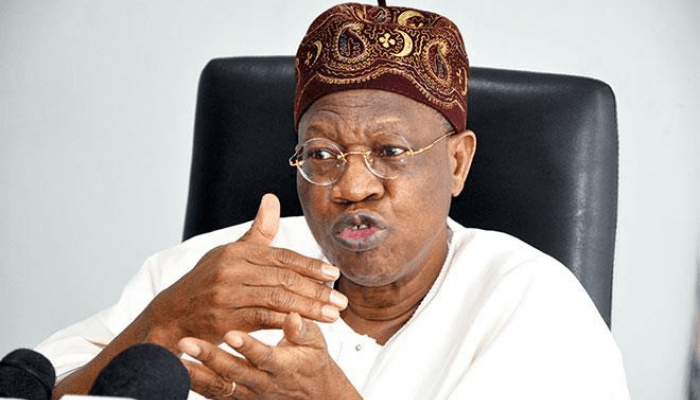
Alhaji Lai Mohammed, Nigeria’s former Minister of Information and Culture, has defended the government’s handling of the 2020 #EndSARS protests, attributing the escalation of the crisis to fake news and disinformation rather than government communication failures. Speaking at a high-level forum at the London School of Economics and Political Science (LSE), Mohammed offered insights into his tenure’s communication challenges during several national crises.
According to the former minister, while the #EndSARS protests began as legitimate demonstrations against police brutality, they were subsequently hijacked by individuals with ulterior motives. The situation deteriorated significantly following the deployment of troops to the Lekki Toll Gate in Lagos, an event that became a flashpoint in the protests.
“The problem we had was not the usual communication gap between the government and the citizens. It was fake news and disinformation, coupled with unbridled violence,” Mohammed stated during his presentation.
In particular, the former minister criticized CNN’s coverage of the protests, claiming the international network relied heavily on unverified and allegedly doctored content. He argued that such reporting heightened tensions and shaped a global narrative that diverged from the actual situation on the ground, further complicating government efforts to restore calm.
Drawing comparisons with other crisis situations during his tenure, Mohammed highlighted the Nigerian government’s more successful communication approach during the COVID-19 pandemic. Despite the absence of established global templates for pandemic communication, he noted that the government’s strategy of transparency and daily briefings resulted in remarkably high public approval ratings between 97 and 98 percent.
The former minister also reflected on the government’s communication strategy in the fight against Boko Haram insurgency in Nigeria’s northeast. He described organizing a landmark media tour for 40 journalists to territories previously controlled by the extremist group as a pivotal moment that countered terrorist propaganda and helped rebuild public confidence in military operations.
Addressing another controversial decision during his tenure, Mohammed defended the suspension of Twitter in Nigeria. He characterized it not as an impulsive action but as a necessary measure to curb incitement and divisive content after repeated unsuccessful attempts to secure cooperation from the social media platform.
Mohammed also highlighted his introduction of nationwide town hall meetings as an innovative approach to government communication. These forums, which he described as unscripted platforms, allowed for tailored messaging and inclusive engagement across Nigeria’s six geopolitical zones, helping bridge communication gaps between the government and citizens.
The former minister revealed that upon taking office, he encountered a significant lack of structured communication strategy. This vacuum necessitated the development of a comprehensive framework that integrated both traditional and digital media channels to establish an effective two-way feedback system between the government and the public.
Mohammed’s appearance at the LSE concluded his three-day speaking tour in the United Kingdom, during which he promoted his new book, “Headlines & Soundbites: Media Moments That Defined an Administration.” The publication chronicles his experiences as Information Minister from 2015 to 2023, a period marked by significant communication challenges across multiple national crises.
The former minister’s reflections provide a window into the complex relationship between government communication, media coverage, and public perception during some of Nigeria’s most turbulent recent events, particularly highlighting the growing impact of disinformation in crisis situations.
Fact Checker
Verify the accuracy of this article using The Disinformation Commission analysis and real-time sources.

7 Comments
It’s concerning to hear how fake news and disinformation exacerbated the EndSARS crisis in Nigeria. Effective communication from the government is crucial during civil unrest, and it sounds like there were significant challenges there. Curious to learn more about the specific misinformation that spread and how it impacted the situation.
The former minister’s comments about the role of fake news and disinformation in the EndSARS crisis are quite concerning. Effective communication from the government is so important during civil unrest, but it sounds like there were major challenges in getting accurate information out. Curious to learn more about the specific misinformation that spread.
Interesting perspective from the former Information Minister on the role of disinformation in the EndSARS protests. While the initial demonstrations seemed legitimate, it’s concerning to hear they were later hijacked by those with ulterior motives. Effective communication is so important during crises like this.
I agree, the spread of fake news and misinformation can really inflame already tense situations. Curious to know more about the specific types of disinformation that contributed to the escalation of the EndSARS protests.
The former minister’s comments highlight the serious problems that can arise from the spread of fake news and misinformation, especially during civil unrest. While the initial EndSARS protests may have been legitimate, it’s concerning to hear they were later hijacked and inflamed by disinformation. Effective government communication is vital, but this situation shows how difficult it can be to combat the spread of false narratives.
This highlights the serious challenges governments face in managing the spread of disinformation, especially during civil unrest. It’s troubling to hear the EndSARS protests were hijacked and exacerbated by fake news. Effective communication is vital, but it’s clearly a complex issue with no easy solutions.
Interesting insights from the former Nigerian Information Minister on the challenges of combating disinformation during the EndSARS protests. It’s troubling to hear the legitimate demonstrations were hijacked and escalated by the spread of fake news. Effective government communication is crucial during crises like this, but it’s clearly a complex issue with no easy solutions.