


Listen to the article
Former Information Minister Attributes #EndSARS Crisis to Fake News, Not Government Communication Failure
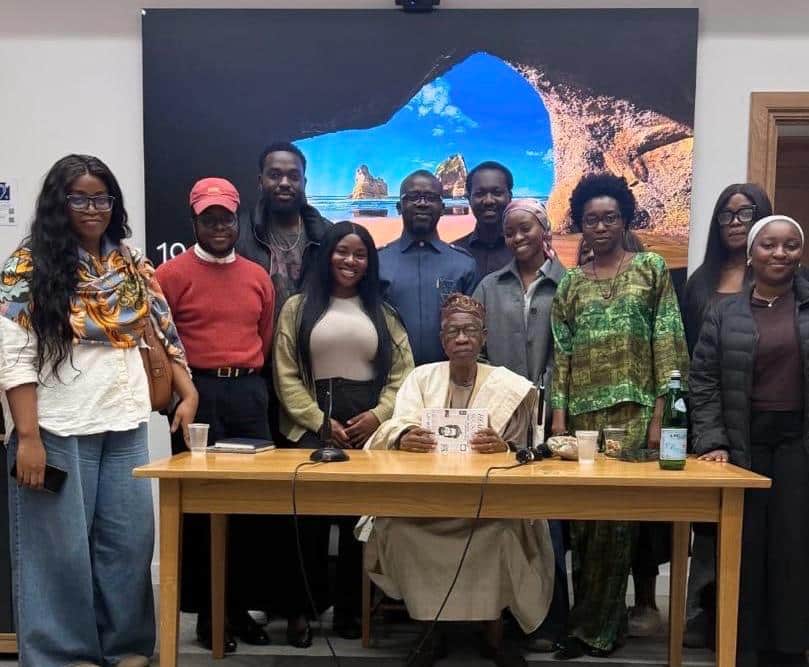
Former Minister of Information and Culture, Lai Mohammed, has characterized the #EndSARS protests as a prime example of how misinformation can inflame already volatile situations, rather than representing a breakdown in government communication. Speaking at a high-level forum at the London School of Economics and Political Science on Friday, Mohammed outlined how the initially legitimate protests against police brutality were derailed by deliberate misinformation campaigns.
“The problem we had was not the usual communication gap between the government and the citizens. It was fake news and disinformation, coupled with unbridled violence,” Mohammed stated, according to a Sunday release from his media office headed by Nnamdi Atupulazi.
The former minister emphasized that while the protests began as genuine expressions of public grievances, they were “quickly hijacked by those with ulterior motives” before being further escalated by the spread of unverified information across various media platforms.
Mohammed pointed to a critical turning point when government forces were deployed to Lagos’s Lekki Toll Gate to disperse protesters. “That’s when fake news and disinformation escalated,” he explained, specifically criticizing CNN’s coverage of the events, which he claimed relied on “unverified and, in some cases, doctored content” that shaped international perception in ways that did not accurately reflect the situation on the ground.
“What we saw during EndSARS was the dangerous power of disinformation in real time,” Mohammed observed, advocating for stronger fact-checking mechanisms, greater media responsibility, and improved resilience against what he termed “information disorder.”
During the same forum, Mohammed highlighted Nigeria’s communication approach during the COVID-19 pandemic, describing it as successful despite the absence of modern precedent. “When COVID-19 broke out, there was no template to fall back on. The last major pandemic, the Spanish Flu, had occurred over 100 years earlier. So we had to devise our own communication strategy on the go,” he said.
The government’s pandemic response featured a coordinated framework built on transparency and consistency, including daily briefings and multi-platform messaging. Mohammed detailed how advocacy materials were translated into major indigenous languages and pidgin to ensure broad accessibility across both traditional and digital platforms.
“We launched live radio programmes nationwide to sustain public dialogue, bringing together health experts, religious and traditional leaders, caregivers and survivors to educate citizens and address lingering doubts about the virus, while tackling stigmatization,” he explained. This approach reportedly achieved approval ratings between 97% and 98% according to government polling, suggesting strong public reception of the communication strategy.
These efforts, Mohammed argued, effectively countered misinformation while managing public anxiety and encouraging compliance with safety measures. He credited this approach with helping Nigeria avoid the catastrophic death toll that many had predicted, noting that the country recorded only 0.0044% of the 7.1 million global COVID-19 deaths.
Addressing another major national challenge, Mohammed discussed communication strategies during Nigeria’s ongoing insurgency in the northeast. He highlighted a media tour he led shortly after taking office, bringing approximately 40 journalists to areas previously controlled by Boko Haram but later reclaimed by government forces.
“That trip was a turning point. For the first time, journalists were able to see firsthand that those territories had been reclaimed, and that normalcy was gradually returning,” Mohammed said. This initiative, according to the former minister, successfully shifted both domestic and international perceptions about the government’s progress against extremist groups, countering insurgent propaganda while rebuilding public confidence in military operations.
Throughout his presentation, Mohammed emphasized the critical importance of strategic communication in managing national crises, while highlighting the particular challenges posed by misinformation in an increasingly digital media landscape.
Fact Checker
Verify the accuracy of this article using The Disinformation Commission analysis and real-time sources.

12 Comments
The former minister raises an important issue about the role of misinformation in escalating civil unrest. Fact-checking and public education efforts could help mitigate such risks.
Absolutely. Governments must be proactive in countering false narratives and providing reliable, transparent information to the public.
The role of social media in spreading unverified information during civil unrest is concerning. Better digital media literacy could help citizens critically evaluate news sources.
That’s a good point. Empowering the public to discern fact from fiction is crucial in the age of instant online sharing.
Disinformation can certainly exacerbate volatile situations, as we’ve seen in many protests around the world. Transparency and accountability from authorities is key to maintaining public trust.
Absolutely. Governments need to get ahead of the narrative and provide credible information to counter false claims.
Interesting take on how misinformation can intensify civil unrest. Proactive communication and fact-checking seem crucial to prevent such crises from spiraling out of control.
Agreed. Balancing the rights of free speech and public order is a delicate challenge for governments.
This highlights the challenges governments face in managing public demonstrations and controlling the narrative. A nuanced approach balancing rights and public order is needed.
Agreed. Maintaining transparency and open communication channels can help defuse tensions and prevent disinformation from hijacking legitimate protests.
This is a complex issue where balancing free speech, public safety, and credible information is crucial. Governments need to be nimble and responsive to rapidly evolving situations.
Agreed. Effective communication strategies and strong digital media literacy programs could help prevent misinformation from derailing legitimate protests.