


Listen to the article
NBC Correspondent Jacob Soboroff Turns Personal Tragedy into Chronicle of Los Angeles Disaster
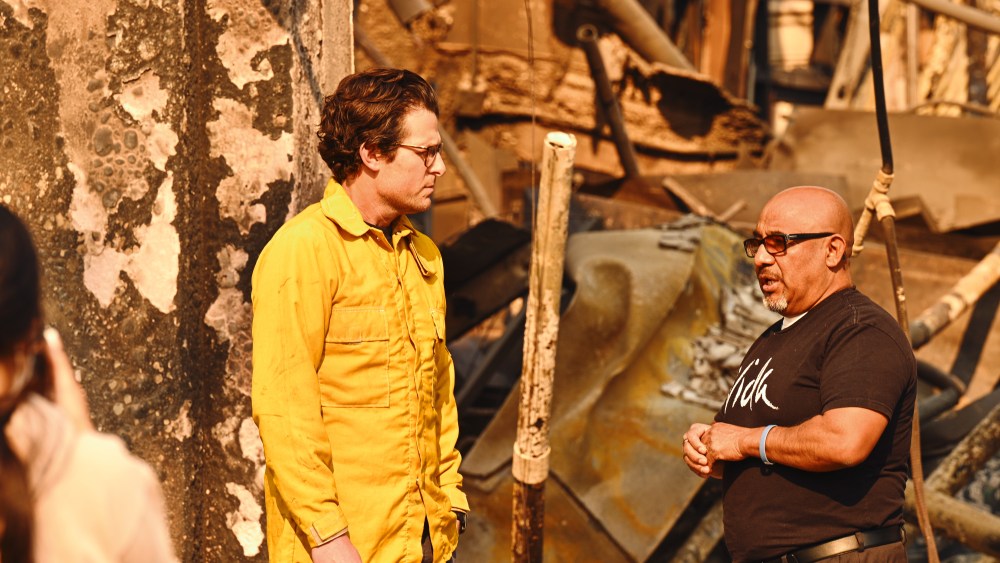
Jacob Soboroff, veteran NBC News correspondent, will never forget January 7, 2025—the day a devastating wildfire swept through his childhood neighborhood in Pacific Palisades. Volunteering to cover the chaotic scene due to his familiarity with the area, Soboroff watched as his childhood home and most of what he remembered from his youth was reduced to ashes within 48 hours.
This personal connection to the disaster forms the backbone of Soboroff’s new book, “Firestorm: The Great Los Angeles Fires and America’s New Age of Disaster,” published by Mariner Books on January 6, 2026. The book chronicles the extraordinary events of those two January days when more than 6,800 homes and buildings in the Palisades and Malibu area were destroyed. Another 9,400 structures were decimated 35 miles away in Altadena.
“What I have come to learn in writing this book and spending the better part of 2025 diving deep into the experience is that in some measure it was the fire of the future,” Soboroff explained. A senior career emergency management official who has served across Democratic and Republican administrations told him the disaster was both a look into his past and a glimpse into his own children’s future.
The 2025 Los Angeles fires, which became the costliest wildfire event in American history, resulted from a complex convergence of factors. “There is not one proximate cause to natural disasters like the one we experienced in L.A.,” Soboroff noted. “It was obviously the global climate emergency, but it’s also the degradation of our infrastructure and changes in the way we live.”
Soboroff recalls hearing electric car batteries exploding around him during his reporting. However, he emphasizes that perhaps the most troubling aspect was the spread of misinformation and disinformation in our charged political climate, which complicated recovery efforts.
The book details the breakdown in political relationships during the crisis, particularly between then-California Governor Gavin Newsom and President-elect Donald Trump. President Joe Biden was actually in Southern California when the fires broke out, heading to the Coachella Valley to dedicate the final national monument of his presidency. Newsom was on his way to meet Biden when the disaster unfolded.
“Their relationship was critical to the major disaster declaration being declared almost immediately,” Soboroff writes. Meanwhile, Trump “almost inexplicably injected himself from the moment that the fires started and began sowing the seeds of misinformation about who was to blame.”
Soboroff doesn’t absolve local leaders of responsibility. He notes that Newsom promised a “Marshall Plan 2.0 for Los Angeles” during an interview for “Meet the Press,” which Soboroff says hasn’t materialized. Questions remain about operational decisions, including the deployment of firefighters to different areas in the Palisades and the presence of inactive steel lattice towers in Altadena that were the source of the Eaton fire.
The book provides a minute-by-minute account of the confusion and chaos, including a scene where Elon Musk confronted firefighters at Zuma Beach on a livestream, forcing Newsom to respond in real time. Residents struggled with conflicting information about evacuation procedures.
Los Angeles’ vulnerability to wildfires isn’t new. Soboroff references a 1960s L.A. Fire Department documentary called “Design for Disaster,” which warned about how the city’s development patterns created fire risks. “Now it’s more acute and more obvious than ever to everybody,” he says. “The question is, when we come back, if we come back, how do you build back?”
The fires also highlighted other pressing issues affecting the region, including the entertainment industry’s struggles, the critical role of immigrants in rebuilding efforts, and Los Angeles’ housing affordability crisis. “All of these things are issues that needed to be addressed before the fire, but I think in the wake of the fire, it is crystal clear for all of us how acute those issues are,” Soboroff observes.
Despite the widespread destruction, Soboroff has found ways to memorialize what was lost. He regularly visits a bronze plaque outside the Palisades Recreation Center, installed during a 1986 park rebuilding campaign that his family participated in. The plaque bears the names of his parents, grandparents, and neighbors—some who lost their homes in the fire, some he hadn’t thought about in years, some no longer living.
“It reminds me of what that place was, not just in the days before the fire, because it had changed, but what that place means to me,” he reflects. “I hope that everybody can find something like that for them as we try to move forward from this. And I think that the book hopefully can be that for a lot of people.”
Fact Checker
Verify the accuracy of this article using The Disinformation Commission analysis and real-time sources.

6 Comments
Misinformation can be incredibly damaging during crises. I’m glad Soboroff is using his platform to counter false narratives and provide authoritative information. Understanding the root causes and systemic issues is key to building resilience.
Soboroff’s personal connection to this tragedy must make his reporting all the more impactful. Chronicling the events and challenges in a book is a valuable contribution to understanding the new realities of extreme weather events.
Yes, his firsthand experience gives him a unique perspective to share. Documenting these disasters is crucial for learning how to better prevent and respond to them in the future.
Wildfires are a growing threat that require clear, fact-based communication. It’s concerning to hear recovery efforts were hampered by misinformation. Journalists like Soboroff have an important role in reporting the truth and helping communities prepare and respond effectively.
Wildfires are an increasing threat due to climate change. While it’s unfortunate to hear recovery efforts were impeded by misinformation, Soboroff’s book sounds like an important contribution to the public discourse on disaster preparedness and response.
Reporting on disasters like this requires empathy and integrity. Soboroff’s personal connection likely gives him valuable insight, but he’ll need to balance that with objective analysis. I look forward to reading his book and learning more about this critical issue.