


Listen to the article
Russia Launches Covert Campaign to Bolster Hungary’s Orbán Before Elections
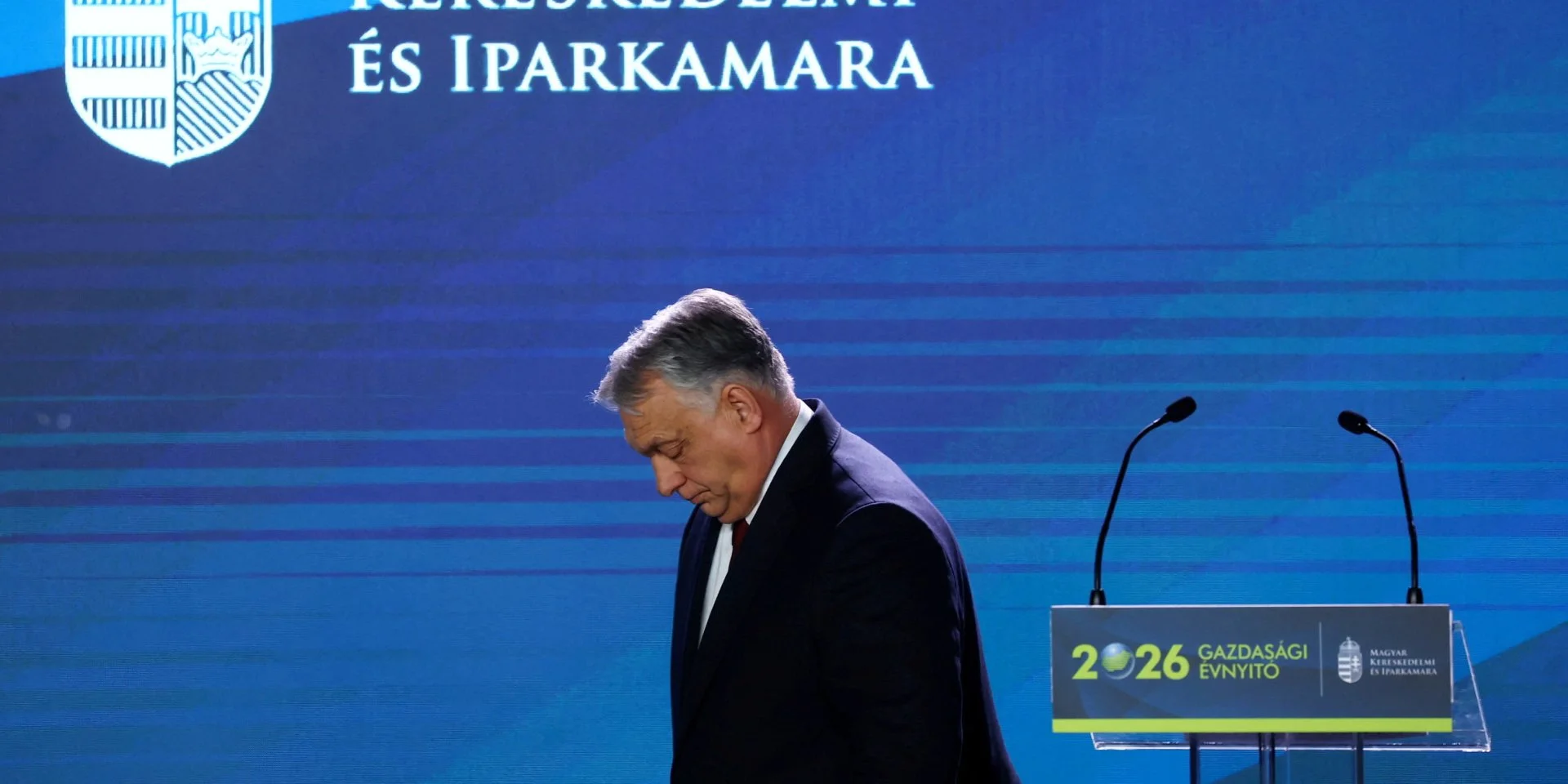
Russian operatives have developed a sophisticated disinformation strategy to help Hungarian Prime Minister Viktor Orbán secure victory in upcoming parliamentary elections, according to a Financial Times investigation. The campaign, crafted by the Moscow-linked Social Design Agency, aims to portray Orbán as a strong, sovereign leader while undermining his main political opponent.
Sources familiar with the operation revealed that Russian strategists drafted the plan in late 2025, with documents obtained by the Financial Times detailing the comprehensive approach. The campaign materials promote Orbán as “the only candidate capable of keeping Hungary sovereign and standing alongside global leaders as an equal” and “a strong leader with friends around the world.”
The strategy simultaneously targets Péter Magyar, Orbán’s chief political rival, positioning him as “a puppet of Brussels with no external support.” The plan also includes efforts to undermine Magyar’s Tisza party by suggesting it harbors a “hidden agenda” that threatens Hungarian interests.
To maintain plausible deniability, Russian operatives have reportedly avoided direct contact with the Hungarian government. Instead, the Social Design Agency proposes building relationships with local influencers through intermediaries, creating what appears to be organic domestic support for Orbán’s leadership.
The operation walks a careful line regarding Orbán’s relationship with Russian President Vladimir Putin. While acknowledging that Orbán’s political approach draws inspiration from Putin’s governance model, the campaign strategists deliberately avoid creating explicit connections between the two leaders that could damage Orbán’s standing with Western allies.
Instead, the campaign emphasizes Orbán’s ties to U.S. President Donald Trump, presenting this relationship as evidence that Trump represents Hungary’s best hope for security and economic stability in an uncertain geopolitical landscape.
The messaging strategy relies heavily on digital media, utilizing memes, infographics, videos, and narratives developed in Russia but carefully adapted for Hungarian audiences. According to the report, the Social Design Agency began analyzing Hungarian media coverage and think tank reports in February to identify effective themes and narratives for their campaign.
The operation has reportedly identified approximately 50 public figures who support Orbán and around 30 opposition figures whose statements could be leveraged to amplify the campaign’s messaging across Hungarian media and social platforms.
This Russian intervention comes at a critical time for Orbán’s political future. A February poll by Závecz Research showed the opposition Tisza party leading Orbán’s ruling Fidesz party among decided voters, with 50% support for Tisza compared to 38% for Fidesz. This represents a slight increase for the opposition from January’s numbers, signaling potential vulnerability in Orbán’s historically strong position.
The Financial Times report follows similar findings from investigative outlet VSquare, which reported on March 6 that the Kremlin planned to deploy social media manipulation specialists to Russia’s embassy in Budapest specifically to influence Hungary’s upcoming elections in Orbán’s favor.
In what appears to be an attempt to create counter-narratives, Orbán has previously accused Ukraine of interfering in Hungary’s elections, making this claim during a February 16 press conference with U.S. Secretary of State Marco Rubio.
Hungary’s parliamentary elections are scheduled for April 12, 2026, when voters will elect a new National Assembly. Orbán, who has led the Fidesz party and served as Hungary’s prime minister continuously since 2010, is seeking to extend his 16-year tenure in power against growing domestic opposition.
The revelation raises serious concerns about foreign interference in European democratic processes and highlights Russia’s ongoing efforts to influence political outcomes in NATO and EU member states.
Fact Checker
Verify the accuracy of this article using The Disinformation Commission analysis and real-time sources.

12 Comments
This is a troubling development. The Kremlin’s attempts to sway the Hungarian election through disinformation are a direct assault on the country’s democratic process. Voters must be aware of these manipulative tactics.
The Kremlin’s disinformation campaign targeting the Hungarian election is deeply concerning. Efforts to undermine democracy and influence voters’ choices are unacceptable. Voters must have access to reliable information to make their decisions.
While I’m not surprised by the Kremlin’s tactics, it’s still alarming to see the scale and sophistication of this disinformation campaign aimed at influencing the Hungarian election. Voters must be vigilant.
Absolutely. Transparency and fact-based information are crucial for voters to make informed decisions. I hope Hungary’s authorities take strong measures to counter this foreign interference.
The Kremlin’s playbook of using social media and other digital tools to undermine democracy is well-documented. I hope Hungary’s authorities are vigilant in countering these efforts to sway the upcoming vote.
Absolutely. Transparent and fact-based electoral campaigns are essential for a healthy democracy. Voters must have access to reliable information to make their choices.
While I’m not surprised by the Kremlin’s tactics, it’s still alarming to see the scale of this disinformation campaign aimed at the Hungarian election. Protecting the integrity of the democratic process should be a top priority for all.
This is concerning. The Kremlin’s disinformation tactics to influence foreign elections are increasingly worrying. I hope Hungary’s voters can see through these manipulative attempts to sway their choice.
Agreed. It’s critical that elections remain free and fair, without outside interference. Voters deserve accurate information to make informed decisions.
This disinformation campaign targeting the Hungarian election is deeply concerning. Efforts to manipulate voters and distort the political process are unacceptable in a democracy.
I agree. The Kremlin’s interference in foreign elections is a serious threat that must be addressed. Protecting the integrity of the democratic process should be a top priority.
This disinformation campaign is a worrying development. The Kremlin’s attempts to sway the Hungarian election through manipulative tactics are a direct threat to the country’s democratic institutions. Voters must be vigilant and informed.