


Listen to the article
Jordan Observes World Press Freedom Day Amid Growing Global Challenges
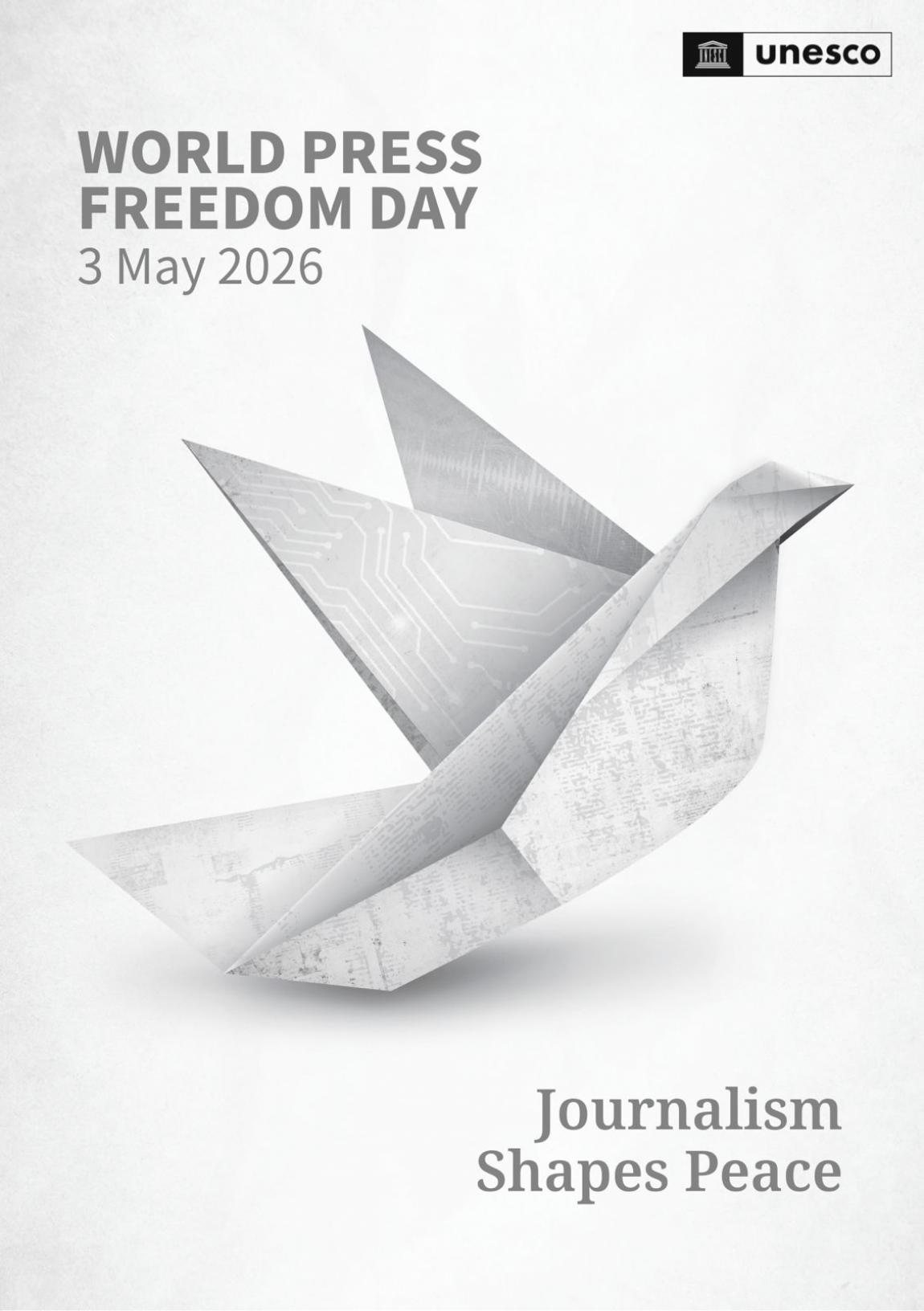
Jordan joins the international community in commemorating World Press Freedom Day at a critical moment when journalism worldwide faces mounting pressures and unprecedented threats.
This year’s observance comes as UNESCO’s latest report on global trends in freedom of expression and media development paints a concerning picture of declining press freedoms and media independence across the globe.
According to the report, the world is experiencing a historic regression in freedom of expression, with declines of this magnitude rarely recorded outside exceptional periods such as the World Wars and Cold War. This deterioration raises profound concerns about both journalist safety and public access to reliable information.
The UNESCO assessment documents significant shifts in the media landscape between 2022 and 2025. Global freedom of expression has declined by 10% since 2012, while self-censorship among media professionals has reached an alarming 63%. Government and powerful actor control over media outlets has increased by 48%, affecting newspapers, radio stations, and digital platforms. Academic and artistic freedoms have also suffered a 37% decline.
The human cost of journalism remains tragically high. UNESCO data reveals that 310 journalists have been killed between early 2022 and September 2025, including 24 women. Of these, 162 were killed while covering armed conflicts. The year 2024 alone saw 82 journalist fatalities. Additionally, at least 46 journalists have been killed since 2010 for their reporting on climate and environmental issues.
The exceptional electoral cycle of 2024, which saw elections in 72 countries affecting approximately 3.7 billion people, has highlighted the destructive impact of disinformation and hate speech on democratic processes. A UNESCO and Ipsos survey covering 16 countries that held elections in 2024 found that nearly 90% of respondents expressed concern about disinformation undermining electoral integrity in their countries.
The survey also revealed that 67% of internet users in these countries had been directly exposed to hate speech on digital platforms. UNESCO’s report notes that hate speech has evolved to become increasingly intertwined with false claims, dehumanization tactics, and direct incitement to violence.
Women journalists face particularly severe challenges. Research by the International Center for Journalists and UN Women found that 73% of women journalists surveyed had experienced online attacks, while 20% reported offline abuse connected to online violence. A 2023 study of 283 attacks identified online harassment as the most prevalent form of abuse. By 2025, 42% of women journalists reported that digital attacks had led to offline assaults or threats—double the level reported in 2020.
The technological landscape presents additional challenges to journalism sustainability. The growing influence of major technology companies and the rapid advancement of artificial intelligence threaten to further marginalize professional journalism. A survey of approximately 4,000 people across four countries revealed that 97% claimed at least basic understanding of artificial intelligence, with more than 40% using AI to create general content and nearly one-third employing it to produce online content.
Despite these challenges, the UNESCO report identifies several positive developments. The digital revolution has enabled approximately 1.5 billion additional people to access information through social media platforms between 2020 and 2025. Investigative journalism has expanded through cross-border collaborative projects, with more outlets adopting paid subscription models for financial sustainability. Additionally, 96 out of 194 countries now legally recognize community media, supporting media pluralism and diversity, while 140 UN Member States have adopted legal guarantees for public access to information.
Ahead of its global conference in Lusaka, Zambia, UNESCO called on governments, civil society, and the international community to renew their commitment to independent journalism and the free flow of information. The organization emphasized that information integrity and media freedom must be central to policies related to peace, recovery, and security.
UNESCO Director General Dr. Khaled El Enany underscored the existential threat facing newsrooms worldwide, stating: “Newsrooms around the world are facing an existential threat as they struggle to cover their costs, even though they remain the last line of defense for citizens against manipulation and division in the age of digital disinformation. Free and accurate information is a public good, and I call on Member States and all our partners to invest in journalism as a key driver of peace.”
Fact Checker
Verify the accuracy of this article using The Disinformation Commission analysis and real-time sources.

13 Comments
The finding that global freedom of expression has declined by 10% since 2012 is a sobering statistic. Protecting journalists and ensuring access to reliable information are fundamental to democratic societies. This UNESCO report highlights the need for immediate, concerted action to address these threats.
I agree. The deterioration of press freedoms worldwide is a serious problem that requires a coordinated global response. Safeguarding the media’s independence and integrity should be a top priority.
This UNESCO report on the global decline in press freedoms is deeply concerning. Independent and critical media are essential for healthy democracies. I hope governments and stakeholders take swift action to address these troubling trends.
You make a good point. Protecting journalists and ensuring access to reliable information should be a priority worldwide.
This UNESCO report paints a disturbing picture of the state of media freedom globally. The rise in government and corporate control over media outlets, as well as the increase in self-censorship, are deeply concerning trends. Urgent reforms are needed to protect journalists and promote transparent, independent journalism.
It’s disheartening to see such a steep decline in press freedoms globally. Independent journalism plays a vital role in holding the powerful accountable and exposing the truth. We must find ways to better protect media professionals.
The finding that self-censorship among media professionals has reached 63% is very alarming. A free and fearless press is essential for a healthy public discourse. Governments and other actors must cease efforts to undermine press freedoms.
Absolutely. Self-censorship is a worrying symptom of a deteriorating media environment. Protecting journalists from threats and ensuring their ability to report freely is critical.
This UNESCO report is a stark reminder of the fragility of press freedoms worldwide. Disinformation and attacks on the media pose grave risks to democracy. We must redouble efforts to safeguard the integrity and independence of journalism.
This UNESCO report paints a grim picture of the state of freedom of expression around the world. Media freedom is the bedrock of democracy, and its erosion is deeply troubling. Urgent reforms are needed to safeguard journalists and promote transparency.
The rise in government and corporate control over media outlets is very worrying. Diverse and pluralistic media landscapes are crucial for informed citizens and robust public discourse.
Agreed. Disinformation and censorship erode trust in the media and undermine democratic values. This is a serious issue that requires concerted global action.
The decline in global freedom of expression and the rise in government control over media outlets is deeply concerning. Diverse and independent media are essential for holding the powerful accountable and informing the public. Urgent action is needed to address these worrying trends.