


Listen to the article
Trump Escalates Troop Reduction in Germany, Signaling Shift in European Security Stance
President Donald Trump announced Saturday that the United States will significantly reduce its military presence in Germany, going beyond the Pentagon’s initial plan to withdraw 5,000 troops and escalating tensions with Chancellor Friedrich Merz amid growing transatlantic friction.
“We’re going to cut way down. And we’re cutting a lot further than 5,000,” Trump told reporters in Florida, without providing specifics about the extent of the drawdown or the strategic reasoning behind the decision.
The Pentagon had announced Friday that approximately 5,000 U.S. troops would leave Germany over the next six to 12 months following what it described as a “thorough review” of force posture in Europe. The withdrawal represents about one-seventh of the 36,000 American service members currently stationed in Germany.
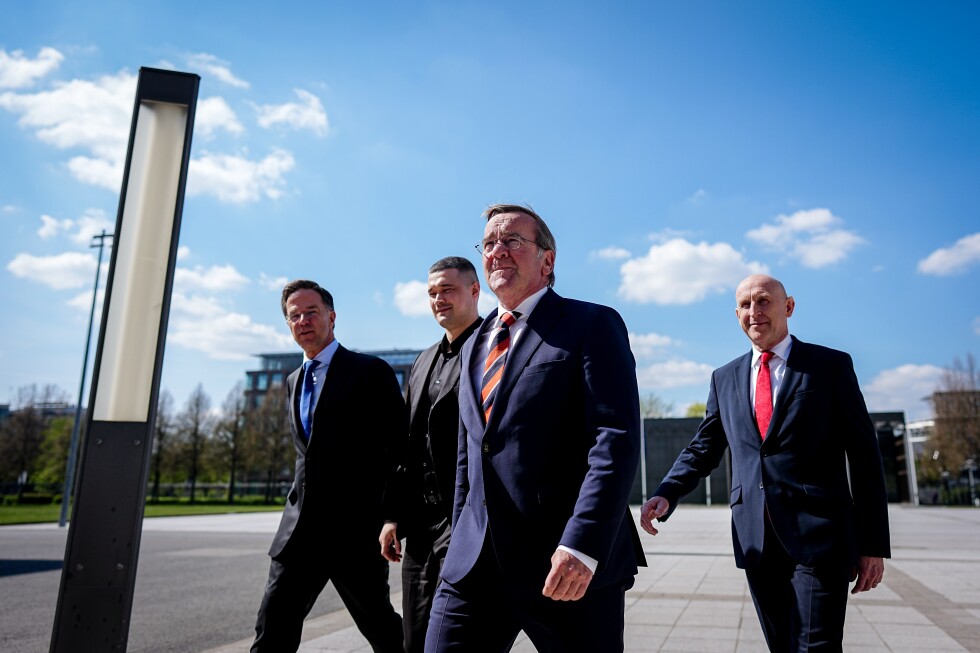
Germany’s Defense Minister Boris Pistorius responded with measured acceptance, suggesting the move was anticipated. “The presence of American soldiers in Europe, and especially in Germany, is in our interest and in the interest of the U.S.,” Pistorius told the German news agency dpa, while acknowledging that “Europeans must take on more responsibility for our security.”
The decision has prompted bipartisan concern in Washington. Republican leaders of both armed services committees, Senator Roger Wicker of Mississippi and Representative Mike Rogers of Alabama, issued a joint statement expressing they were “very concerned” about the withdrawal, warning it risks “undermining deterrence and sending the wrong signal to Vladimir Putin” as Russia’s invasion of Ukraine enters its fifth year.
They also revealed that the Pentagon had canceled plans to deploy the Army’s Long-Range Fires Battalion, though the Defense Department has not confirmed this detail.
The troop reduction comes at a time of heightened tensions between Trump and European leaders. The president has publicly criticized Merz, Spanish Prime Minister Pedro Sánchez and British Prime Minister Keir Starmer over their unwillingness to join his campaign with Israel against Iran. Merz particularly drew Trump’s ire after stating the U.S. is being “humiliated” by Iranian leadership and criticizing Washington’s strategic approach to the conflict.
Further exacerbating transatlantic relations, Trump announced plans to increase tariffs on European Union automobiles to 25% next week, a move that would disproportionately impact Germany’s crucial automotive industry. At least one EU lawmaker has described the tariff hike as “unacceptable” and accused Trump of breaking U.S. trade commitments.
Germany hosts several critical American military installations, including the headquarters of U.S. European and Africa commands, Ramstein Air Base, and the Landstuhl Regional Medical Center, where casualties from conflicts in Afghanistan and Iraq received treatment. U.S. nuclear weapons are also stationed in the country.
A U.S. defense official, speaking on condition of anonymity, revealed that the military branches were not consulted before the decision was announced and learned about it “in real time.” The Pentagon later defended the process, with acting press secretary Joel Valdez stating the withdrawal “follows a comprehensive, multilayered process that incorporates perspectives from key leaders in EUCOM and across the chain of command.”
Military analysts suggest the removal of 5,000 troops—equivalent to a brigade combat team—would have limited impact on combat capabilities but sends a significant message about U.S. commitment to European security. The 2nd Cavalry Regiment, the only permanent brigade combat team in Germany, plays an important role in NATO’s deterrence posture.
The troop reduction reverses a trend that began after Russia’s full-scale invasion of Ukraine in 2022, when the U.S. increased its European deployment. NATO spokesperson Allison Hart acknowledged the decision on social media, noting it “underscores the need for Europe to continue to invest more in defense and take on a greater share of the responsibility for our shared security.”
This marks Trump’s second attempt to withdraw forces from Germany. During his first term, he announced plans to remove 9,500 troops, but the process never began and was formally halted by President Biden in 2021.
With U.S. forces in Europe typically numbering between 80,000 and 100,000 personnel, the planned withdrawal represents the beginning of what could be a significant realignment of America’s military footprint on the continent, with potentially far-reaching implications for European security and NATO solidarity.
Fact Checker
Verify the accuracy of this article using The Disinformation Commission analysis and real-time sources.

10 Comments
The US troop presence in Germany has been a cornerstone of transatlantic security for decades. While the specifics are unclear, this drawdown seems to reflect a changing strategic calculus on the part of the US administration.
You’re right, this move represents a major shift. Germany will need to carefully assess the security implications and determine how to adjust its own defense posture accordingly.
While the stated rationale for this move is unclear, it seems to reflect a broader shift in the US approach to European security. Germany will need to carefully navigate this evolving dynamic to protect its interests.
Absolutely. The US-Germany relationship is a key pillar of the transatlantic alliance, so any significant changes here will have ripple effects across the region and globally.
This troop drawdown is a significant development that could have far-reaching implications, both geopolitically and for the mining/commodities sector. It will be important to monitor how Germany and its European partners respond.
Well said. This decision by the US is sure to reshape the strategic landscape in Europe. It will be crucial for stakeholders in the mining and energy industries to stay informed on these developments.
From a mining and commodities perspective, I’m curious how this decision might impact the supply chains and logistics that rely on the US military presence in Germany. Could be worth watching for any downstream effects.
That’s a good point. The US troop presence has likely facilitated the movement of critical materials and resources. This drawdown could disrupt some of those supply chain linkages.
Interesting move by the US. Curious to see how Germany responds and whether this signals a broader shift in European security dynamics. Will be important to watch how this plays out.
I agree, this decision could have significant implications. The US-Germany relationship has been strained lately, so this drawdown will likely add to the tensions.