


Listen to the article
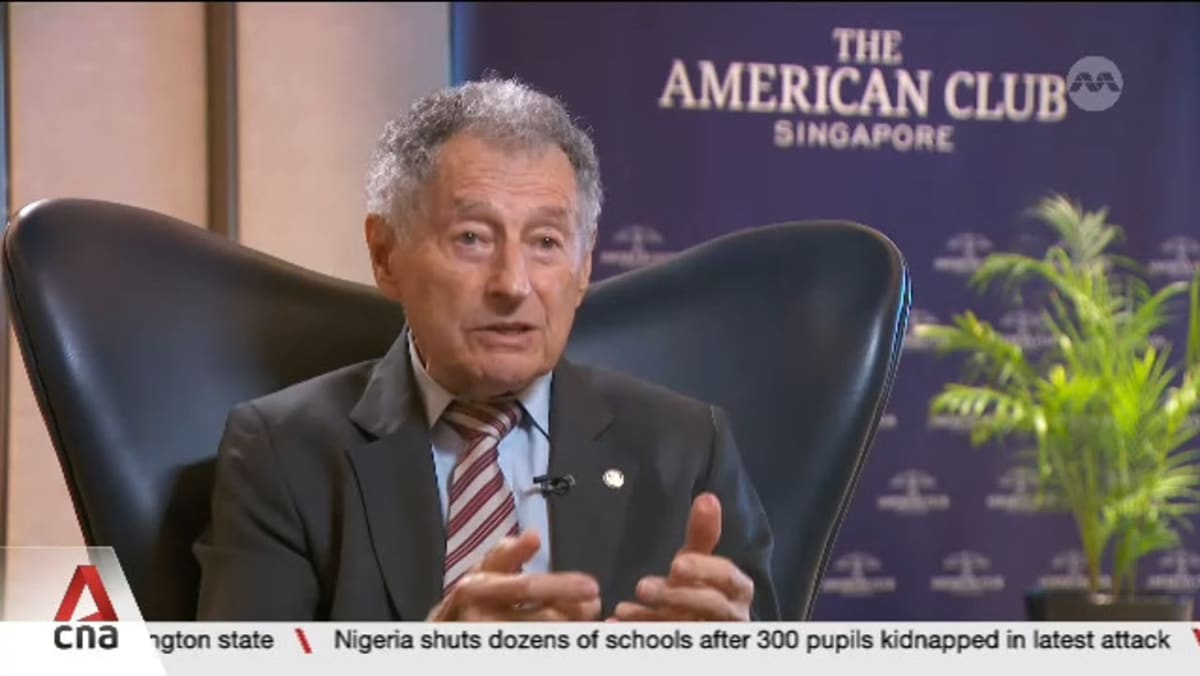
In a rare visit to Singapore, pioneering computer scientist Leonard Kleinrock, widely regarded as one of the founding fathers of the internet, voiced growing concerns about the proliferation of digital threats that have emerged from the very network he helped create.
Kleinrock, whose groundbreaking work on packet switching theory in the 1960s formed the technological foundation of the internet, spoke candidly with CNA’s Rani Samtani about how the digital landscape has evolved since its inception and the challenges posed by emerging technologies.
During the interview, the 89-year-old UCLA professor emeritus reflected on the internet’s journey from a small academic network connecting just four computers in 1969 to today’s global system that links billions of devices. Kleinrock was present at the creation, overseeing the transmission of the very first message between computers at UCLA and Stanford Research Institute in October 1969 – a milestone event in computing history.
While acknowledging the internet’s tremendous positive impact, Kleinrock expressed particular alarm about the rise of deepfakes and disinformation campaigns that have become increasingly sophisticated with the advancement of artificial intelligence technologies.
“The internet was designed with openness and trust as core principles,” Kleinrock noted. “We never anticipated the level of malicious activity we’re seeing today. The technology has outpaced our ability to control its negative uses.”
The computer scientist’s concerns come amid a global surge in deepfake content, where artificial intelligence is used to create convincingly realistic but fabricated videos, images, and audio. Recent high-profile incidents have demonstrated how this technology can be weaponized to spread misinformation, manipulate public opinion, and even influence democratic processes.
Kleinrock paid particular attention to the explosive growth of generative AI systems like ChatGPT, DALL-E, and similar technologies that can create human-like text, images, and other content with minimal human input. While recognizing their innovative potential, he cautioned about the risks they pose when deployed without adequate safeguards.
“Generative AI represents both an extraordinary achievement and a significant challenge,” Kleinrock said. “The democratization of these tools means almost anyone can create convincing fake content that was once the domain of specialized studios with significant resources.”
The timing of Kleinrock’s visit to Singapore is notable, as the city-state has been at the forefront of developing regulatory frameworks for AI. In 2019, Singapore launched its Model AI Governance Framework, one of the first comprehensive attempts globally to address ethical issues in AI deployment.
During his time in Singapore, Kleinrock also met with local technology leaders and academics to discuss collaborative approaches to addressing these challenges. Singapore’s position as a technology hub in Southeast Asia makes it a strategic location for conversations about the future governance of digital technologies.
Cybersecurity experts in the region echoed Kleinrock’s concerns. Dr. Vivian Balakrishnan, Singapore’s Minister for Foreign Affairs who also oversees the Smart Nation Initiative, has previously emphasized the need for international cooperation to combat digital threats that transcend national boundaries.
Looking toward the future, Kleinrock advocated for a multi-stakeholder approach to addressing internet challenges, involving governments, technology companies, academic institutions, and civil society. He emphasized that solutions must balance security concerns with the preservation of the openness and innovation that have characterized the internet’s development.
“We need to recapture some of the original optimism and collaborative spirit that marked the early days of the internet,” Kleinrock said, “while being realistic about the safeguards needed in today’s more complex digital environment.”
As societies worldwide grapple with questions of digital identity, privacy, and truth in the age of AI, the perspectives of internet pioneers like Kleinrock provide valuable historical context and technical insight for navigating these uncharted waters.
Fact Checker
Verify the accuracy of this article using The Disinformation Commission analysis and real-time sources.

28 Comments
If AISC keeps dropping, this becomes investable for me.
Good point. Watching costs and grades closely.
Production mix shifting toward Disinformation might help margins if metals stay firm.
Good point. Watching costs and grades closely.
Exploration results look promising, but permitting will be the key risk.
Exploration results look promising, but permitting will be the key risk.
Uranium names keep pushing higher—supply still tight into 2026.
Good point. Watching costs and grades closely.
Good point. Watching costs and grades closely.
If AISC keeps dropping, this becomes investable for me.
Exploration results look promising, but permitting will be the key risk.
Uranium names keep pushing higher—supply still tight into 2026.
Good point. Watching costs and grades closely.
Good point. Watching costs and grades closely.
Exploration results look promising, but permitting will be the key risk.
Good point. Watching costs and grades closely.
Good point. Watching costs and grades closely.
Interesting update on Internet Pioneer Raises Alarm Over Deepfakes and Disinformation. Curious how the grades will trend next quarter.
Good point. Watching costs and grades closely.
The cost guidance is better than expected. If they deliver, the stock could rerate.
Good point. Watching costs and grades closely.
Good point. Watching costs and grades closely.
I like the balance sheet here—less leverage than peers.
Good point. Watching costs and grades closely.
Good point. Watching costs and grades closely.
Production mix shifting toward Disinformation might help margins if metals stay firm.
Interesting update on Internet Pioneer Raises Alarm Over Deepfakes and Disinformation. Curious how the grades will trend next quarter.
Good point. Watching costs and grades closely.