


Listen to the article
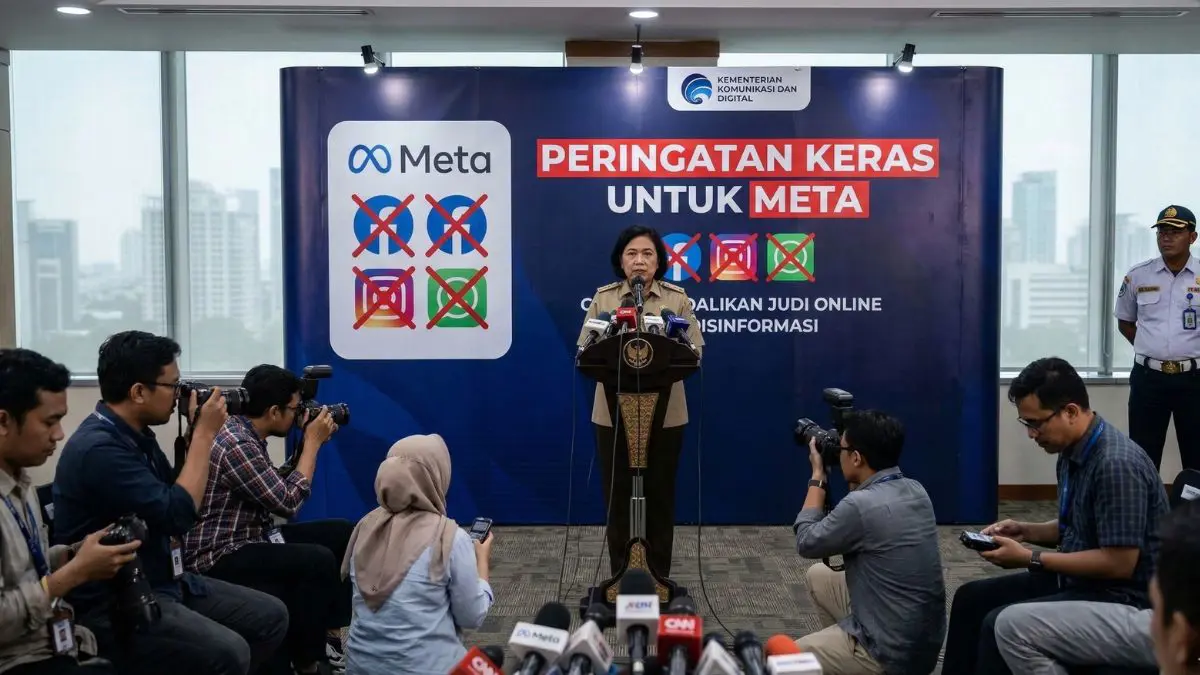
Indonesia has issued a formal warning to Meta over the company’s poor response to government requests for content removal, reflecting growing tensions between Southeast Asian regulators and global tech platforms.
The Ministry of Communications and Digital Affairs delivered the “stern warning” following an unscheduled inspection of Meta’s Jakarta headquarters on Wednesday. Communications Minister Meutya Hafid personally led the visit, which revealed concerning compliance issues with Indonesia’s digital content regulations.
According to ministry data, Meta has acted on just 28.47% of content that authorities had flagged for removal, primarily related to disinformation and illegal online gambling activities. Officials characterized this response rate as significantly below acceptable levels.
“Disinformation, defamation and hate content threaten lives in Indonesia,” Hafid said in an official statement following the visit. The minister’s comments reflect growing government concern about harmful online content in a country with over 170 million internet users.
Indonesia’s digital regulatory framework has grown more assertive in recent years as the government attempts to manage an increasingly complex online landscape. The country has implemented a series of regulations requiring tech platforms to register with authorities and comply with local content moderation demands.
Meta, which operates Facebook, Instagram, and WhatsApp, faces particular scrutiny in Indonesia, where its platforms are among the most widely used social media services. The company has previously faced regulatory challenges in the country, including demands to comply with new digital registration requirements introduced in 2022.
The timing of the warning comes as Indonesia continues to navigate post-election tensions following its February presidential vote. During electoral periods, authorities typically increase scrutiny of online platforms to prevent the spread of political misinformation and social unrest.
Industry analysts note that Indonesia’s actions reflect a broader trend across Southeast Asia, where governments are increasingly willing to confront tech giants over content issues. Thailand, Vietnam, and the Philippines have similarly increased regulatory pressure on international platforms in recent years.
For Meta, the Indonesian warning represents another regulatory challenge in a region that has become increasingly important to its growth strategy. Southeast Asia represents one of the company’s fastest-growing markets, with hundreds of millions of users across its family of apps.
The Indonesian government has indicated that Meta must significantly improve its compliance rate or potentially face more severe regulatory consequences. While officials did not specify what these measures might include, Indonesia’s digital regulations allow for penalties ranging from formal warnings to service restrictions or financial penalties.
Digital rights advocates have noted the delicate balance between legitimate content moderation and potential overreach. “There’s a genuine need to address harmful content, but transparency around takedown requests is essential,” said Damar Juniarto, Executive Director of SAFEnet, a digital rights organization in Indonesia.
The content at issue primarily involves online gambling operations, which are largely prohibited in Indonesia, and various forms of misinformation that authorities claim threaten public safety and social cohesion.
Meta has not yet publicly responded to the warning, though the company has previously stated its commitment to working with Indonesian authorities while balancing free expression concerns.
The confrontation highlights the evolving relationship between sovereign governments and global tech platforms, as countries increasingly assert regulatory authority over digital spaces once considered beyond traditional jurisdiction.
Fact Checker
Verify the accuracy of this article using The Disinformation Commission analysis and real-time sources.

8 Comments
I’m curious to see how this situation unfolds. Indonesia’s digital regulations seem to be evolving rapidly, and global tech firms will need to adapt their policies and operations accordingly.
Interesting to see Indonesia taking a firm stance on disinformation and online gambling issues with global tech platforms. Balancing digital innovation with responsible content moderation is an ongoing challenge for many regulators.
Disinformation and illegal online gambling can have serious real-world impacts. Indonesia’s approach reflects the need for tech companies to be more accountable to local authorities on these critical issues.
Agreed. Responsible self-regulation by platforms is important, but governments also need effective enforcement mechanisms to protect citizens.
This highlights the growing importance of effective content governance, especially in high-impact markets like Indonesia. Meta will need to improve its responsiveness to government requests if it wants to maintain a sustainable presence in the country.
Indonesia’s warning to Meta is a timely reminder that tech giants must adapt to local regulatory environments, not the other way around. Compliance and cooperation will be essential for sustainable global expansion.
This dispute highlights the ongoing tensions between tech companies’ global ambitions and the sovereignty of national digital ecosystems. Finding the right balance will be a key challenge going forward.
Absolutely. Policymakers will need to strike a careful balance between supporting innovation and safeguarding public interests in the digital age.