


Listen to the article
Bangladesh Government Pledges Media Reform and Crackdown on Misinformation
State Minister for Information and Broadcasting Yaser Khan Choudhury announced today that the government is implementing measures to combat the spread of misinformation and disinformation while ensuring accurate information reaches the public.
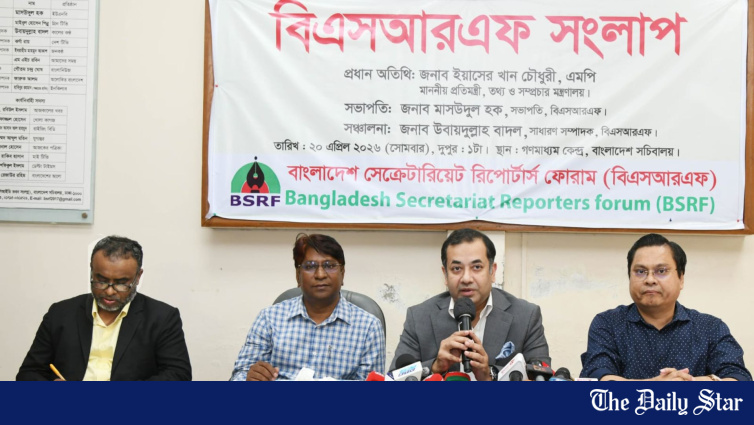
“We want accurate and correct information to reach the people so that confusion does not spread and public trust in the media is strengthened,” Choudhury stated during a views-exchange meeting organized by the Bangladesh Secretariat Reporters Forum (BSRF) at the Secretariat’s Media Centre.
The announcement comes at a critical time for Bangladesh’s media landscape, which has faced challenges including the rapid proliferation of social media platforms and concerns about information integrity. Media experts have long pointed to the need for structural reforms to maintain journalistic standards while adapting to digital transformation.
Choudhury outlined plans to modernize the country’s media sector through enhanced digitalization and policy reforms. These initiatives will be developed with input from various stakeholders, signaling a collaborative approach to addressing the sector’s challenges.
“The media plays a crucial role in our democracy, and we must ensure it has the tools and framework to function effectively in the digital age,” he added, though specific details about implementation timelines or budgetary allocations were not disclosed.
The state minister also acknowledged deficiencies in the current working environment for journalists, particularly at the Secretariat. He noted that the designated press area lacks modern amenities and suitable working conditions, promising initiatives to upgrade these facilities.
“Journalists should have proper resources and spaces to conduct their work effectively,” Choudhury said, recognizing that infrastructure improvements are essential for fostering quality journalism.
In a notable departure from previous government messaging, Choudhury encouraged media professionals to engage in constructive criticism of the government’s performance, including highlighting mistakes and shortcomings. This stance represents a potential shift in government-media relations, which have occasionally been strained in recent years.
Media freedom advocates have cautiously welcomed these statements, though many stress that concrete actions will be the true measure of the government’s commitment to press freedom and information integrity.
Bangladesh, like many developing nations, has grappled with challenges related to misinformation, particularly on social media platforms where content can spread rapidly without verification. The COVID-19 pandemic exacerbated these issues, with health misinformation creating public confusion during critical periods.
The government’s focus on strengthening information accuracy comes amid global concerns about the impact of false information on public discourse and democratic processes. Several countries in South Asia have implemented various regulatory approaches, with mixed results and ongoing debates about balancing regulation with freedom of expression.
The BSRF meeting was presided over by its President Masudul Hoque and moderated by General Secretary Ubaidullah Badol. Principal Information Officer Yeakub Ali and numerous journalists covering the Secretariat also attended the event, indicating broad engagement from the media community.
Industry observers note that the success of these initiatives will depend on transparent implementation and genuine collaboration between government authorities and media organizations. The promised policy reforms will require careful balancing to ensure they combat misinformation without restricting legitimate journalistic activities or freedom of speech.
As Bangladesh continues its digital transformation journey, the information ecosystem will remain a critical area for development and regulatory consideration, with implications for public trust, democratic participation, and social cohesion.
Fact Checker
Verify the accuracy of this article using The Disinformation Commission analysis and real-time sources.

10 Comments
Combating misinformation and strengthening public trust in the media is crucial. I hope the government’s proposed reforms can strike the right balance between modernization and upholding journalistic standards.
Agreed. Transparency and stakeholder collaboration will be key to ensuring the reforms are effective and address the core challenges.
This is a complex issue with no easy solutions. I’m curious to see the specific policy changes the government plans to implement and how they will measure the impact on information integrity.
Good point. Establishing clear metrics and an independent evaluation process will be important to assess the effectiveness of their approach over time.
The rapid rise of social media has certainly exacerbated misinformation challenges. I’m interested to see how the government plans to address those issues through digital transformation and policy reforms.
Yes, social media platforms have become a major vector for the spread of misinformation. Collaborative solutions between government, media, and tech companies will be essential.
It’s encouraging to see the government taking proactive steps to address misinformation and disinformation. Effective policy reforms will require input from diverse stakeholders to ensure a balanced and sustainable approach.
Strengthening public trust in the media is a noble goal, but the government will need to tread carefully to avoid overreach or censorship. Upholding journalistic integrity and freedom of expression should be the top priorities.
Proactive steps to combat misinformation are welcome, but the devil will be in the details. I hope the new initiatives prioritize press freedom and empower journalists to do their jobs effectively.
Absolutely. Maintaining a healthy, independent media landscape is crucial for a well-informed public and a functioning democracy.