


Listen to the article
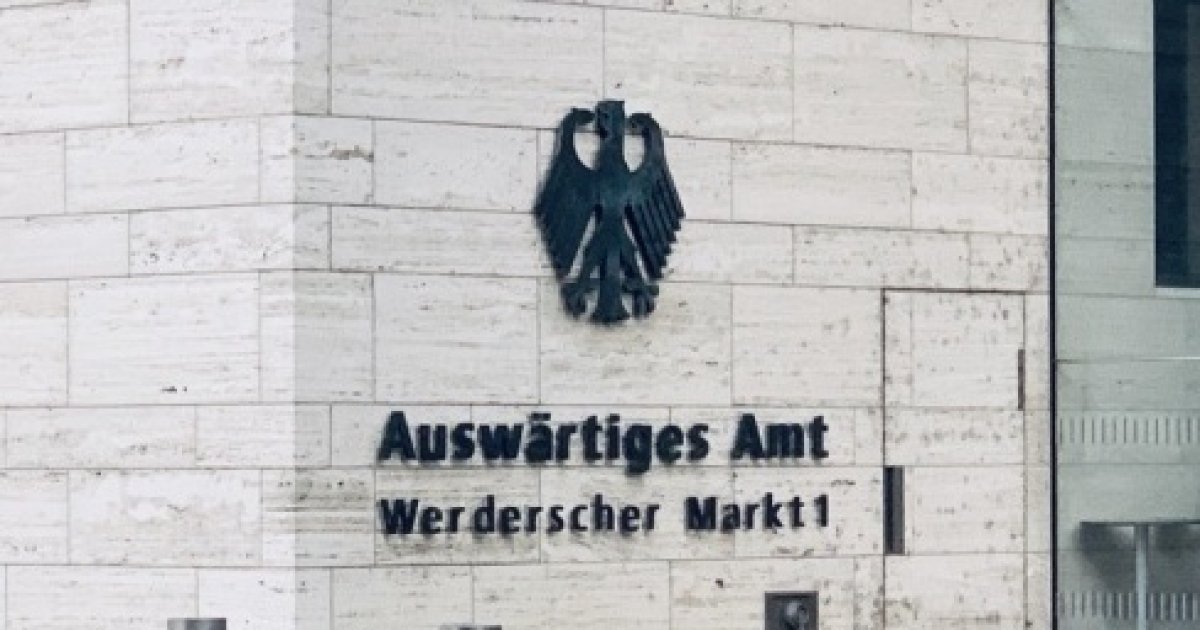
Germany Summons Russian Ambassador Over Cybersecurity Threats and Election Interference
German officials have summoned the Russian ambassador to address accusations of state-sponsored cyberattacks and disinformation campaigns targeting the country’s democratic processes, including recent federal elections.
In a briefing on December 12, German Foreign Ministry spokesman Martin Giese presented evidence linking Russian intelligence services to a series of coordinated hybrid attacks against German institutions. Using what he described as “two national attribution methods,” German intelligence has directly connected these incidents to Russian state actors.
“We can now clearly attribute the cyberattack on the German air traffic control service in August 2024 to the hacking collective APT 28, also known as Fancy Bear,” Giese stated. “Our intelligence proves that the Russian military intelligence service GRU is responsible for this attack.”
The allegations extend beyond the air traffic control system breach. According to Giese, Germany has “definitively” determined that Russia orchestrated the “Storm 15” campaign, a coordinated effort to “influence and destabilize the internal affairs of the Federal Republic of Germany,” with specific targeting of recent federal elections.
German intelligence has traced these activities to specific Russian organizations, including the Moscow-based “Center for Geopolitical Expertise” think tank and the “Two-Headed Eagle Movement.” Both entities, according to Giese, operate with direct support from the GRU.
The German investigation revealed a sophisticated disinformation ecosystem employing cutting-edge technology. “The analysis shows that artificially generated supposedly investigative materials, deepfake videos, pseudo-journalistic websites, and fabricated testimonies are being distributed on various platforms,” Giese explained.
These tactics represent what German officials view as a deliberate strategy to undermine democratic institutions. “The purpose of these Russian cyberattacks and disinformation attacks is clear: to divide society, sow distrust, provoke rejection and weaken trust in democratic institutions,” said Giese. “Russia thus poses a very real threat to our security, not only through its aggressive war against Ukraine, but also here in Germany.”
During the ambassador’s summons, German officials made their position unmistakably clear. “We are absolutely confident in the results. And the Russian ambassador certainly understood them too—he doesn’t need lengthy evidence to understand what we’re talking about. We can prove it… it’s solid evidence. It’s unequivocally, unquestionably confirmed,” Giese emphasized.
The German response involves both domestic measures and European cooperation. In coordination with EU partners, Germany is implementing countermeasures aimed at curbing Russia’s hybrid activities. These include supporting new individual sanctions against “hybrid actors” at the European level, encompassing entry bans, asset freezes, and prohibitions on providing economic resources.
Beginning January 2026, Germany and its EU partners will implement enhanced controls on cross-border travel of Russian diplomats within the Schengen area. “The goal is to ensure better information sharing and minimize intelligence risks,” Giese noted. Additional bilateral restrictions will also apply specifically to Russian diplomatic personnel in Germany.
On the domestic front, Germany has bolstered its capabilities to detect and counter foreign influence operations. The Ministry of Interior confirmed ongoing investigations into both the cyberattack and disinformation cases. Since June 2024, the Central Service for Detecting Foreign Information Manipulation (CMM) has been operational, working alongside other departments to ensure early detection of foreign influence campaigns.
The ministry is also developing “a new central platform for interdepartmental exchange and coordination of measures to counter hybrid threats,” designed to create comprehensive situational awareness and improve data assessment capabilities.
These developments mark a significant escalation in Germany’s approach to Russian cyber and information operations, reflecting growing concern across Europe about foreign interference in democratic processes and critical infrastructure.
Fact Checker
Verify the accuracy of this article using The Disinformation Commission analysis and real-time sources.

5 Comments
It’s good to see Germany taking this threat so seriously and directly confronting Russia. Transparent communication of the evidence and coordinated international responses will be key to deterring future malicious cyber activity.
Disinformation campaigns aimed at influencing domestic affairs are a concerning trend we’ve seen in many countries. I hope the German government is able to effectively counter these Russian efforts and protect the integrity of their democratic processes.
Cyber threats to critical infrastructure like air traffic control are extremely serious. If the German government’s assessments are accurate, Russia must be held accountable through appropriate diplomatic and legal channels. Strengthening cybersecurity resilience should also be a top priority.
Concerning to hear about these alleged Russian cyberattacks and disinformation campaigns targeting Germany. While the evidence seems compelling, I’d be curious to learn more about how Germany determined the attribution to Russian state actors. Transparency around these investigations is key for public trust.
This highlights the growing threat of state-sponsored hybrid warfare tactics like cyberattacks and information manipulation. Germany appears to be taking a firm stance, which is warranted if the claims can be substantiated. Ongoing monitoring and multilateral cooperation will be crucial to combat these challenges.