


Listen to the article
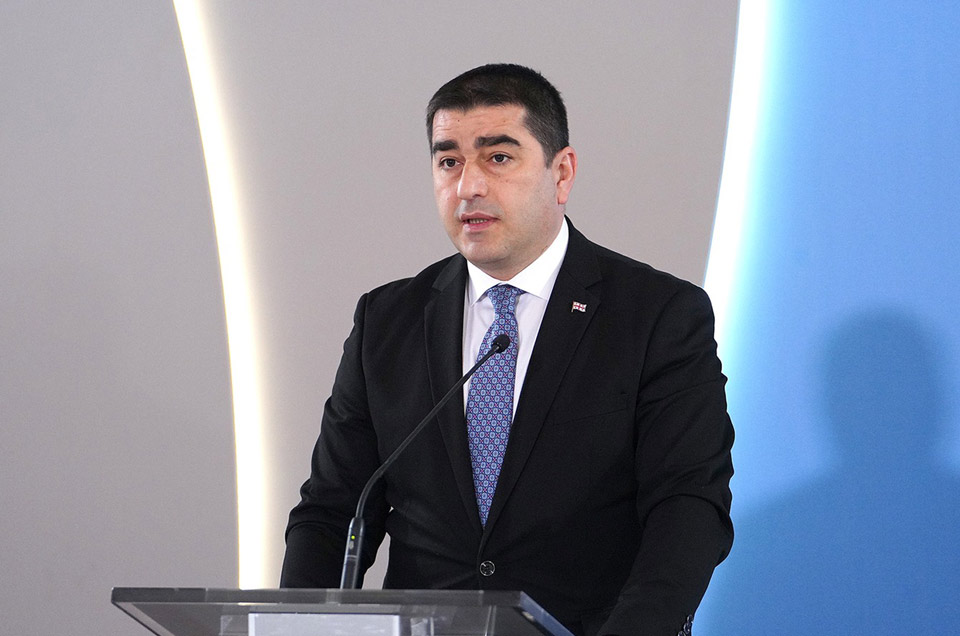
The European Union has postponed a scheduled human rights dialogue with Georgia, prompting sharp criticism from the country’s Parliament Speaker Shalva Papuashvili, who accused Brussels of avoiding genuine engagement with Tbilisi.
According to Georgia’s Ministry of Foreign Affairs, the Georgia–EU Human Rights Dialogue, which was set to take place on November 21, 2025, in Brussels, has been delayed by European officials. The Georgian ministry characterized the postponement as evidence that the EU is “not prepared to listen to Georgia’s perspectives” on contentious issues.
“There is no ‘Europe’ without respect for the truth and openness to criticism,” Papuashvili declared in a pointed statement shared on social media platforms. The Parliament Speaker escalated his criticism by suggesting that EU positions regarding Georgia are fundamentally flawed and built on misinformation.
“It is no surprise that Brussels is avoiding dialogue, especially on issues where they may actually have to listen and respond,” Papuashvili continued. “When your positions are built on disinformation, a single truthful word in a reasoned discussion is enough to expose the falsehoods.”
The postponement comes amid increasingly strained relations between Georgia and the European Union. The South Caucasus nation, which has long aspired to join the EU, has seen its European integration process complicated in recent years by concerns over democratic backsliding and rule of law issues.
The Georgia–EU Human Rights Dialogue represents a key platform for structured discussions on human rights and democratic reforms. Established as part of the broader Association Agreement between the EU and Georgia, these regular meetings allow both sides to review progress on commitments related to human rights, judicial independence, and democratic institutions.
Political analysts note that tensions between Tbilisi and Brussels have intensified particularly after Georgia’s ruling Georgian Dream party pushed through controversial legislation earlier this year, including a foreign agents law that critics compared to similar restrictions in Russia. The European Union, along with other Western partners, strongly criticized these moves as undermining Georgia’s democratic credentials and potentially jeopardizing its EU candidacy status.
The current diplomatic spat highlights the increasing divergence between Georgia’s stated European aspirations and its government’s actions. While public support for EU membership remains high among Georgian citizens, with polls consistently showing over 70% favor joining the bloc, the government has adopted increasingly antagonistic rhetoric toward European institutions.
Regional experts suggest the government’s confrontational stance might be calculated to appeal to nationalist sentiments ahead of upcoming elections, where the ruling party faces significant challenges from pro-Western opposition forces.
For the European Union, the decision to postpone the dialogue reflects growing frustration with what officials in Brussels see as Georgia’s backsliding on previously agreed reform commitments. The EU has repeatedly emphasized that Georgia’s European path depends on concrete progress in strengthening democratic institutions, judicial independence, and media freedom.
The postponement of the human rights dialogue represents another setback in what was once considered one of the EU’s most successful Eastern Partnership relationships. Georgia, which signed an Association Agreement with the EU in 2014, has received billions in European assistance and benefited from increased trade and visa-free travel to the Schengen zone.
As tensions continue, observers worry about the potential for further deterioration in relations between Tbilisi and Brussels, which could ultimately impact Georgia’s citizens through reduced European support and slower progress toward integration with European institutions.
Neither side has announced a new date for the postponed human rights dialogue.
Fact Checker
Verify the accuracy of this article using The Disinformation Commission analysis and real-time sources.

7 Comments
This is a complex geopolitical issue with valid concerns on both sides. While I don’t have enough context to judge the merits, I hope the EU and Georgia can work through their differences professionally and in good faith.
Interesting claim by the Georgian Parliament Speaker. It’s concerning if the EU is indeed avoiding genuine dialogue on important human rights issues. Transparent and constructive engagement is critical, even on sensitive topics.
The Speaker’s accusation of Brussels using disinformation is quite serious. If true, that would be very troubling and undermine trust. I hope both sides can find a way to have an open and honest discussion to get to the bottom of this.
I agree, open dialogue is essential. Resorting to disinformation would be counterproductive and damage the EU’s credibility. Hopefully they can resolve this impasse and have a productive discussion.
The Georgian Speaker’s claims raise valid questions about the EU’s approach. However, I would caution against rushing to conclusions without a full understanding of the context and both sides of the story. Maintaining open lines of communication is crucial.
Postponing a scheduled human rights dialogue is concerning, regardless of the reasons. Transparent communication and a willingness to address difficult topics head-on should be the priority for any constructive partnership.
Well said. Avoiding dialogue rarely leads to positive outcomes. I hope both parties can find a way to have a meaningful exchange and make progress on these important issues.