


Listen to the article
Georgia at Epicenter of Digital Hate Campaigns as Election Looms
With control of the U.S. Senate on the line next year, Georgia once again finds itself at the center of America’s political landscape. Experts warn the state’s voters could become prime targets for a new wave of digital hate campaigns designed to suppress participation and sow distrust.
“Political polarization is at an all-time high. And studies have shown that distrust in democracy and the rise in political polarization are being driven by the flow of disengagement and digital hate,” said Dr. Sam Woolley, the William S. Dietrich II Endowed Chair in Disinformation at the University of Pittsburgh.
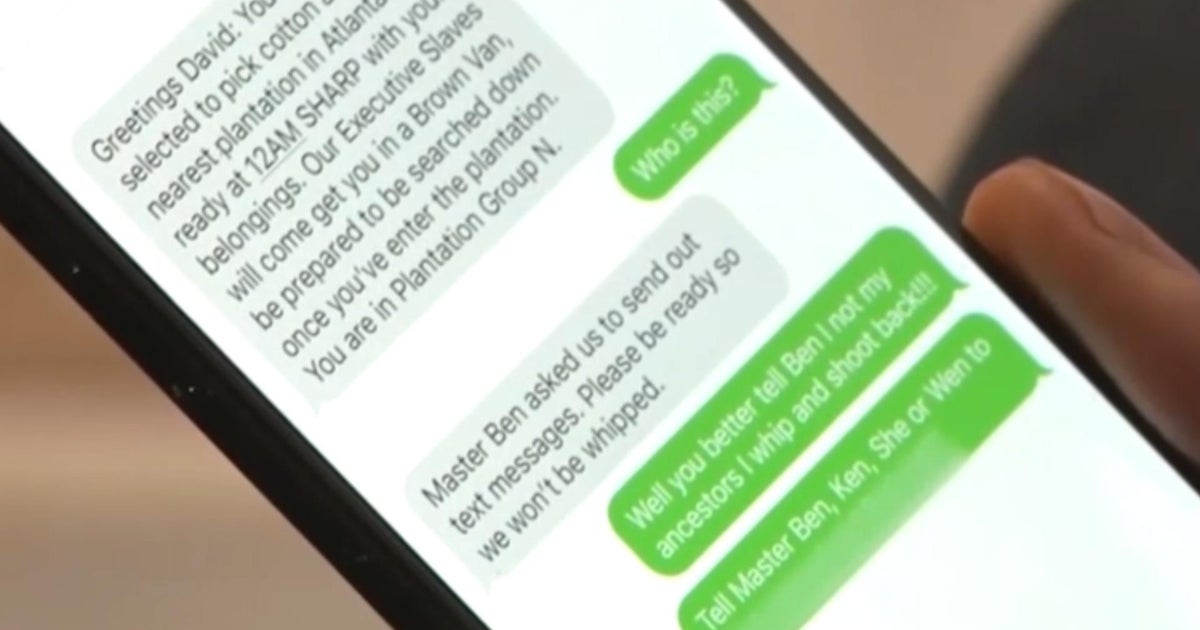
Just a year ago, a coordinated racist text campaign targeted Black, Latino, and LGBTQ+ voters with threats and misinformation. Investigators discovered the messages relied on unregulated voter-data sources and anonymous texting applications, with federal authorities eventually tracing at least 20 rotating phone numbers used in the operation.
The incident prompted Georgia Senator Jon Ossoff to call for a federal investigation. “We’ve seen this before,” said Sen. Ossoff. “Now we must make sure we never see it again.” While the FBI and Justice Department confirmed inquiries into the origin and intent of the messages, they declined further comment on their findings.
Cyber incidents tied to elections have risen nearly 63% since 2020, with Georgia ranking among the top 10 states for cybercrime in 2024, according to reports from Savannah CEO.
AI Transforms Disinformation Landscape
The 2024 election cycle marked a turning point in how disinformation campaigns are executed, according to Woolley. The year witnessed the convergence of automation and amplification, allowing propagandists to merge AI-driven targeting with traditional hateful messaging.
“The use of generative AI defined 2024,” Woolley explained. “Deepfakes were just the tip of the iceberg. AI micro-targeting allowed propagandists to aim hate at specific communities.”
This technology enables digital operatives to analyze massive voter datasets not merely to influence opinions but to weaponize identity itself. “AI helps those spreading hate organize their data, create targeted messages, and scale their campaigns. It’s not just automation; it’s personalization,” Woolley said.
The result has been a wave of algorithmic disinformation that feels deceptively personal and local to recipients.
Encrypted Platforms Provide Cover
Encrypted messaging platforms like Telegram, WhatsApp, and Signal have become key battlegrounds for both democratic organizing and propaganda dissemination, creating what researchers call “encrypted propaganda” — disinformation campaigns operating within private networks where falsehoods spread unchecked.
“These encrypted spaces provide hidden information structures where propagandists can plan without fear of being tracked,” Woolley warned. “We’ve seen extremist groups — even those linked to Jan. 6th — use them to coordinate. And increasingly, political organizations are exploiting those same channels to target voters of color.”
Historical Echoes of Voter Suppression
Digital intimidation tactics represent modern versions of historical methods used to suppress political participation. A 2024 Free Press poll found that Black voters are twice as likely to be targeted with election misinformation on social media as White voters.
Historical parallels include the 1906 Atlanta Race Massacre, when White-owned newspapers printed sensational false stories accusing Black men of assaulting White women, inciting mob violence that killed at least 25 Black residents and destroyed Black-owned businesses.
During Reconstruction, groups like the Ku Klux Klan distributed threatening pamphlets warning Black citizens against voting. And following World War I, newspaper rumors about alleged Black aggression fueled white mob violence across dozens of U.S. cities in what became known as the Red Summer of 1919.
Georgia: The Political Battleground
Georgia’s status as a swing state makes it particularly vulnerable to disinformation campaigns. “Propagandists go where they can make change,” Woolley said. “Georgia’s small swing counties make it a prime target. They know if they can sway even 100,000 people here, that could decide the presidency.”
Communities of color in battleground states like Georgia, Michigan, and Pennsylvania face higher exposure to “tailored” digital hate designed to breed apathy or confusion rather than direct persuasion.
“Much of this content doesn’t tell people who to vote for,” Woolley noted. “It tells them their vote doesn’t matter, that institutions can’t be trusted, or that showing up could put them at risk.”
Election Day Chaos
On Election Day 2024, more than 60 bomb threats struck polling places in Fulton, DeKalb, and Gwinnett Counties as voters queued at churches, schools, and community centers across Georgia. According to All Voting is Local, 17 polling locations closed in real time, affecting nearly 69,000 registered voters, predominantly voters of color.
Federal agencies, including the FBI and CISA, later traced many of these hoaxes to Russian-origin email addresses, suggesting foreign interference aimed at suppressing turnout in Democrat-leaning precincts.
A joint statement from U.S. intelligence agencies confirmed that “foreign adversaries, particularly Russia,” conducted influence operations aimed at stoking fear and undermining confidence in elections.
Legal Gaps and Platform Failures
Experts point to significant regulatory gaps in addressing coordinated digital harassment and large-scale disinformation campaigns.
“There have been cases where individuals were prosecuted for threatening election workers,” said Nora Benavidez, senior counsel and director of digital justice and civil rights at Free Press, citing a 2023 Justice Department case in Florida. “But at scale, our laws haven’t caught up.”
Meanwhile, major technology platforms have scaled back content-moderation efforts even as hate speech and election falsehoods continue to rise. Woolley warns that political pressure has discouraged decisive action from these companies.
“Rolling back content moderation absolutely amounts to a public-safety risk,” he said. “Social media companies have given up on trust and safety to save money – and digital hate has exploded.”
He specifically pointed to Elon Musk’s takeover of X (formerly Twitter) as having “spurred a race to the bottom,” pushing other tech companies to follow suit while limiting access to critical research data.
As Georgia looks toward the 2026 midterms and 2028 presidential race, experts warn that disinformation efforts will likely intensify without significant intervention.
“We don’t lack for solutions, whether they’re technological, legal, or educational,” Woolley concluded. “What we lack right now is political will.”
Fact Checker
Verify the accuracy of this article using The Disinformation Commission analysis and real-time sources.

10 Comments
Voter suppression and disinformation campaigns are incredibly concerning. It’s crucial that everyone can freely and safely exercise their democratic rights. I hope authorities can get to the bottom of this and ensure fair and secure elections.
This is a deeply troubling situation. Voter intimidation and the spread of racist misinformation have no place in a healthy democracy. I hope the perpetrators of these shameful acts are swiftly identified and held accountable.
This is deeply troubling. Voters should never have to face racist threats or intimidation when trying to participate in the political process. I’m glad to see officials taking this seriously and calling for a full investigation.
Agreed. Protecting the integrity of elections and safeguarding the voting rights of all citizens should be a top priority.
Disruptive disinformation campaigns and voter suppression tactics undermine the foundations of democracy. I hope authorities can identify and hold accountable those responsible for these shameful actions.
Absolutely. Free and fair elections are essential, and any efforts to subvert that must be swiftly addressed.
Attempts to sow distrust and suppress voter participation through hateful tactics are incredibly concerning. Safeguarding the democratic process should be a top priority for all elected officials and law enforcement.
This is an alarming situation that requires a robust response. Voter intimidation and the spread of malicious misinformation are completely unacceptable in a healthy democracy. I hope justice is served.
Voter suppression and disinformation campaigns pose a serious threat to the integrity of our elections. I hope the authorities can get to the bottom of this and take decisive action to protect the voting rights of all citizens.
Protecting the democratic process and ensuring free and fair elections is crucial. Voter suppression tactics and disinformation campaigns that target marginalized communities are completely unacceptable. I hope the authorities can put a stop to these egregious actions.