


Listen to the article
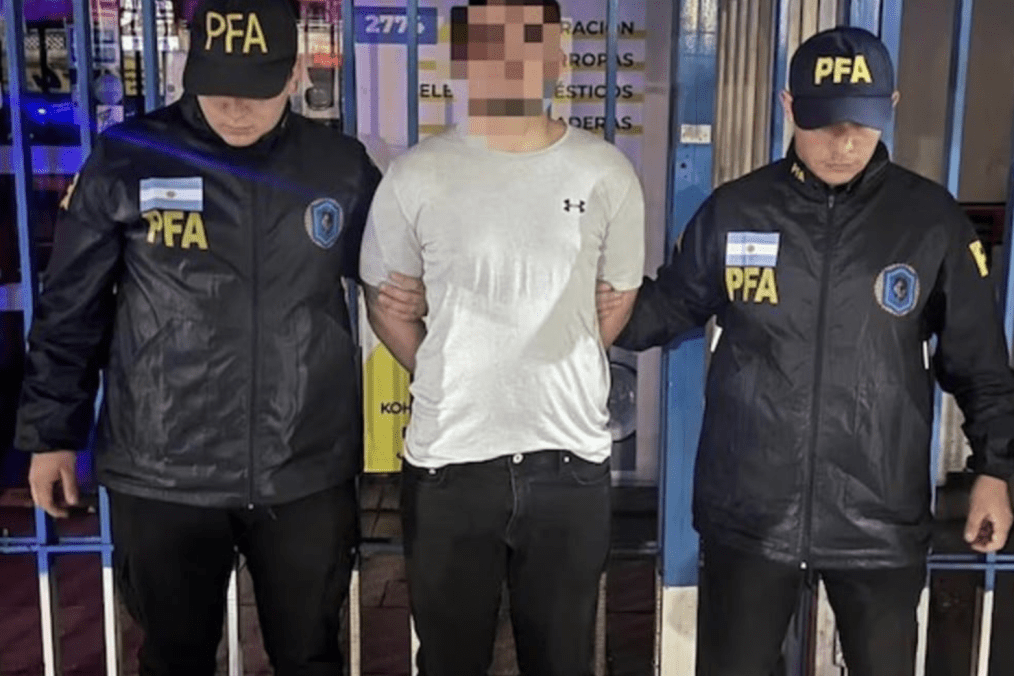
Argentine authorities have arrested a 26-year-old Russian national described as a key figure in a Kremlin-linked influence operation that targeted President Javier Milei’s government in retaliation for its support of Ukraine.
Dmitry Novikov was apprehended on May 1 in Lanús, a southern suburb of Buenos Aires, following a joint operation by the Federal Police, State Intelligence Secretariat, and National Migration Directorate. Officials had monitored his movements for approximately two weeks after he entered Argentina from Istanbul on April 12 as a tourist.
Security Minister Alejandra Monteoliva announced the arrest via social media, describing Novikov as “a threat to the democratic order” who “came to operate, destabilize, and attack our institutions.” Federal Judge Julián Ercolini ordered preventive detention pending deportation, citing both flight risk and national security concerns.
The arrest represents the first capture of a senior operative in “La Compañía” (The Company), a Russian influence network that intelligence officials say is the successor to the information arm of the Wagner private military company. According to leaked documents, the organization spent at least $283,000 in 2024 placing fabricated stories against President Milei across Argentine media.
Born in Petropavlovsk-Kamchatsky in Russia’s Far East, Novikov has moved through multiple Latin American countries over the past two years, including Chile, the Dominican Republic, Colombia, Panama, and Brazil. The Dominican Republic deported him in September 2025, with prosecutors there stating he operated “a cyber-influence network linked to the Lakhta or La Compañía project.”
The Argentine operation represents a clear example of how the Kremlin retaliates against governments supporting Ukraine – through paid articles, fabricated scandals, and mobile operatives working across multiple countries.
Buenos Aires had previously exposed the network’s local cell in June 2025, identifying Russian residents Lev Andriashvili and Irina Yakovenko as operators. A leaked archive of 76 internal documents published in April 2026 by openDemocracy, Filtraleaks, and partner outlets revealed the operation’s scope: La Compañía paid for at least 250 articles across more than 20 Argentine digital outlets between June and October 2024, making Argentina its largest target across Africa and Latin America during that period.
The content strategy blended legitimate grievances about Milei’s austerity policies with outright fabrications. One planted story claimed Milei had sent a sabotage team to attack a Chilean gas pipeline, while another accused him of purchasing $64,000 worth of Cartier collars for his cloned dogs in the United States. Many articles carried no byline or appeared under fictitious identities with AI-generated photos.
The timing of the disinformation campaign aligns directly with Milei’s Ukraine policy. The Argentine president took office in December 2023 with Ukrainian President Volodymyr Zelenskyy attending his inauguration. Milei subsequently joined the Ukraine Defense Contact Group and canceled Argentina’s planned BRICS accession – moves that apparently triggered Moscow’s response.
La Compañía launched its Argentine workstream in April 2024, with August 2024 becoming the operation’s highest-spending month anywhere, exceeding any African target. The leaked materials show the organization also analyzed Argentina’s military-industrial complex, mapped Antarctic oil resources, profiled opposition figures, and developed plans to support opposition candidates in Argentina’s 2025 legislative elections.
The campaign appears to have diminished after January 2025, coinciding with the second Trump administration’s distancing from Kyiv and Argentina’s abstention from a UN resolution demanding Russian withdrawal.
Ukraine’s Center for Countering Disinformation has characterized Novikov’s arrest as confirmation that Moscow is extending its information warfare into regions where governments align with Kyiv, utilizing shadow structures and manipulated public opinion.
Russia’s embassy in Buenos Aires has dismissed the openDemocracy investigation as “anti-Russian material” and rejected the disinformation accusations. The bilateral relationship still permits Russian citizens visa-free entry to Argentina under a 2009 agreement that remains in force – a provision Novikov utilized to enter the country.
Fact Checker
Verify the accuracy of this article using The Disinformation Commission analysis and real-time sources.

4 Comments
This case highlights the ongoing global challenge of combating foreign disinformation campaigns. Argentina’s proactive response is commendable, and I’m curious to see if this leads to further exposures of similar networks elsewhere.
It’s good to see Argentine authorities taking swift action to apprehend this suspected operative and address the threat to their institutions. Maintaining the integrity of democratic elections is crucial.
This is a concerning development, as any foreign interference in a country’s democratic processes needs to be taken seriously. I’m curious to learn more about the extent of this Russian influence network and its activities in Argentina.
The details about the scale of funding and coordination behind this Russian influence operation are quite alarming. I hope the investigation can shed more light on the full extent of the Kremlin’s involvement.