


Listen to the article
Five Tools to Combat Disinformation in the Digital Age
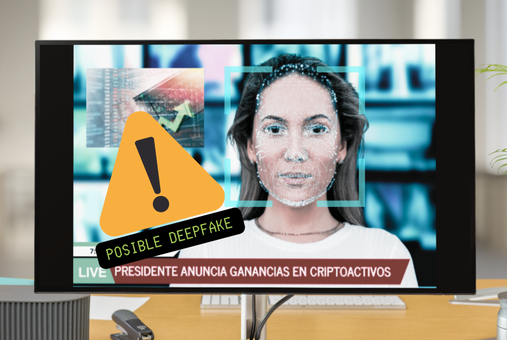
In an information ecosystem where misinformation circulates faster than fact-checkers can respond, media organizations increasingly rely on sophisticated tools to verify content, detect hoaxes, and understand how false narratives spread. As disinformation campaigns grow more sophisticated, these digital resources have become essential for journalists and fact-checkers working to preserve truth in public discourse.
From tracking disinformation patterns to recovering deleted content and analyzing manipulated media, these five tools represent the cutting edge of fact-checking technology currently employed by newsrooms worldwide.
Google Fact Check Tools
Google has developed a comprehensive ecosystem of fact-checking resources that serve both professional fact-checkers and the general public. The company’s flagship tool, Fact Check Explorer, functions as a specialized search engine that aggregates claim reviews from numerous fact-checking organizations globally, including prominent Latin American outlets like Chequeado (Argentina), Bolivia Verifica, El Sabueso (Mexico), and Cotejo.info (Venezuela).
Users can simply enter a phrase, data point, or link to determine if it has already been verified by a credible organization, along with the corresponding rating (“true,” “false,” or “misleading”). This tool dramatically reduces duplication of effort across fact-checking organizations.
Additionally, Google offers the Fact Check Markup Tool, which enables publishers to add structured data “tags” to their fact-checking articles. This makes verified content more easily discoverable in Google search results, boosting their visibility when users search for related information. Media outlets interested in implementing this feature must first verify their website through Google Search Console.
For more technically advanced applications, Google also provides APIs that allow media developers to integrate verification functionalities directly into their own platforms and workflows.
Archive.org
Archive.org, a non-profit digital library established by internet pioneer Brewster Kahle, has become an invaluable resource for preserving digital content. Its best-known feature, the Wayback Machine, allows users to access archived versions of websites, even when content has been deleted or modified.
This capability proves crucial for journalists investigating suspicious changes to online content, verifying the original context of statements, or tracking how misleading narratives evolve over time. The platform’s massive collection of archived videos, images, and digitized files also helps fact-checkers determine whether viral content actually originated in entirely different contexts or time periods.
In an era where digital evidence can vanish with a few keystrokes, Archive.org serves as an essential historical record of the internet, helping journalists establish critical timelines and preserve context that might otherwise be lost.
OSoMeNet
Developed by the Observatory on Social Media (OSoMe) at Indiana University, OSoMeNet visualizes content diffusion patterns across social platforms including Bluesky, Mastodon, and TikTok. The tool generates maps showing diffusion networks (tracking how information flows between users) and co-occurrence networks (revealing which topics or hashtags frequently appear together in online discussions).
OSoMeNet evolved from Hoaxy, a widely used tool that was discontinued after Twitter (now X) disabled its free API access. Many of Hoaxy’s features were subsequently integrated into OSoMeNet.
“OSoMeNet allows users, including journalists, to examine how certain narratives are disseminated online,” Ben Serrette, director of IT and engineering at OSoMe, told LatAm Journalism Review. “Researchers can more easily identify which influential accounts are amplifying a topic, see if there is any kind of coordinated effort, or even discover other related topics they may not have been aware of.”
The platform’s timeline feature displays posting activity chronologically, enabling analysts to track how narratives evolve and spread over time—critical for identifying coordinated disinformation campaigns and their key amplifiers.
InVID
InVID is a sophisticated platform designed specifically to detect, authenticate, and verify video content shared on social media. Developed by a multidisciplinary European consortium including prominent news organizations like Agence France-Presse and Deutsche Welle, InVID emerged from the Horizon vera.ai project, which aims to leverage AI in combating disinformation.
The platform includes tools that extract contextual information from videos on major platforms like Facebook, X (formerly Twitter), and YouTube. It enables reverse image searches and can fragment clips into key frames for detailed analysis. InVID also allows users to read metadata from videos and images and verify copyright information for audiovisual content.
Perhaps most significantly, InVID offers forensic analysis capabilities that can help detect manipulated images—an increasingly important feature as AI-generated content becomes more prevalent and convincing.
The platform’s browser extension, available for Chrome and Firefox, allows journalists to integrate these powerful verification tools directly into their daily workflow without disruption.
FactFlow AI
When devastating floods struck Spain in 2024, false narratives about the disaster spread rapidly on social media, outpacing fact-checkers’ ability to respond and potentially endangering residents. This crisis prompted Spanish fact-checking organization Newtral to develop FactFlow, an AI-powered tool that detects misinformation patterns across text, audio, video, and images on Telegram—a platform frequently used for spreading viral content in Spain.
According to Sara Estevez, a prompts engineer at Newtral who presented FactFlow at the 2025 Global Summit on Disinformation, the tool has reduced monitoring time for potential viral disinformation on Telegram from hours to seconds. It has also helped identify previously undetected disinformation channels.
Developed as part of JournalismAI’s 2024 Innovation Challenge, FactFlow leverages the open-source AI model Qwen, which Newtral trained on more than one million messages collected from over 2,000 suspicious Telegram accounts and channels.
Currently, FactFlow is only available to academics and Newtral’s own fact-checkers, but the organization plans to expand access to other newsrooms soon and integrate additional platforms like TikTok and X. Newsrooms interested in using the tool can contact Newtral directly at proyectos@newtral.es.
As disinformation tactics grow increasingly sophisticated, these five tools represent critical resources for media organizations working to separate fact from fiction in today’s complex information landscape.
Fact Checker
Verify the accuracy of this article using The Disinformation Commission analysis and real-time sources.

10 Comments
Disinformation is a serious threat to informed public discourse. While no tool is perfect, these resources seem like a step in the right direction. I’m curious to see how they perform in real-world scenarios and whether they can keep up with evolving disinformation tactics.
Agreed. The fight against disinformation requires a multi-pronged approach, and these fact-checking tools could be a valuable component. Rigorous testing and continuous improvement will be key to their effectiveness.
As someone who follows news and current events, I welcome the development of these disinformation-fighting tools. Fact-checking is crucial, and I’m glad to see organizations investing in innovative solutions to combat the growing problem of false narratives.
Detecting and analyzing disinformation is a complex challenge, but these tools look promising. I’m particularly interested in the Google Fact Check Explorer, as having a centralized platform to aggregate fact-checks could be very useful.
Yes, the ability to search across multiple fact-checking sources is a valuable feature. It will be interesting to see how effective these tools are in practice and whether they can keep up with the rapid spread of misinformation online.
Disinformation is a growing challenge, especially online. These tools sound like a good way for journalists and the public to verify information and stay ahead of false narratives. I’m curious to learn more about how they work and what kind of insights they can provide.
Yes, having advanced fact-checking tools is crucial in today’s media landscape. It will be interesting to see how these technologies evolve to keep pace with increasingly sophisticated disinformation tactics.
The rise of disinformation is concerning, but it’s good to see media organizations investing in innovative solutions to combat it. I appreciate that these tools aim to provide objective, fact-based information to the public.
Absolutely. Preserving truth in public discourse is vital for a healthy democracy. These fact-checking tools seem like a step in the right direction.
These disinformation detection and analysis tools sound promising, but I wonder about their limitations. How accurate and comprehensive are they? Can they keep up with the rapid spread of misinformation online? I’d be interested to see independent assessments of their performance.