


Listen to the article
Filipino Journalist’s Legal Battle Against Red-Tagging Forces Meta to Reveal Identities Behind Online Threats
Leonardo Vicente “Cong” Corrales has spent years in the crosshairs of anonymous attackers who repeatedly branded him as a communist—a dangerous accusation in the Philippines. Now, his landmark legal action against Meta has achieved what many thought impossible: unveiling the identities of those responsible for online harassment campaigns.
In July 2025, after a protracted legal battle, the National Privacy Commission (NPC) arbitration granted Corrales access to the identities of at least 10 social media accounts responsible for “red-tagging” him. Notably, at least one account was traced to a government establishment.
Red-tagging—the practice of labeling individuals as members of the Communist Party of the Philippines and its armed wing—has become a serious threat to journalists in the country. The Communist Party is designated as a terrorist group by the Philippine government, making such accusations potentially life-threatening.
Corrales’ troubles began in 2019 after he reported on the plight of Higaonon Indigenous people, who were fleeing military operations in their ancestral lands in Mindanao. Shortly afterward, his photo appeared on posters circulated online that labeled him as an alleged communist.
“These platforms are no longer just neutral bulletin boards; they are now the primary battlegrounds for public discourse,” Corrales told IFEX in an interview. “By failing to act decisively, these platforms become unwitting accomplices to human rights abuses.”
The harassment escalated in 2020 when Corrales found a funeral wreath bearing his name after he expressed support for ABS-CBN, the country’s largest broadcaster, which was shut down during former President Rodrigo Duterte’s administration.
In 2021, anonymous Facebook accounts shared a photo of Corrales holding what appeared to be a gun, falsely suggesting he was an armed rebel. The image was actually from a safety training seminar for journalists, where he had been handling a toy gun.
The campaign against him intensified in 2023 when an anonymous Facebook account published Corrales’ personal information obtained from city government housing records, suggesting that critics of the government should be denied access to public services like socialized housing.
Despite repeated appeals to Meta to remove the offending content and reveal information about the accounts behind them, the company initially refused, claiming it “needed legal processes to comply with the request for information,” even after acknowledging it had removed some of the posts.
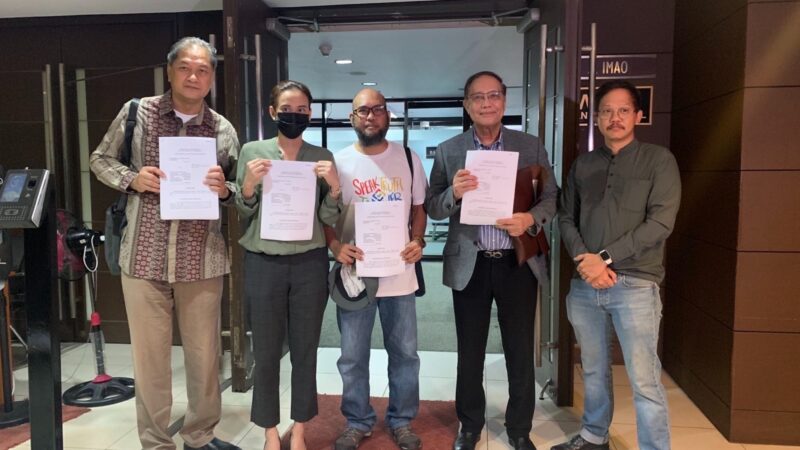
This resistance prompted Corrales to file a formal complaint with the NPC, supported by the National Union of Journalists of the Philippines (NUJP) and volunteer lawyers from the Movement Against Disinformation, who described it as “watershed litigation.”
A recent study by the NUJP revealed that 60 percent of red-tagging incidents between 2016 and 2024 were perpetrated by state forces, particularly members of the police and military. This finding adds weight to concerns about official involvement in harassment campaigns against journalists.
The Supreme Court of the Philippines validated these concerns in an important 2024 ruling that characterized red-tagging as a genuine threat to life and liberty, despite authorities’ persistent denials that such a practice exists.
Corrales emphasizes that his legal action serves a broader purpose beyond his individual case. “The legal route is not just about a single case; it’s about forcing a systemic change in how these platforms handle human rights issues,” he explained.
He called on the government to issue “clear, unequivocal condemnation of red-tagging by high-ranking officials” and ensure “swift investigation and prosecution of individuals who spread disinformation and incite violence against journalists and rights advocates.”
For social media platforms like Meta, Corrales recommended implementing “stricter and more transparent content moderation policies” specifically addressing state-sponsored disinformation campaigns, greater responsiveness to user reports of threats, and investment in local teams with deep understanding of the Philippine sociopolitical context.
From being the most red-tagged journalist in his region, Corrales has transformed his experience into a groundbreaking case that may establish new precedents for holding both online platforms and perpetrators accountable for digital harassment of journalists in the Philippines.
Fact Checker
Verify the accuracy of this article using The Disinformation Commission analysis and real-time sources.

8 Comments
This is an important case highlighting the dangers of disinformation and online harassment faced by journalists, especially those reporting on sensitive issues like indigenous rights. It’s good to see the journalist taking legal action to hold social media platforms accountable for enabling such abuses.
Agreed. The red-tagging of journalists is a serious problem that needs to be addressed. Transparency around the identities of those engaged in these coordinated harassment campaigns is a critical first step.
This story highlights the critical role that independent, investigative journalism plays in exposing the truth, even in the face of powerful forces seeking to suppress it. Corrales’ persistence in this legal battle is commendable and serves as an example for other journalists facing similar challenges.
The use of ‘red-tagging’ as a tactic to discredit and threaten journalists is a disturbing trend that must be condemned. I hope this case sets a precedent for holding social media platforms and government actors accountable for enabling such abuses.
Agreed. Journalists should not have to fear for their safety or face coordinated campaigns of harassment and disinformation simply for doing their jobs. This victory for Corrales is an important step in the right direction.
The revelation that at least one of the accounts responsible for the harassment campaign against this journalist was traced back to a government establishment is deeply concerning. It raises questions about the role of state actors in spreading disinformation and suppressing critical reporting.
Absolutely. This case highlights the need for greater scrutiny and accountability around the activities of government agencies and officials when it comes to online discourse and the targeting of journalists.
This story underscores the importance of journalists like Corrales who are willing to take on powerful interests and challenge the spread of disinformation, even in the face of personal risk. Their bravery and commitment to the truth are essential for a healthy democracy.