


Listen to the article
In the battle against digital misinformation, officials from Turkic-speaking nations are discovering that national regulations offer limited protection in a borderless online world. Representatives gathered in Baku, Azerbaijan recently to address this growing challenge across their region.
“There are so many platforms — YouTube, Instagram — where citizens also spread false information and the government can’t do anything about it,” said Zarina Kalmuratova, chief specialist of the Information Policy Department of the Ministry of Culture, Information and Youth Policy of the Kyrgyz Republic.
Her frustration highlights a fundamental challenge for governments worldwide: how to enforce national regulations when information flows freely through global platforms operating beyond any single country’s jurisdiction.
Kyrgyzstan implemented anti-fake news legislation in 2022, immediately drawing criticism from freedom of expression advocates who feared it would become a tool for government censorship. Speaking at the recent media conference in Baku, Kalmuratova defended the law’s implementation.
“Yes, it was perceived as a restriction. As if it were a tool for blocking or shutting down websites. But in reality, that didn’t happen,” she said.
Under Kyrgyzstan’s regulatory framework, individuals who believe they’ve been targeted by misinformation can request government intervention. Officials then demand the offending outlet remove the content within 24 hours. Non-compliant websites face potential blocking for up to two months – a penalty Kalmuratova characterizes as measured rather than draconian.
This enforcement mechanism, however, proves ineffective when dealing with international tech giants. The Kyrgyz official proposes that companies like Meta and Google establish official operations within Turkic-speaking nations, creating much-needed accountability mechanisms.
“This would be a huge step in the fight against disinformation,” she argued during the conference, which brought together media officials from across the Organisation of Turkic States (OTS).
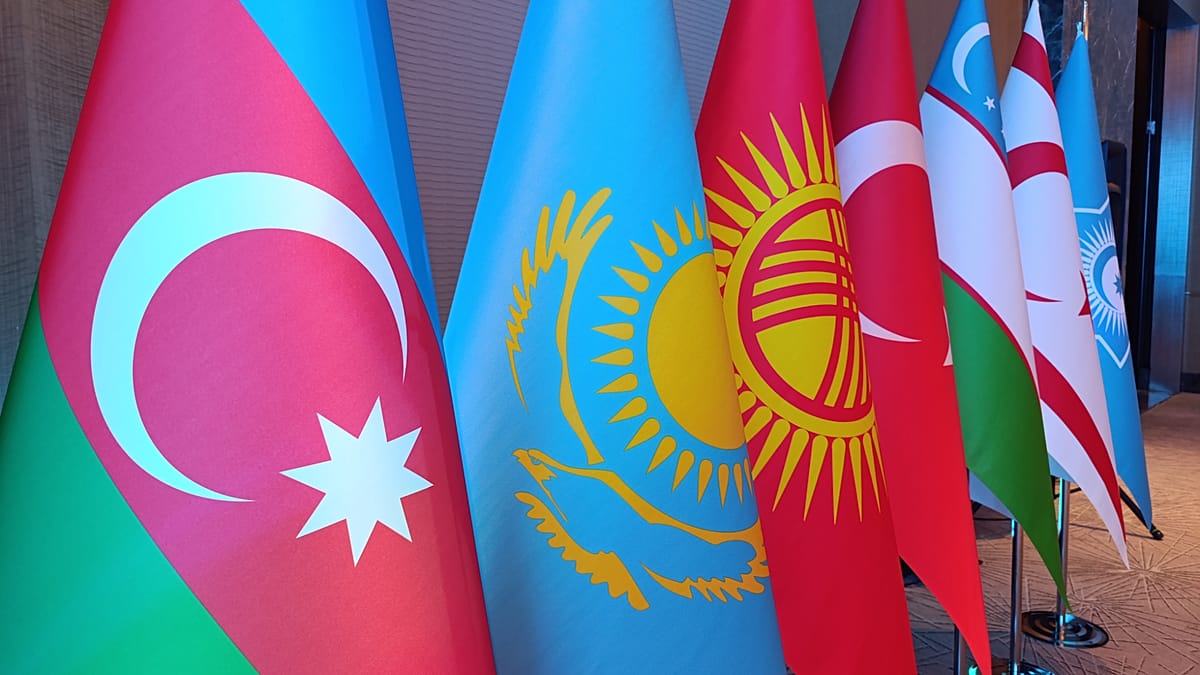
The OTS, comprising Turkey, Azerbaijan, Kazakhstan, Kyrgyzstan and Uzbekistan as full members, with Hungary, Turkmenistan and others participating as observers, spans a geographic arc from southeastern Europe through the Caucasus mountains into Central Asia. This diversity presents both challenges and opportunities for developing shared media policies.
Kazakhstan’s approach offers a complementary strategy focused less on restrictions and more on developing trustworthy alternatives. Deputy Minister of Culture and Information Kanat Iskakov emphasized building audience trust through quality journalism.
“We must develop coordinated approaches to journalistic standards for digital services to build audience trust,” Iskakov told attendees.
His emphasis on harmonized standards and collaborative content production suggests these nations recognize that credibility, not just enforcement, will determine their success in combating misinformation. The goal appears to be cultivating domestic media outlets that audiences trust, thereby reducing the appeal of unreliable sources.
The Baku gatherings – including the 12th Working Group Meeting on Media and Information and the 7th ministerial-level conference – represent the latest step in the OTS’s efforts to establish common media policies across diverse political systems with varying levels of press freedom.
The initiative raises complex questions about balancing citizen protection from harmful falsehoods while preserving space for legitimate criticism and debate. Kyrgyzstan’s experience illustrates both the appeal and limitations of national-level regulation in an interconnected digital landscape.
Media analysts note this regional approach could potentially serve as a model for other geographic blocs facing similar challenges. However, concerns remain about whether such regulations might eventually be used to suppress political opposition under the guise of combating disinformation – a criticism frequently leveled at similar laws in other regions.
The next OTS media forum will convene in Turkey, where member states will continue addressing key challenges: enforcing standards when platforms operate globally, building public trust in official media, and leveraging regional cooperation to find solutions individual nations cannot achieve alone.
As digital platforms continue transforming how information spreads across borders, the Turkic states’ experiment in regional media regulation offers valuable insights into both the potential and limitations of governmental responses to the misinformation crisis.
Fact Checker
Verify the accuracy of this article using The Disinformation Commission analysis and real-time sources.

14 Comments
Interesting insights into the challenges Central Asian nations face in combating online misinformation. The borderless nature of digital platforms poses real difficulties for national-level regulations. A more coordinated, global approach may be needed.
You make a good point. Addressing this issue will likely require new models of international collaboration and governance.
Central Asian nations grappling with the disinformation challenge highlights how this is a worldwide issue requiring global solutions. Curious to see what other approaches emerge from different regions to address this complex problem.
Agreed, a diversity of perspectives and strategies will likely be needed to tackle this multifaceted challenge effectively.
Interesting look at the challenges Central Asian nations face in combating online misinformation. While government regulations are one approach, it’s clear global tech platforms play a big role that national laws can’t fully address.
You raise a good point. Balancing free expression and combating false narratives is a complex issue without easy solutions.
The borderless nature of online platforms makes enforcing national laws on disinformation very difficult. This is a global problem that will likely require multilateral cooperation and innovative approaches to address effectively.
Absolutely, a global, collaborative response seems necessary to tackle the cross-border challenges of modern disinformation.
The Kyrgyz government’s anti-fake news law seems well-intentioned, but the risks of overreach and censorship are concerning. Balancing public good with free expression is an age-old challenge that will only grow more complex in the digital era.
That’s a fair assessment. Navigating this issue will require nuance, transparency and ongoing public dialogue.
It’s interesting to hear the Kyrgyz government’s perspective on their anti-fake news legislation. While the intent may be to combat harmful misinformation, the potential for abuse is concerning. Thoughtful policy development will be crucial.
You raise a fair point. Nuanced policymaking is needed to uphold democratic principles while also addressing the real dangers of online disinformation.
Kyrgyzstan’s anti-fake news law seems like a controversial move, with valid concerns about potential government overreach. Striking the right balance between tackling disinformation and protecting free speech will be an ongoing challenge.
I agree, these types of regulations require careful implementation to avoid misuse. Oversight and transparency will be key.