


Listen to the article
Experts Call for Urgent Action to Protect Digital Rights Amid Rising Threats in Bangladesh
Civil society leaders and rights activists have issued an urgent call for protecting digital and civic spaces in Bangladesh during a high-profile consultation in Dhaka this week. The meeting highlighted growing concerns about freedom of expression, widespread disinformation, and escalating gender-based violence in both online and offline environments.
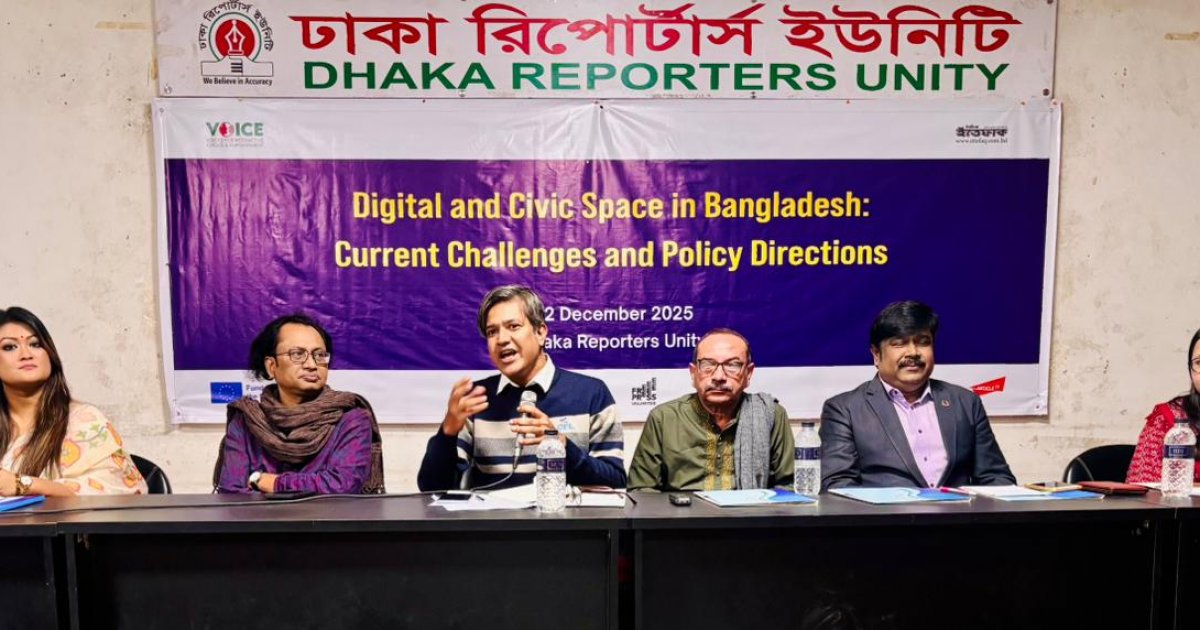
The multi-stakeholder consultation, “Digital and Civic Space in Bangladesh: Current Challenges and Policy Directions,” took place at Dhaka Reporters Unity, bringing together diverse voices from civil society organizations, media outlets, academic institutions, legal professionals, and women and youth activists.
Participants voiced strong condemnation of recent violent incidents, particularly the killing of Sharif Osman Hadi, which they described as emblematic of the broader suppression of dissenting voices in the country. They also expressed deep concern over mob attacks allegedly incited through online disinformation campaigns targeting major news organizations including Prothom Alo and The Daily Star.
“These incidents represent a direct assault on independent journalism and free expression,” said one participant, noting that women journalists and public intellectuals have faced particularly severe harassment. The vandalism of cultural institutions was characterized as a deliberate attempt to silence progressive spaces and independent voices.
Musharrat Mahera, Deputy Director of Programs at VOICE, delivered the keynote presentation emphasizing that digital and civic rights are shaped by a complex interplay of laws, policies, institutions, and social practices. She highlighted an alarming rise in targeted propaganda against women on social media platforms.
“Gender-based disinformation is not merely a digital issue—it fuels division, hatred, and social unrest that undermines peace and harmony throughout society,” Mahera explained. She advocated for inclusive and peaceful political engagement as a critical pathway forward.
The consultation revealed multiple dimensions of Bangladesh’s shrinking civic space. Dr. Zahed Ur Rahman, a prominent columnist and activist, urged citizens to persist in defending human rights despite mounting challenges. “We must continue raising our voices against violations both online and offline, even as domestic and global pressures intensify,” he stated.
Abul Hasan Rubel of Ganosanhati Andolon warned about the normalization of violence against women following recent mass uprisings. He criticized the misappropriation of inclusive language to justify discriminatory practices that further marginalize vulnerable communities.
Media personality Dipty Chowdhury stressed the state’s responsibility in protecting freedom of speech while ensuring justice when violations occur. “Freedom of expression must be protected, but it must also respect the rights of others,” Chowdhury noted.
Human rights activist Monjur Rashid emphasized that meaningful social change becomes inevitable when citizens collectively assert their fundamental rights. “Civil rights remain central to any functioning democracy,” Rashid said, calling for greater solidarity among rights defenders.
The proliferation of false information targeting women was highlighted by Tamara Yesmin Toma, an online disinformation specialist. She called on law enforcement agencies to take more proactive measures in investigating disinformation cases and holding perpetrators accountable.
Ahmed Swapan Mahmud, Executive Director of VOICE, underscored his organization’s longstanding commitment to defending digital freedom, media rights, and the safety of journalists and human rights defenders. “As digital repression and disinformation intensify, collective action becomes essential to protect those most at risk,” Mahmud said.
The consultation culminated in a series of concrete policy recommendations, including calls for inclusive digital policies, transparent governance mechanisms, strengthened media literacy programs, and targeted protection for women, journalists, indigenous activists, and other marginalized communities who face disproportionate levels of discrimination and harassment.
These developments come at a critical juncture for Bangladesh, where digital rights have become increasingly contested amid rapid technological change and political tensions. Experts note that the country’s approach to regulating online spaces will significantly influence its democratic trajectory and human rights landscape in the coming years.
Fact Checker
Verify the accuracy of this article using The Disinformation Commission analysis and real-time sources.

14 Comments
Mob attacks fueled by online disinformation campaigns pose a serious challenge. Robust measures are needed to counter the spread of false narratives and protect journalists and media organizations.
Agreed. Fact-checking initiatives and digital literacy programs could help build resilience against manipulative content.
Protecting digital rights and civic spaces is a complex challenge, but one that must be tackled urgently. I commend the organizers for convening this timely and important dialogue.
Safeguarding freedom of expression is fundamental to a healthy democracy. Urgent action is needed to address the escalating threats to digital and civic spaces in Bangladesh.
This multi-stakeholder consultation is a positive step in addressing the complex issues of digital rights and civic space in Bangladesh. Collaborative efforts between civil society, media, and policymakers will be crucial.
Inclusivity and diverse representation in these discussions are key to developing effective solutions.
Gender-based violence in online and offline spaces is deeply concerning. Protecting the safety and rights of women and marginalized groups must be a top priority.
This issue has broader implications beyond Bangladesh. Protecting digital rights and civic spaces is a global challenge that requires coordinated international responses.
This is an important conversation that deserves widespread attention. I hope the outcomes of this consultation will inspire similar discussions and actions in other parts of the world.
The consultation’s emphasis on policy directions is encouraging. Effective regulatory frameworks and enforcement mechanisms are crucial to safeguarding digital and civic spaces.
Policymakers should also consider the role of technology companies in addressing these challenges.
The killing of Sharif Osman Hadi is a tragic example of the suppression of dissenting voices. Authorities must investigate these incidents thoroughly and ensure perpetrators are held accountable.
Disinformation and violence are complex, multifaceted problems. A comprehensive, multi-pronged approach involving various stakeholders is necessary to find sustainable solutions.
Protecting digital rights and civic spaces is critical amid rising disinformation and violence. Stakeholders must urgently address these threats to safeguard freedom of expression and prevent further escalation.