


Listen to the article
Bangladesh’s election authorities face mounting security challenges as the country prepares for its February 12 parliamentary vote, with widespread concern over illegal firearms, political violence, and the interim government’s ability to maintain order.
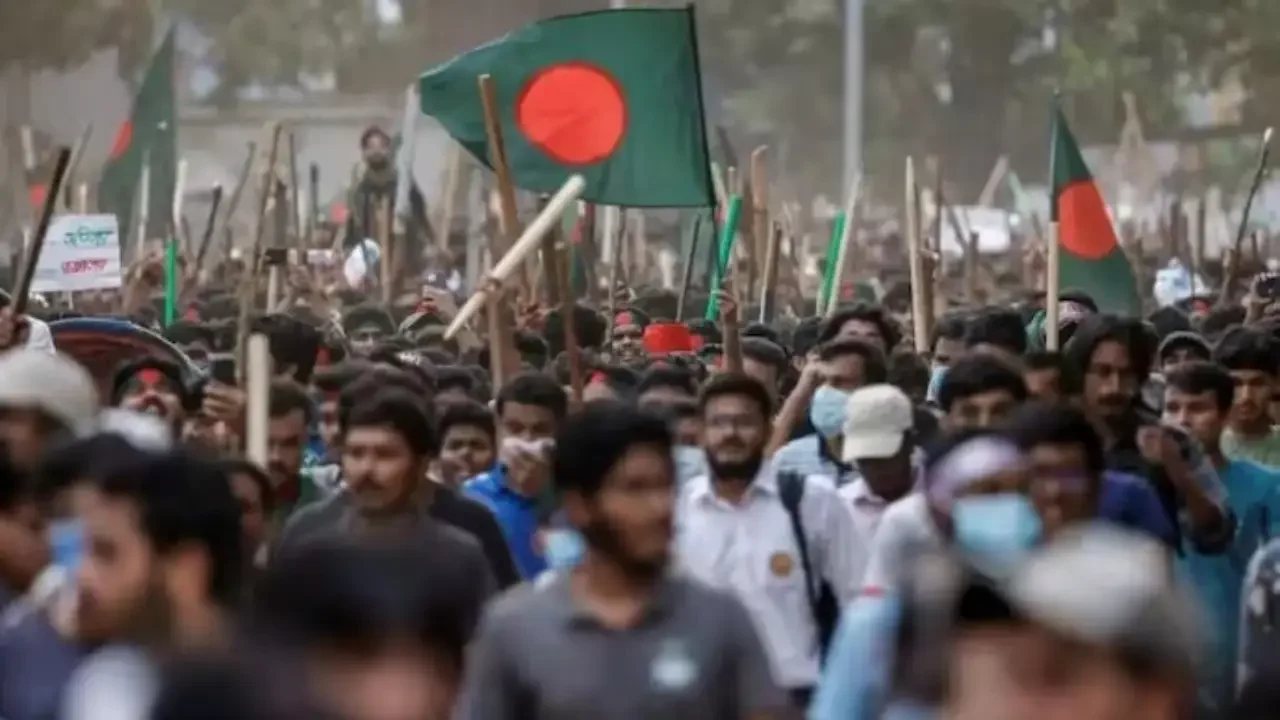
What should have been a routine democratic exercise has instead become one of the most serious governance tests for the administration led by Professor Muhammad Yunus, who took office after former Prime Minister Sheikh Hasina’s government fell during student-led protests last August.
As Bangladesh approaches its 13th parliamentary election, warnings from administrators, police officials, and human rights organizations indicate the country is entering its most volatile pre-election period since parliamentary democracy was restored in the early 1990s following military rule.
The most pressing security threat is the proliferation of illegal weapons, which intensified during the period of political transition. During last year’s upheaval, more than 5,700 firearms and substantial ammunition stocks were looted from police stations and security installations nationwide – an unprecedented breach of state control. While authorities report recovering 70-80 percent of these weapons, over 1,300 police-issued firearms remain unaccounted for.
“These aren’t just dormant stockpiles anymore,” one security official said on condition of anonymity. “They’re actively circulating through criminal networks, political muscle groups, and local power brokers, and increasingly being used to influence electoral outcomes.”
Field police have identified at least 25 active arms-smuggling routes, particularly along Bangladesh’s borders with India and Myanmar. Major urban centers including Dhaka, Chattogram, Narayanganj, and Khulna have seen a surge in shootings linked to political rivalry, extortion, and territorial disputes as the election campaign intensifies.
The interim government’s controversial decision to allow selected candidates and “important persons” to retain or obtain firearm licenses during the election period has generated widespread unease. While officials defend the policy as necessary for protecting threatened candidates, critics warn it risks normalizing armed politics in an already volatile environment.
Beyond firearms, Bangladesh has witnessed an alarming rise in mob violence and public lynchings. According to the Human Rights Culture Foundation, deaths from mob violence jumped from 126 in 2024 to 460 in 2025 – nearly tripling in a single year. Other rights groups documented between 168 and 197 such deaths, despite differences in methodology.
Victims are often accused of petty crimes, political dissent, or alleged moral transgressions. Religious minorities and cultural communities have also been targeted. Rights groups accuse the interim administration of failing to act decisively, suggesting that official rhetoric portraying mobs as “pressure groups” has undermined accountability.
“When citizens perceive the justice system as ineffective or compromised, collective violence fills the void,” explained one social scientist tracking the phenomenon. “It reflects a deeper erosion of public confidence in formal institutions.”
Digital disinformation poses another significant threat to electoral integrity. Officials have repeatedly warned of a potential “digital insurgency” as social media platforms are expected to play a decisive role in shaping – and potentially destabilizing – the election. Fabricated videos, AI-generated content, and coordinated disinformation campaigns could inflame communal tensions, delegitimize candidates, or suppress voter turnout.
Bangladesh has experienced this dynamic before, particularly when online religious rumors translated into offline violence. Monitoring such threats has reportedly become more difficult following operational constraints on the National Telecommunication Monitoring Centre since last year’s political transition.
Judicial independence has emerged as another flashpoint. Administrators have publicly urged the Election Commission to engage with courts over what they describe as routine or “blanket” bail granted to identified criminals and militants. This highlights longstanding tensions within Bangladesh’s governance framework, where security agencies often express frustration when judicial decisions are perceived as undermining law enforcement efforts.
Police officials have spoken candidly about political interference and lobbying on behalf of accused criminals. “Those who give speeches by day, lobby by night,” remarked one senior officer, summarizing the dilemma facing law enforcement.
The Election Commission finds itself struggling to assert authority amid these challenges. While it has instructed field officials to maintain neutrality and professionalism, and ordered joint operations with military and law enforcement to recover illegal weapons, commission officials have privately acknowledged concern about being held solely responsible if the election fails to meet public expectations.
For international observers, Bangladesh’s election carries significant regional implications. A credible vote in the world’s eighth-most populous country affects supply chains, labor migration, counterterrorism cooperation, and geopolitical dynamics across South and Southeast Asia.
However, conditions described by the state’s own officials fall well short of the environment typically associated with free and fair elections. The coming weeks will determine not only the credibility of the February vote but also the future legitimacy of Bangladesh’s political transition.
As Bangladesh approaches the crucial vote, the fundamental question has shifted from who will win to whether the state can still guarantee the basic conditions under which a meaningful election can take place at all.
Fact Checker
Verify the accuracy of this article using The Disinformation Commission analysis and real-time sources.

7 Comments
This is a complex challenge with high stakes for Bangladesh’s democracy. The interim government will need to balance security measures with preserving civil liberties. Careful planning and impartial oversight will be crucial.
You make a good point. Finding that balance between security and democracy will be critical. Vigilance and dialogue with all stakeholders will be essential to navigating this delicate situation.
It’s troubling to hear about the scale of the weapons looting during the political transition. Restoring state control over security will be essential for ensuring a free and fair vote. Addressing the root causes of this instability should be a priority.
Agreed. The election authorities will need robust contingency plans and coordination with security forces to mitigate the risks. Transparency and public trust will be vital to the process.
This is concerning news about the security challenges facing Bangladesh’s upcoming election. The proliferation of illegal firearms is a serious threat to the democratic process. Maintaining order and credibility will be critical for the new administration.
The sheer scale of the weapons looting is truly alarming. Restoring state control over security will be a formidable task for the election authorities. Robust safeguards and coordination with the international community may be needed.
The concerns raised by administrators, police, and human rights groups underscore the gravity of the situation. Bangladesh must find a way to uphold democratic norms while restoring order and security. A peaceful, credible election should be the goal.