


Listen to the article
European Commission Unveils ‘Democracy Shield’ to Combat Disinformation
The European Commission today launched its much-anticipated “Democracy Shield” initiative, a coordinated effort to protect EU democratic processes from foreign interference, disinformation, and hybrid threats. The program arrives amid growing concerns about election security and online manipulation across the continent.
The Democracy Shield, a centerpiece of Commission President Ursula von der Leyen’s second-term agenda, focuses primarily on coordination mechanisms and voluntary partnerships rather than introducing strict new regulatory measures. The approach appears calibrated to address democratic vulnerabilities while navigating complex political sensitivities around content moderation.
Among the initiative’s concrete plans is the development of a Digital Services Act (DSA) incident and crisis protocol. This mechanism aims to streamline coordination between EU authorities, national governments, and online platforms during serious incidents like election interference or cross-border disinformation campaigns.
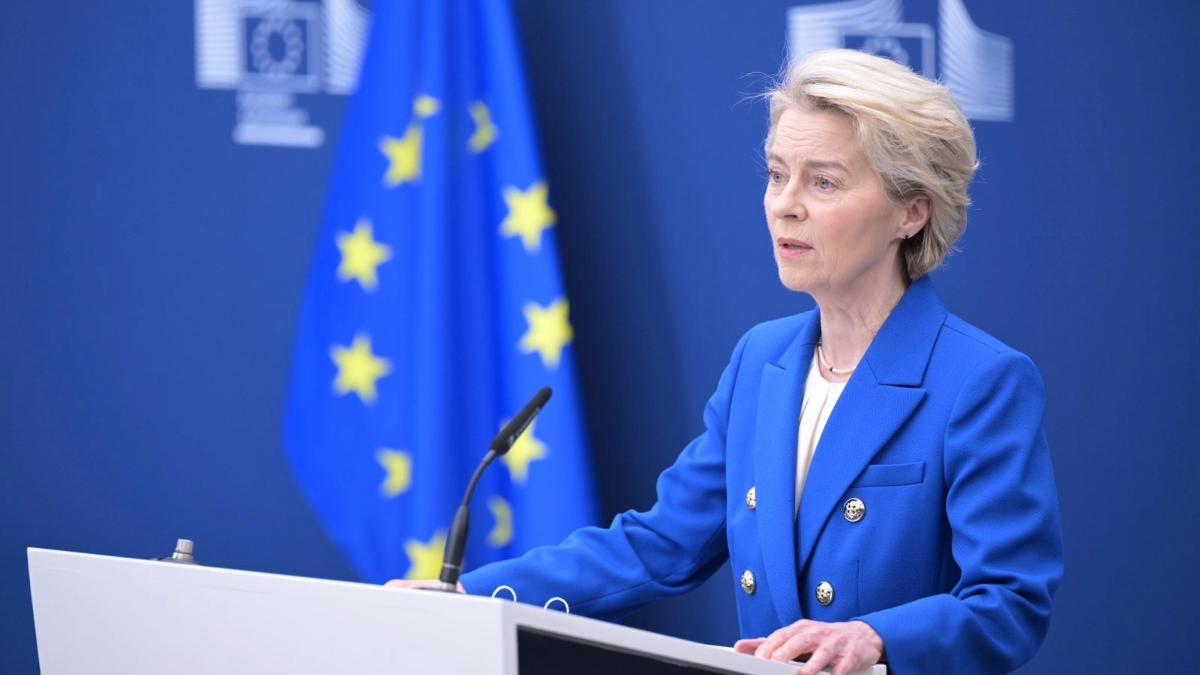
“The Democracy Package will serve as our roadmap to confront the evolving challenges our democracies face, and to support all those who uphold them,” said EU Commissioner Michael McGrath at Wednesday’s news conference. McGrath, who oversees Democracy, Justice, the Rule of Law and Consumer Protection, will lead the newly established European Center for Democratic Resilience.
This center will function as a hub for information-sharing, stakeholder engagement, and capacity-building efforts throughout the EU’s 27 member states and civil society organizations.
Rather than proposing new binding regulations, the Commission has doubled down on its Code of Conduct on Disinformation as the primary mechanism for holding large platforms accountable. The voluntary code outlines commitments for Very Large Online Platforms (VLOPs) and Very Large Online Search Engines (VLOSEs) to counter false information through improved user tools, fact-checker collaborations, and limits on monetizing misleading content.
However, the voluntary approach has shown limitations. A July study by the European Digital Media Observatory (EDMO) identified “consistent gaps in transparency, independent oversight and measurable outcomes” among major platforms. The report warned that without concrete results, the Code risks becoming merely “performative.” Several major signatories have already withdrawn from the arrangement, further undermining its effectiveness.
Despite documented claims of election interference in Germany and Romania, the Commission has yet to conclude any formal proceedings against platforms under the DSA framework. Instead, officials are relying on “regulatory dialogues” – discussions with platforms under the DSA’s systemic risk provisions – to encourage improved practices.
The Commission has committed to enhancing transparency around recommendation algorithms and demonetizing disinformation sources by removing financial incentives through advertising revenues. Officials indicated they may explore additional voluntary measures, including AI-generated content labeling and user verification tools, though these remain undefined and non-binding.
The Democracy Shield’s development reflects months of internal debate and external pressures, particularly from the United States, where lawmakers have expressed concerns about potential overreach in EU digital regulations. The initiative’s documentation heavily emphasizes respect for freedom of expression and avoids language suggesting direct content regulation.
To bolster its verification infrastructure, the Commission announced plans for a new European Network of Fact-Checkers that will expand fact-checking capabilities across all official EU languages. Simultaneously, EDMO will enhance its independent monitoring capabilities with a focus on elections and real-time crisis response.
The initiative also underscores the EU’s commitment to global democratic resilience through the Team Europe Democracy Initiative, which supports civic education, fact-checking, and independent media beyond EU borders.
Market analysts note that the measured approach likely reflects the Commission’s delicate balancing act between addressing genuine security concerns and avoiding overregulation of the digital space. Tech industry representatives have cautiously welcomed the emphasis on coordination and voluntary measures, while civil society organizations question whether these tools will prove sufficient against sophisticated disinformation campaigns.
As geopolitical tensions rise and technological capabilities advance, the Democracy Shield’s effectiveness will ultimately depend less on its institutional architecture and more on the political will to enforce meaningful accountability when voluntary measures prove inadequate.
Fact Checker
Verify the accuracy of this article using The Disinformation Commission analysis and real-time sources.

18 Comments
The ‘Democracy Shield’ initiative highlights the evolving challenges facing EU democracies in the digital age. Proactive coordination and crisis response protocols seem prudent given the threats of foreign interference and online manipulation.
Absolutely. Safeguarding the integrity of elections and democratic processes should be a top priority. This program appears to strike a balance between action and pragmatism.
While I appreciate the pragmatic approach, I hope the EU doesn’t shy away from necessary regulatory enforcement if voluntary measures prove insufficient. Striking the right balance will be crucial.
That’s a fair concern. The EU will need to closely monitor the effectiveness of the Democracy Shield and be willing to introduce stricter rules if the situation demands it.
The emphasis on voluntary partnerships over strict regulations is an interesting approach. It will be important to ensure these collaborations are transparent and accountable to the public.
Absolutely. Any public-private initiatives need robust safeguards to protect democratic principles and civil liberties.
The development of a DSA incident and crisis protocol is a positive step, but the true test will be in its implementation. Effective coordination between authorities, governments, and platforms is crucial.
Absolutely. The success of this initiative will depend on how well the various stakeholders can work together to respond to threats in a timely and coherent manner. Ongoing monitoring and adjustment will be key.
Interesting approach by the EU to combat disinformation while navigating political sensitivities. Voluntary partnerships and coordination mechanisms could be more effective than heavy-handed regulations in this complex domain.
I agree, a collaborative approach between authorities, governments, and platforms may yield better results than a purely top-down regulatory model. Flexibility will be key.
The development of a DSA incident and crisis protocol sounds like a positive step. Coordinating responses to election interference and cross-border disinformation campaigns is critical.
Agreed. Having a unified framework for handling these types of incidents could greatly improve the EU’s ability to respond swiftly and effectively.
I’m glad to see the EU taking proactive measures to address the evolving threats to democratic integrity. Balancing collaboration and regulation will be a delicate task, but necessary to protect EU citizens.
Well said. Safeguarding democracy in the digital age requires a multifaceted approach that adapts to new challenges. The Democracy Shield initiative seems like a step in the right direction.
I’m curious to see how the EU’s Digital Services Act incident protocol will work in practice. Streamlining coordination between authorities, governments, and platforms could be crucial during disinformation crises.
That’s a good point. Effective cross-border cooperation will be essential, especially for addressing large-scale, transnational disinformation campaigns.
The emphasis on voluntary partnerships is an interesting approach, but I hope the EU doesn’t shy away from stronger regulatory measures if needed. Protecting democratic processes should be the top priority.
I agree. While a collaborative model may be preferable, the EU must be willing to act decisively if voluntary efforts prove insufficient. The integrity of EU elections and democratic institutions is too important to compromise.